Cheap Table Tennis Shoes: What They Actually Cost in 2026

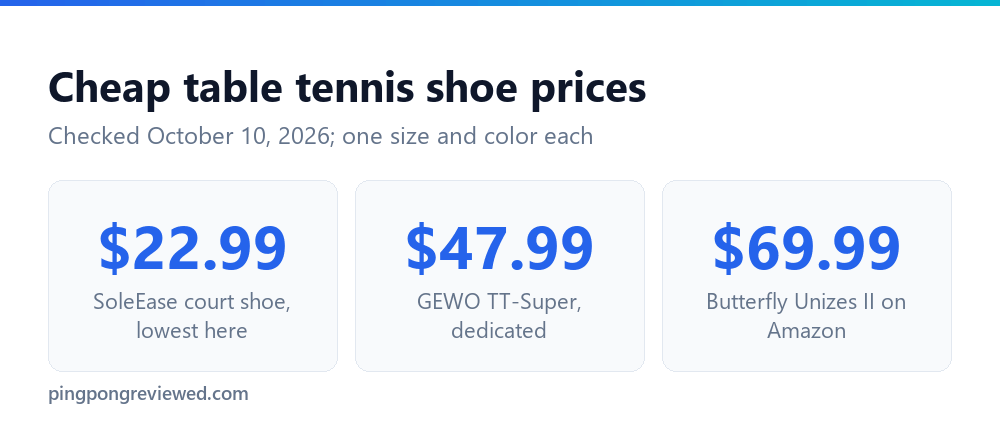
Cheap table tennis shoes do exist, but not many in the US. On October 10, 2026 the cheapest dedicated table tennis shoes we found were the GEWO TT-Super at $47.99 and the Yasaka Jet Impact at $49.95 at Megaspin, in limited sizes. Butterfly’s cheapest on Amazon was $69.99, court shoes that name table tennis in their listing start at $40.00, and plain court shoes start at $22.99. None of these court shoes is described by a maker page as made for the sport. We haven’t tested any shoe, so we report prices and what listings state.
The search results we reviewed for cheap table tennis shoes included a 2016 blog, forum threads and shop pages.
This guide puts US prices side by side and separates shoes made for the sport from court shoes sold for it. It lists what the cheapest dedicated shoes cost, what court shoes cost, and what each listing says and doesn’t say about non-marking soles and table tennis. For other brands, see our Butterfly shoe guide and Mizuno shoe guide.
- →The cheapest dedicated table tennis shoes we found in US shops were the GEWO TT-Super ($47.99) and Yasaka Jet Impact ($49.95), both at Megaspin and in limited sizes.
- →The cheapest Butterfly Lezoline we found on Amazon was the Unizes II at $69.99, the same as Butterfly’s own shop, so a strict under-$50 budget excludes Butterfly.
- →Court shoes that name table tennis in the title start at $40.00, and we could not find a maker page for them, so the listing text is the only source.
- →Only some listings say non-marking. We say so shoe by shoe, because the seller’s wording is the only source.
- →Amazon prices vary by size, color and seller, and one listing is one size.
Table of Contents
Cheap table tennis shoes: the price ladder, October 10, 2026
Notice the gap. The cheapest new dedicated table tennis shoe from a US seller on Amazon was $69.99, which is $22.00 more than the GEWO at Megaspin. Amazon also lists a Yasaka E201 Jet Impact NEO from Amazon Japan. That is our arithmetic from the two prices, and it only holds where a shoe is in stock in your size.
Dedicated table tennis shoes under about $75
1. GEWO TT-Super: the lowest-priced dedicated shoe we found
Megaspin lists the GEWO TT-Super at $47.99, down from $49.99. Sizes 37 to 41 were listed, and sizes 42 to 46 were out of stock. Megaspin’s copy says GEWO has redesigned its classic table tennis shoe, with a high-friction, non-marking indoor sole used for years, and a reinforced, padded heel counter. GEWO’s own page for the TT-Super, in German on gewo-tt.com, also describes a non-marking indoor sole and a reinforced, padded heel counter. We found no Amazon listing, so there is no Amazon link.
2. Yasaka Jet Impact: cheaper now, with one size left
Megaspin lists the Yasaka Jet Impact at $49.95 on sale, down from $79.95, and only Euro 39 (US 6.5) was in stock. Its copy says the rubber is anti-slip and hard wearing, the outer sole is Phylon and rubber, and the shoe runs half a size small, so order half a size bigger. It doesn’t say the sole is non-marking. Amazon also lists a Yasaka E201 Jet Impact NEO from international sellers, which we don’t link.
3. Butterfly Lezoline Unizes II: the lowest-priced Butterfly
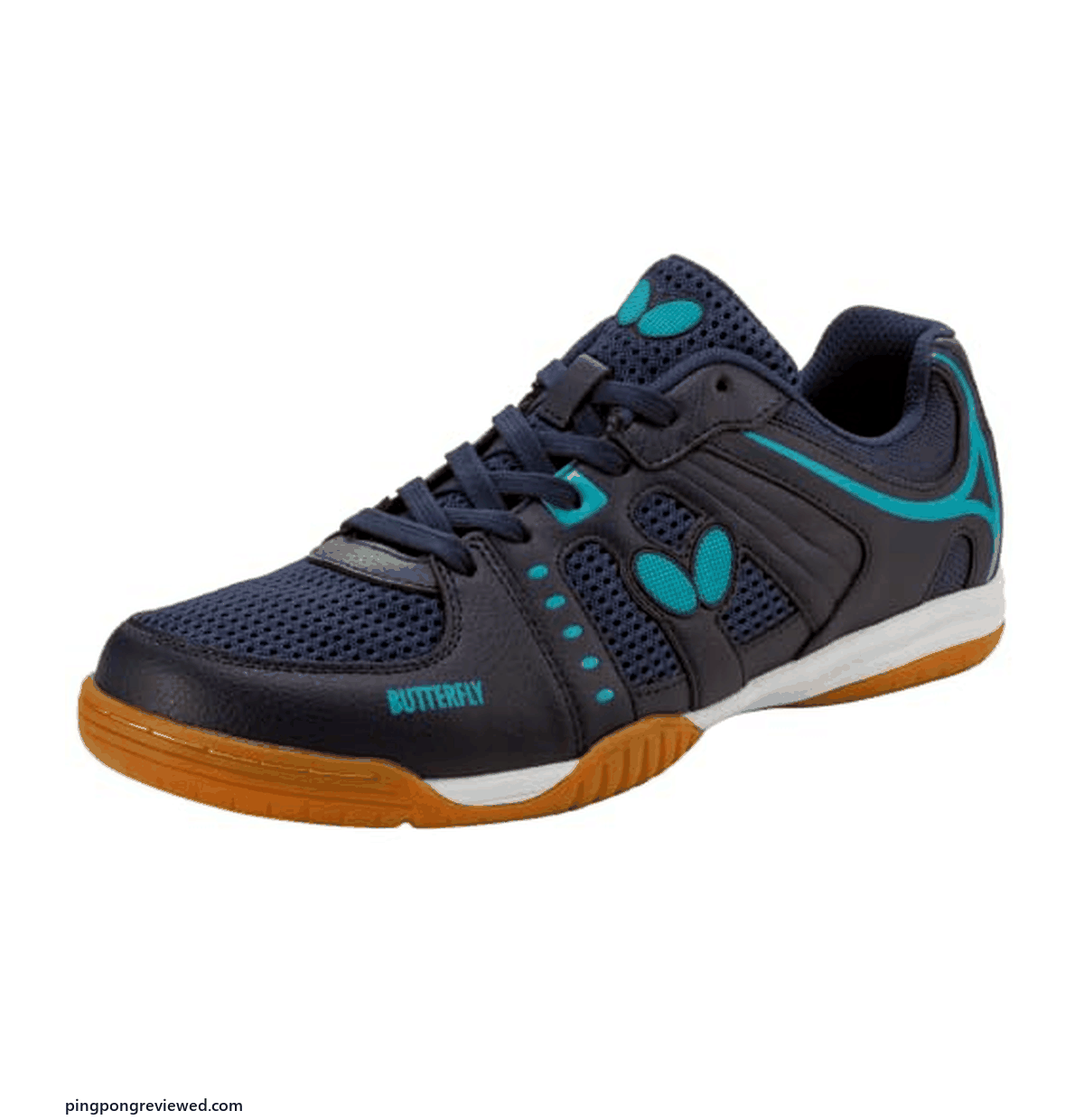
Butterfly’s page for the Lezoline Unizes II says it is recommended for beginners and that it is relatively reasonably priced for people choosing table tennis shoes for the first time, with a rubber and EVA sole. The navy size 7 version was $69.99 on Amazon on October 10 from Bowmar Sports. Butterfly’s own shop showed $69.99 with $84.99 struck through. Butterfly’s pages we read don’t state a non-marking sole.
4. Butterfly Lezoline Reiss: a few dollars more

Butterfly’s page describes the Lezoline Reiss as being for beginners to intermediate players, with grip, cushioning and durability for essential table tennis movement, a rubber and EVA sole, and a note not to step on the heel. The black size 10 version was $74.99 on Amazon on October 10. Butterfly’s shop showed $74.99 with $84.99 struck through.
5. JOOLA Court Junior: for kids
JOOLA’s Court Junior was $49.95 on joola.com, in European sizes 30 to 34, with 35 and 36 not available. JOOLA says the sole’s flexibility and grip support table tennis movements such as fast lunges and side-steps, and that the soft EVA insole protects kids from strain. JOOLA’s adult table tennis shoes were all above $50 in its catalogue, from $89.95.
Court shoes whose listing names table tennis
These are court shoes. The words table tennis appear in their titles, and we could not find a maker page for them, so the listing text is the only source.
6. HUNDRED badminton shoes: non-marking and table tennis in the title

Four HUNDRED models name table tennis and a non-marking sole in their titles: the Court Star at $40.00 in white and black size 7, the Raze at $45.00 in size 12, the Blade Lite at $46.00 in size 10 women’s or 9 men’s, and the Blade at $48.00 in size 12. All were sold by Infinity Prime USA on October 10, and each listing is one size. The Court Star’s bullets mention tennis, volleyball, squash, jogging and running, with table tennis only in the title. We couldn’t read a HUNDRED maker site, so this is seller wording. The Beita Sports shoe, which names table tennis in its title, was $57.99 on October 10, so it falls outside a budget list.
Plain indoor court shoes
7. SoleEase court shoes: the lowest-priced listing here, with no table tennis mention
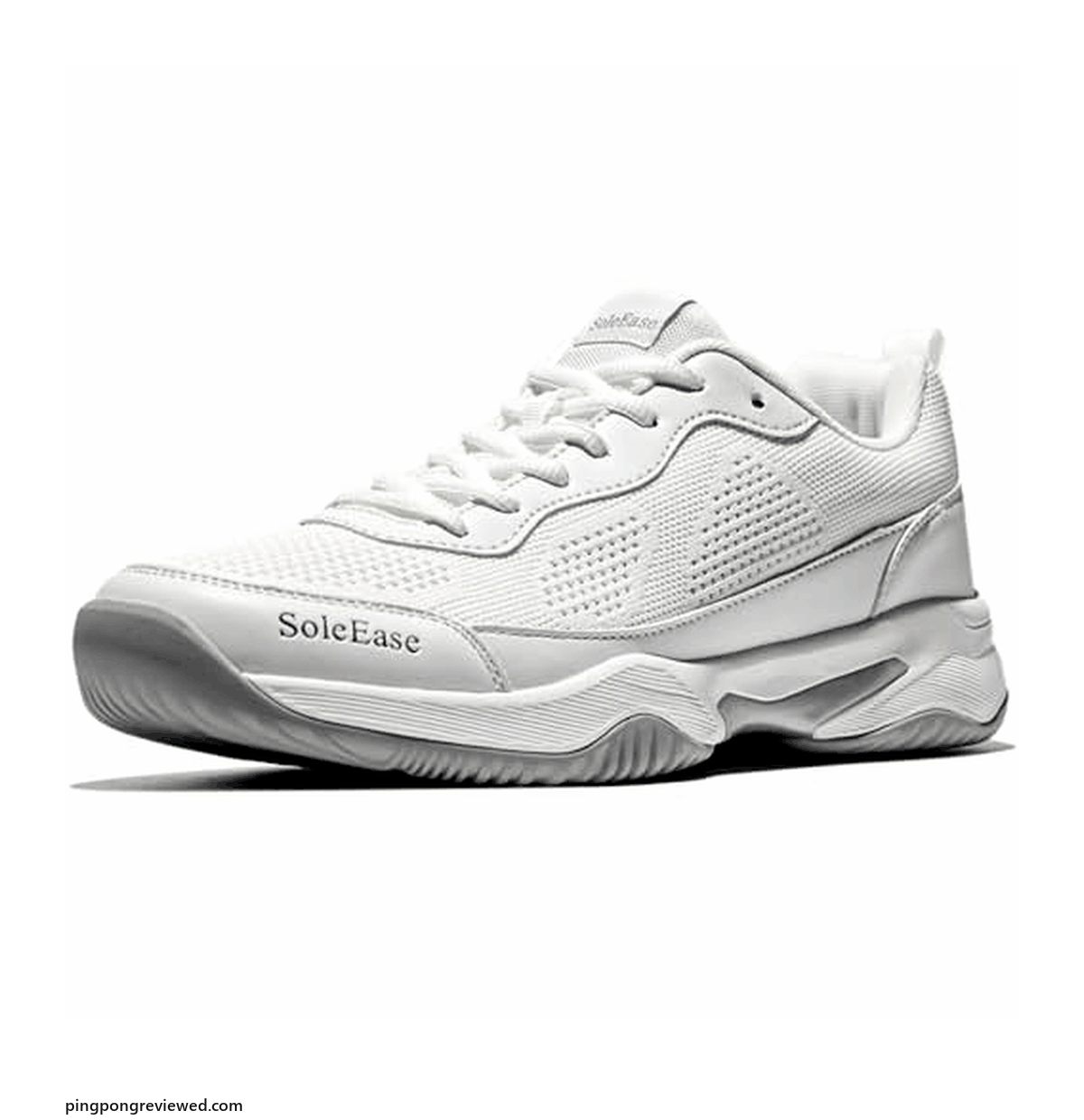
The SoleEase shoe was $22.99 on Amazon on October 10, in white size 7 women’s or 6 men’s. Its title names tennis, pickleball and badminton, and it doesn’t mention table tennis. Its bullets name tennis, badminton, pickleball and squash, and we found no non-marking statement.
8. adidas Court Flight: non-marking, no table tennis mention

The Court Flight’s bullets describe a durable, non-marking Adiwear rubber outsole, for volleyball, basketball, badminton and pickleball, and it is built for indoor wear. It doesn’t mention table tennis. The black and white size 11 was $47.02 on Amazon on October 10, and a size 7 was $45.67. Other men’s sizes and colors went as high as $64.08 on October 10.
9. ASICS Gel-Rocket: a volleyball shoe at varying prices
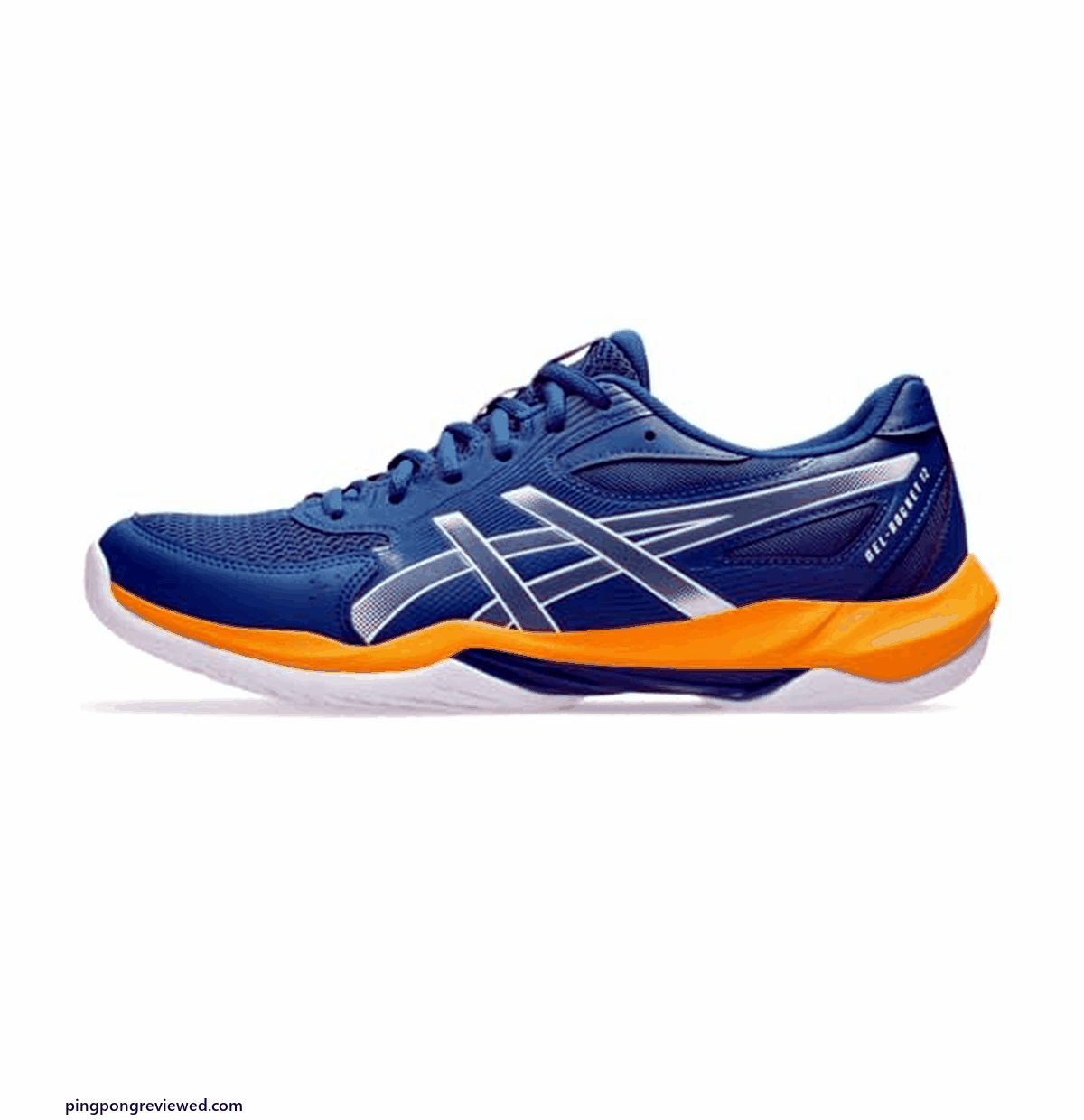
Amazon titles the Gel-Rocket 12 as a volleyball shoe and the Gel-Rocket 11 as an indoor sport shoe. The size 11.5 version sold by ASICS America was $64.95 on October 10. A size 15 from a third-party seller was $48.95, and other sizes ran to $79.95. ASICS’s website returned an access error, so we have only Amazon listing text, which doesn’t mention non-marking or table tennis. For more, see our ASICS shoe guide.
Non-marking soles and venue rules
Sellers use non-marking to mean a sole that will not leave marks on the floor. Whether a venue requires one is the venue’s rule. We looked for a governing-body or standard venue requirement and found none we could cite, so check your venue’s floor rules before you buy.
Here is what the listings state, as the seller’s wording. HUNDRED, adidas Court Flight and the Megaspin and GEWO pages for the TT-Super state a non-marking sole. SoleEase, Butterfly’s pages and the ASICS listings we read don’t. We didn’t test any sole.
Sizing and what to check on a cheap listing
Use the maker’s size chart. Butterfly’s size charts list US, European and Japanese sizes plus insole length in centimeters and inches, and several Amazon titles use European or Japanese sizes. Each Amazon listing is one size and color, so the price you see belongs to that variant. Three flags are worth checking: an international seller, a used item, and a third-party seller where the maker also has a shop. On October 10, one AOLEXWU court shoe listing had a used pair at $24.16 from Amazon Resale, and the new offer was $29.90, not yet in stock.
How we checked this guide
We read Megaspin’s shoe pages and category listing, GEWO’s page for the TT-Super, joola.com’s catalogue, Butterfly’s shop and Amazon’s product data, on October 9 and 10, 2026. We could not read Yasaka’s, ASICS’s or HUNDRED’s websites, so their facts are retailer or seller text. We did not test any shoe. Prices and stock change daily, and in this guide each price belongs to one size and color.
Frequently asked questions
Is there a table tennis shoe under $50?
At Megaspin, a US retailer, on October 10, 2026, the GEWO TT-Super was $47.99, with sizes 37 to 41 listed and 42 to 46 out of stock, and the Yasaka Jet Impact was $49.95 on sale, with only Euro 39 (US 6.5) in stock. In the Amazon searches we ran, the cheapest new dedicated table tennis shoe from a US seller was Butterfly’s Lezoline Unizes II at $69.99. Amazon also lists a Yasaka E201 Jet Impact NEO from Amazon Japan.
What is the cheapest Butterfly table tennis shoe?
On Amazon on October 10, the cheapest we found was the Lezoline Unizes II at $69.99 in navy size 7, sold by Bowmar Sports. Butterfly’s own shop showed $69.99 with $84.99 struck through, and Megaspin listed it at $69.99.
Can I use badminton or pickleball shoes for table tennis?
Some listings name table tennis in the title, for example the HUNDRED badminton shoes and the Beita shoe. We could not find a maker page for those shoes, so the listing text is the only source. Treat them as court shoes, and check your venue’s floor rules.
Do I need non-marking soles?
Several listings state a non-marking sole, including the HUNDRED shoes and the adidas Court Flight. Whether a venue requires it is the venue’s rule, and we found no source that sets a universal requirement.
Are ASICS Gel-Rocket shoes cheap?
On Amazon.com on October 10 they ranged from $48.95 to $79.95 depending on the size, color and seller, and Amazon titles them volleyball or indoor sport shoes.
Is Butterfly’s own shop cheaper than Amazon?
Not on October 10. The shop listed the Unizes II at $69.99, struck through from $84.99, which is the same price as the Amazon listing.
Are shoes titled for badminton and table tennis real table tennis shoes?
The words table tennis appear in the HUNDRED titles and the Beita title. The Court Star’s bullets name tennis, volleyball, squash, jogging and running only. We treat them as court shoes.
How do I check my size?
Use the maker’s size chart. Butterfly’s size charts list US, European and Japanese sizes plus insole length in centimeters and inches, and Megaspin’s copy says the Yasaka Jet Impact runs half a size small and suggests ordering half a size bigger. Each Amazon listing is one size and color.
Are there cheap table tennis shoes for kids?
JOOLA’s Court Junior was $49.95 on joola.com, in European sizes 30 to 34, with sizes 35 and 36 not available when we looked.
Sources
Prices come from Megaspin’s GEWO TT-Super page, Yasaka Jet Impact page and shoe category, GEWO’s TT-Super page, JOOLA’s Court Junior page, Butterfly’s Unizes II and Reiss pages, and Amazon’s product data.
As an Amazon Associate, we earn from qualifying purchases through links on this page.

Ping Pong Reviewed is an equipment review site covering table tennis and baseball gear. Specifications are checked against manufacturer listings, and prices against live retail pages, before publication.