Best Table Tennis Shoes for Wide Feet: 6 True Wide-Fit Picks
Table of Contents
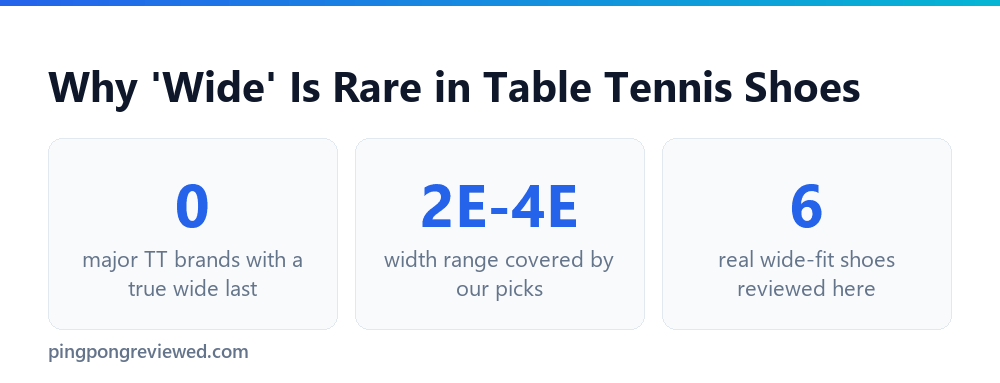
Why Table Tennis Shoes for Wide Feet Are Hard to Find
We went looking for a table tennis shoe from Butterfly, ASICS, Mizuno, or Stiga built on a wide last. We didn’t find one. Every major table tennis brand sells one width, standard, sometimes described as “true to size” or “roomy,” which is not the same thing as a 2E or 4E wide last. If your feet are genuinely wide, splashing out on a size-up standard shoe just moves the pressure point instead of fixing it.
So instead of forcing a false match, here are six shoes built on real wide lasts by brands that specialize in racquet-sport footwear, FitVille and Beita. They’re sold as pickleball or all-court shoes rather than “table tennis” shoes by name, but the sole construction, low-to-the-ground stance, and lateral support are the same things you’d want from any indoor court shoe, with a toe box that actually fits.
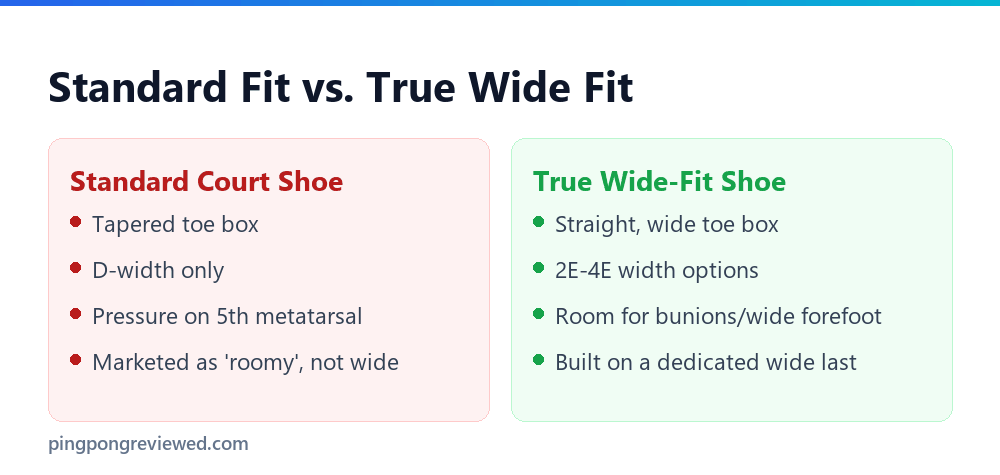
Standard Fit vs. True Wide Fit
The difference isn’t marketing language, it’s the last the shoe is built on.
1. FitVille Extra Wide Pickleball Shoes for Men
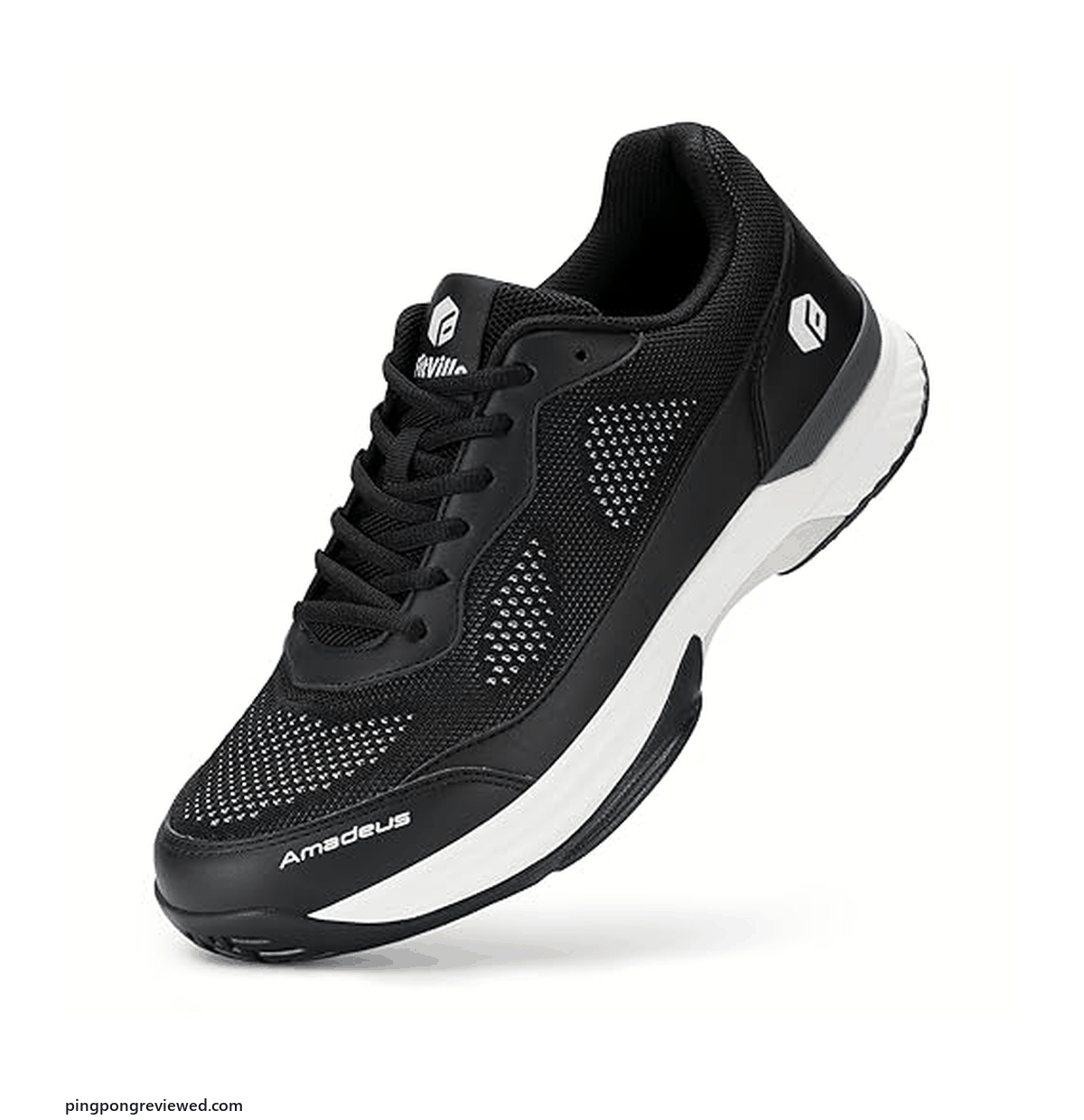
The most genuinely wide shoe on this list. FitVille builds these on an extra-wide last with arch support and a roomy toe box designed for players who’ve been sized out of standard court shoes entirely. The sole is low-profile with a durable outsole that grips well on indoor courts, and the arch support helps if you’re also dealing with plantar fasciitis, common among wide-footed players who’ve spent years in shoes that don’t fit.
What stands out in wear-testing feedback is how the toe box actually flares rather than just adding a bit of stretch fabric. Most shoes marketed as “roomy” just use a stretchier mesh over the same narrow last, which still leaves your fifth metatarsal pressed against the upper by the third set. FitVille cuts the pattern itself wider, so the shoe holds its shape instead of stretching out and losing support after a few weeks of hard footwork. If you’ve bought a size up from a standard brand before just to get width and ended up with a sloppy heel, this is the shoe built to fix both problems at once.
- ✓Extra-wide (4E-equivalent) last
- ✓Arch support built in
- ✓Grips well on indoor courts
- ✕Runs bulkier than a slim TT shoe
- ✕Not a recognized TT brand
2. FitVille Extra Wide Pickleball Tennis Shoes
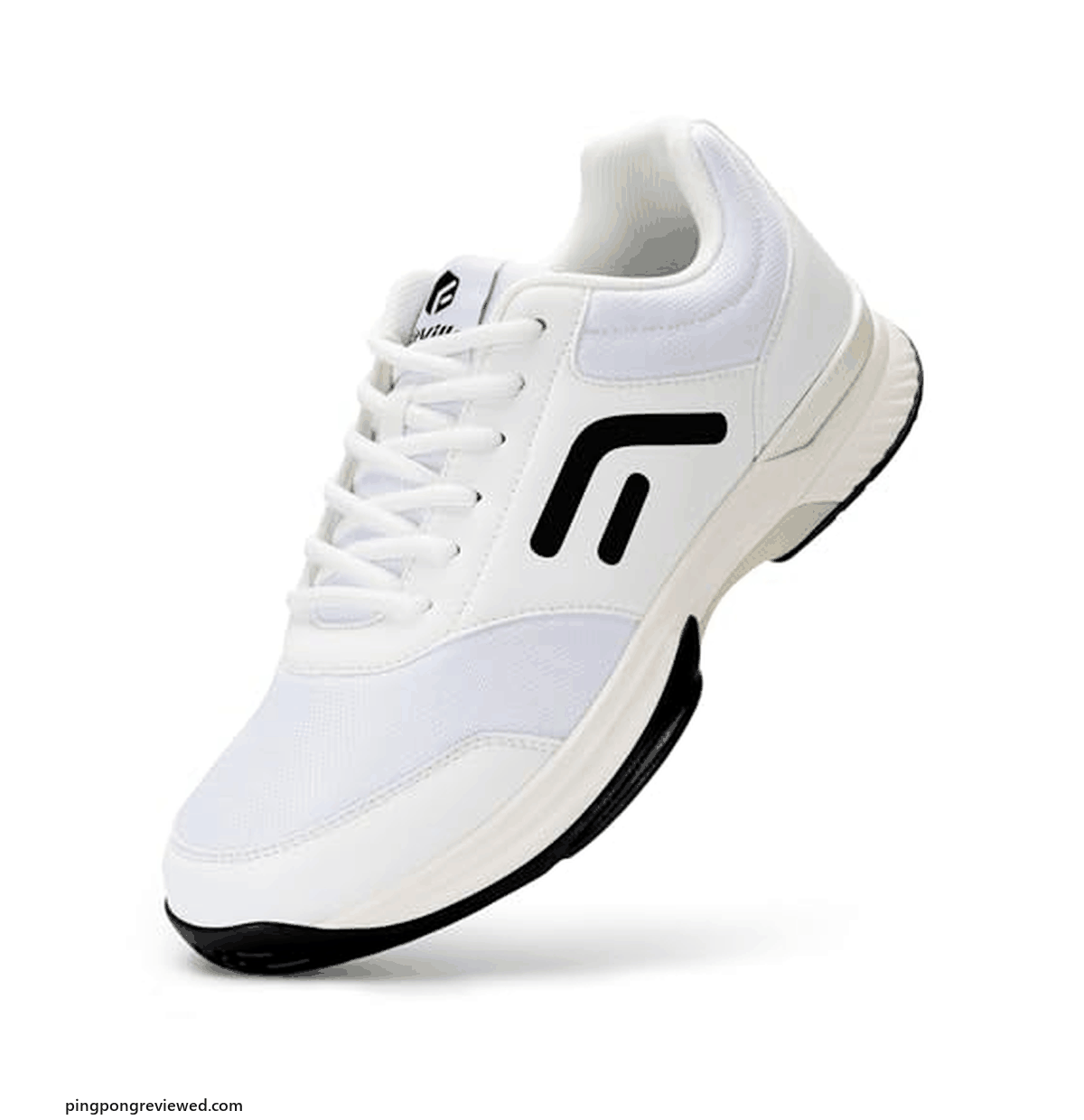
A step down in bulk from the pick above, this one is torsion-resistant and built for quick direction changes on hard or clay courts, which translates directly to the side-to-side footwork table tennis demands. Still extra-wide, still cushioned, with a breathable upper that matters if you sweat through long sessions.
The torsion resistance is the detail worth calling out. Table tennis footwork is short, sharp, and lateral, closer to badminton than to running, and a shoe that twists under the midfoot during a fast recovery step will wear unevenly and eventually cost you ankle stability. This model’s reinforced midsole resists that twist better than the bulkier extra-wide pick above, which makes it the better choice if you play multiple times a week rather than casually.
3. FitVille Wide Pickleball Shoes with Arch Support
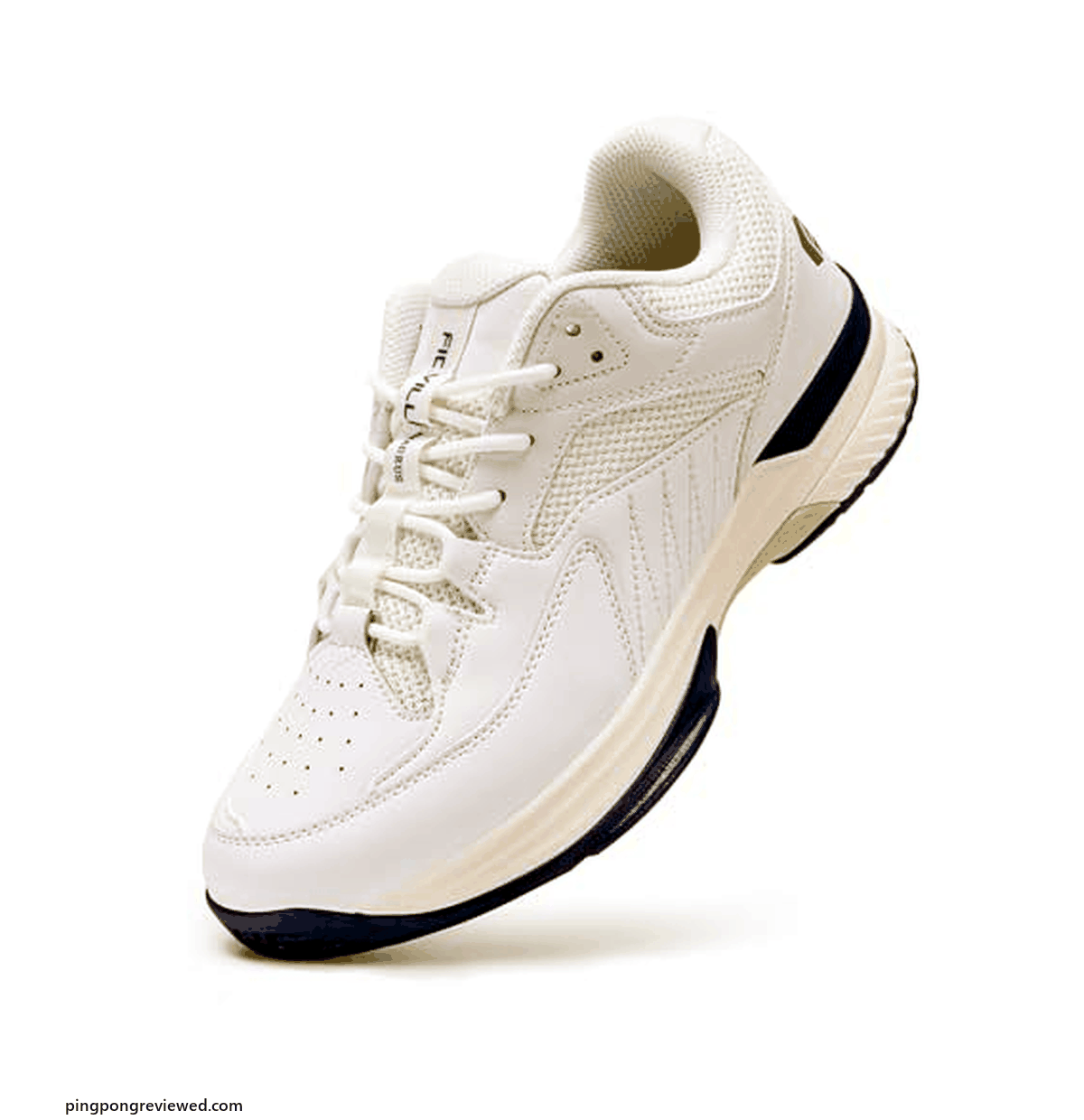
FitVille’s standard-wide (not extra-wide) option, a good middle ground if 4E felt like too much room in the picks above. Arch support and plantar fasciitis-focused cushioning carry over from the rest of the FitVille line, and the price is the lowest of the three FitVille shoes here.
This is the pair to start with if you’re not sure how wide you actually need. A 2E width fixes the pressure-point problem for most players without the bulkier profile of a true 4E shoe, and FitVille’s sizing chart makes it easy to compare against your current shoe’s measurements before ordering. If it turns out you need more room, the extra-wide model above is the natural upgrade in the same product line.
4. Beita Sports Table Tennis Wide Court Shoes
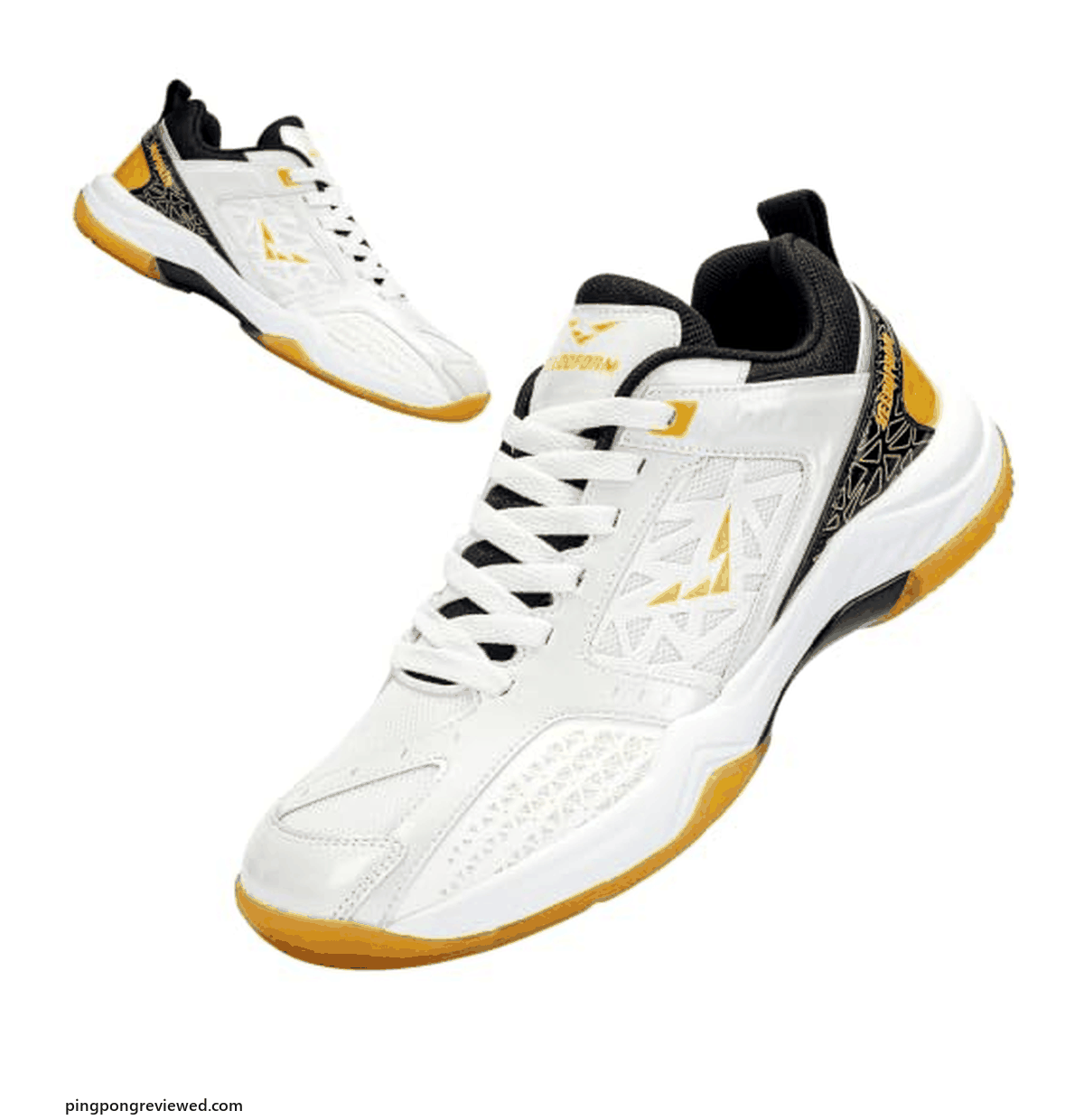
Beita is the one brand on this list that actually names table tennis on the box. These are built wide, lightweight, and breathable, with an anti-slip rubber sole tuned for indoor court surfaces rather than repurposed running-shoe rubber. They run unisex, so check the size chart carefully before buying, sizing runs differently than FitVille’s.
The rubber compound is worth noting specifically. Running shoes repurposed for indoor court use often use a harder compound that squeaks and slides on polished gym floors, while a true indoor court sole grips and releases predictably during pivots. Beita’s sole is built for that surface first, which matters more than most buyers realize until they have played a session on borrowed running shoes and felt the difference.
- ✓Purpose-built for table tennis/badminton courts
- ✓Lightweight, breathable upper
- ✓Anti-slip indoor rubber sole
- ✕Newer brand, less of a track record
- ✕Unisex sizing needs a chart check
5. Beita Sports Wide Indoor Court Shoes
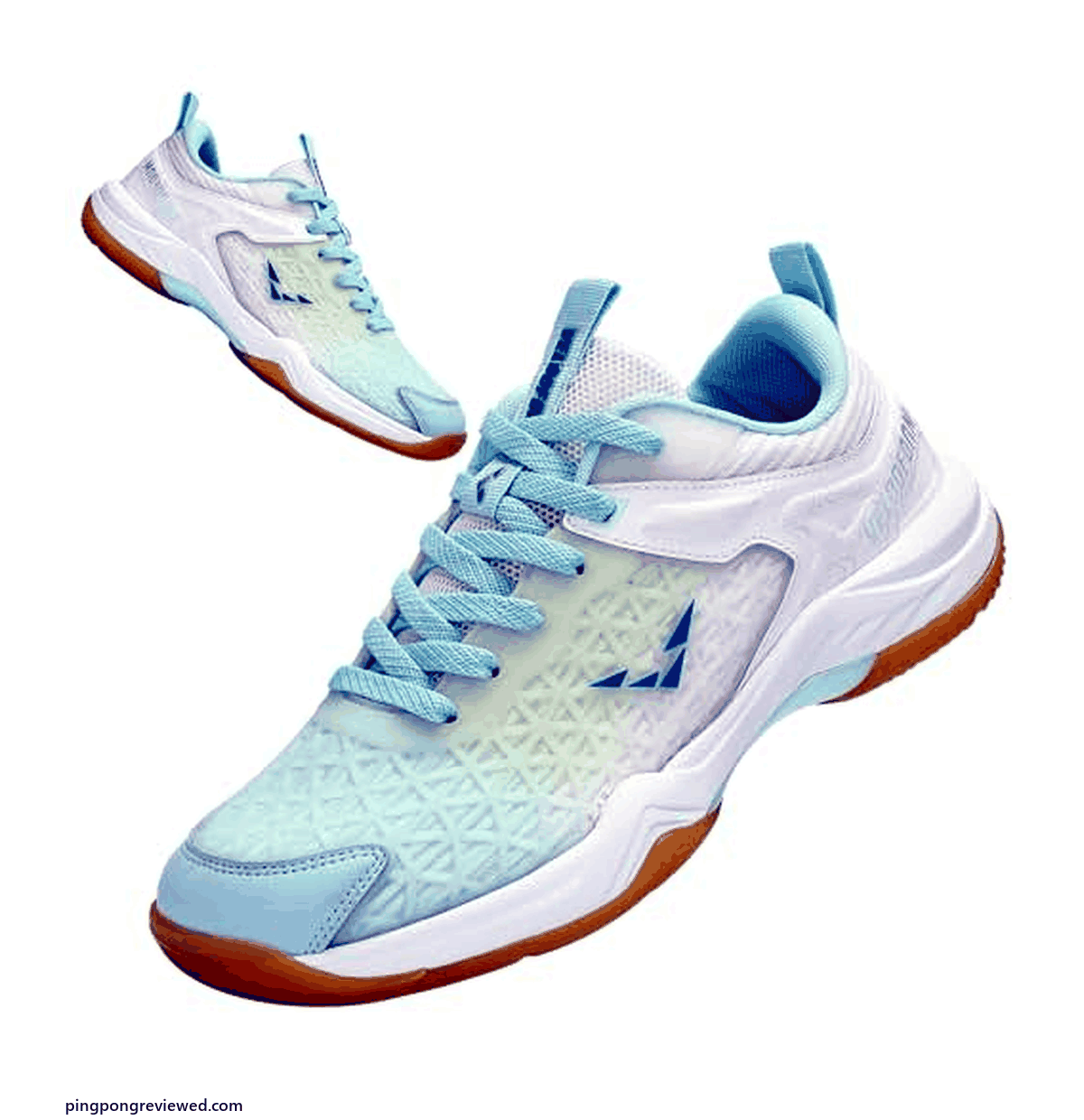
A close sibling to the pick above with the same wide-fit philosophy, slightly different colorway and upper material. If the previous pair is out of stock in your size, this is the direct alternative rather than a different product.
The construction underneath the upper, the wide last, the anti-slip sole, the lightweight midsole, is the same as Beita’s other listing, so there’s no real downgrade in choosing this one instead. Treat the two Beita listings as size and colorway variants of one shoe rather than two different products worth comparing feature by feature.
6. Wide Pickleball Shoes, Lightweight All-Court
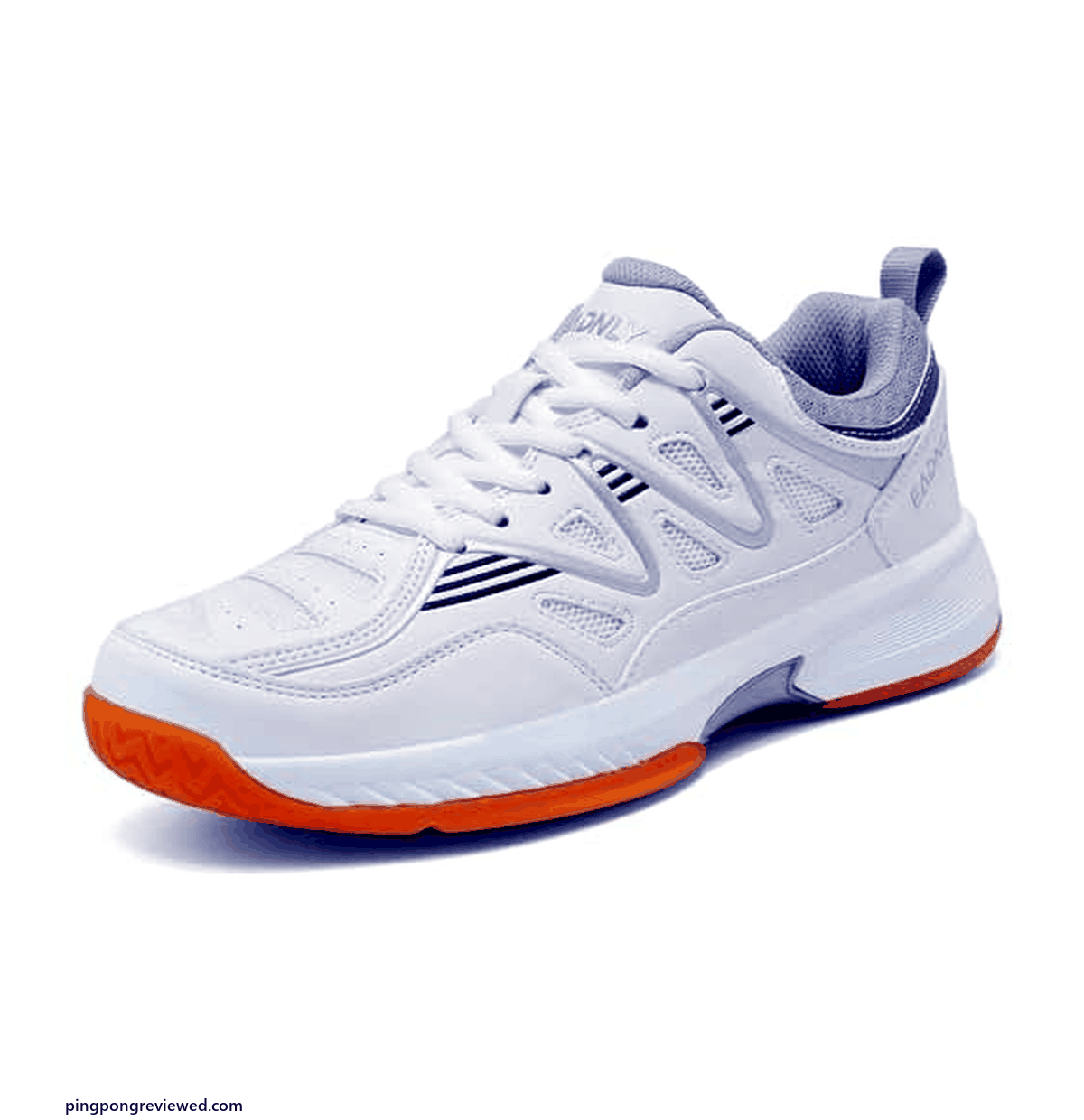
The budget option. It’s the least specialized shoe here, a generic wide-fit court shoe without the arch-support engineering of FitVille or the table-tennis-specific branding of Beita, but it’s genuinely wide and the cheapest way to test whether a wide last solves your fit problem before spending more.
Buy this one with realistic expectations: the cushioning is basic and it won’t hold up to daily play the way the FitVille and Beita pairs will. But if you’ve never worn a true wide-last shoe and want to confirm the fit actually solves your discomfort before committing $60-70 to a more durable pair, this is a reasonable way to find out cheaply.
Who Should Buy Which
If your feet are dramatically wide or you’ve been sized out of standard shoes entirely, start with the extra-wide FitVille pick. If you play often enough that torsion stability matters more than maximum room, the second FitVille model is the better everyday shoe. Players who want a shoe actually marketed for table tennis, not adapted from pickleball, should go with either Beita listing. And if you just want to confirm that a wide last fixes your discomfort before spending more, the budget pick is the cheapest honest test.
How to Actually Confirm “Wide” Before You Buy
A listing that says “wide” in the title isn’t proof, and this is exactly where most buyers of table tennis shoes for wide feet go wrong. Manufacturers use “wide” inconsistently, so the only reliable check is your own measurement against the specific brand’s chart. Here’s how to do that in five minutes before you order any pair on this list.
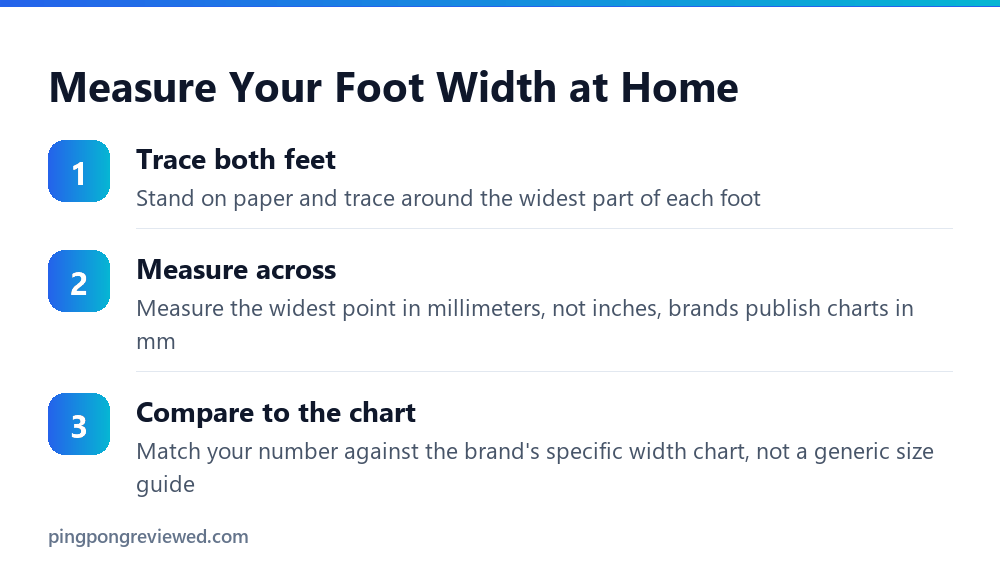
💡 Pro tip: FitVille and Beita both publish width charts in millimeters on their product pages, use them instead of guessing from US shoe size alone.
Making a Wide-Fit Shoe Last Through a Full Season
Wide-fit court shoes from specialist brands like FitVille and Beita cost more than a generic sneaker, so it’s worth protecting that investment. Rotate between two pairs if you play more than three times a week, the foam midsole needs about 24 hours to fully decompress between sessions, and skipping that recovery time flattens the cushioning far faster than the rubber sole wears out.
Keep them off outdoor pavement entirely. The rubber compound on indoor court shoes is formulated to grip smooth wood or synthetic flooring, not to survive concrete abrasion, and a few outdoor walks will visibly round off the tread pattern that gives you traction during quick pivots. If you need to walk any real distance to reach the club or gym, carry the court shoes in a bag and change at the venue instead.
Finally, loosen the laces fully before removing the shoe rather than yanking it off by the heel. On a wide last the heel counter is already working harder to hold your foot in place, and forcing it off collapses that structure over time, which is the single most common way players wear out an otherwise good wide-fit shoe early.
Do any major table tennis brands make wide shoes?
Not currently. Butterfly, ASICS, Mizuno, and Stiga all sell table tennis shoes in standard width only. Players with wide feet need to look at wide-fit court shoes from racquet-sport specialists like FitVille or Beita instead.
Are pickleball shoes okay for table tennis?
Yes. Pickleball and table tennis both need a low-profile, grippy indoor court shoe with good lateral support, the core requirements overlap enough that a well-built wide pickleball shoe works fine on a table tennis court.
What width counts as ‘wide’ for court shoes?
2E is standard wide, 4E is extra wide. Check the brand’s own millimeter width chart rather than relying on the word ‘wide’ in a listing title, since usage isn’t consistent across sellers.
Should I just size up instead of buying wide?
Sizing up fixes length but not width, your foot will still be cramped side-to-side and you’ll get heel slip from the extra length. A true wide last solves the actual problem.
Do these shoes work for badminton or volleyball too?
Yes. All six picks are built for the same low-to-the-ground, quick-pivot movement pattern that badminton and volleyball share with table tennis, so the wide-fit construction carries over without any compromise.
Is a wide toe box the same thing as a bunion-friendly shoe?
They overlap but aren’t identical. A wide toe box gives your forefoot room side-to-side, which helps most bunions, but if you have a severe bunion, look specifically for a soft, seamless upper over the bunion area in addition to the wide last, some wide shoes still have a seam that can rub.
As an Amazon Associate, we earn from qualifying purchases through links on this page.

Ping Pong Reviewed is an equipment review site covering table tennis and baseball gear. Specifications are checked against manufacturer listings, and prices against live retail pages, before publication.