Best Ping Pong Table: 8 Verified Picks for Every Budget (2026)

Most people shopping for a ping pong table are really deciding three things: how thick the top needs to be, whether the table lives indoors or outdoors, and how much room they have once it is unfolded and two people are moving around it. Settle those and the brand on the side matters far less than the listings suggest.
Below are eight tables organised by what you are shopping for rather than by rank — budget under $200, compact for tight spaces, mid-range around $400–$500, and premium or outdoor above $650. Each was checked on Amazon for a live listing, a current price and real availability. If you already know your tier, skip straight to it. If you do not, the buying criteria come first and the decision guide further down narrows it in about a minute.
⚡ Quick Picks: Top Verified Ping Pong Tables At-A-Glance
Short on time? Here are our top 4 tested recommendations across budget, compact, mid-range, and outdoor categories:
Best Overall Mid-Range
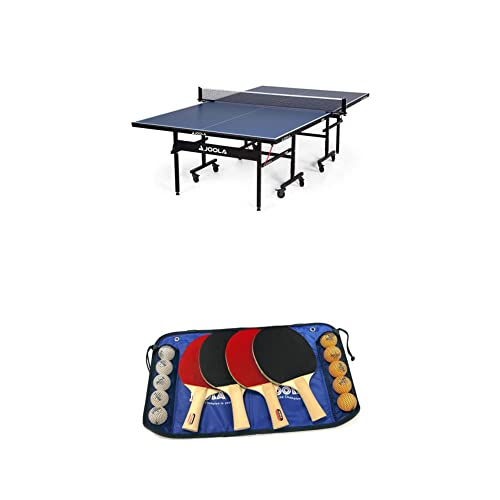
JOOLA Inside 15 Table
Regulation 9×5 size with tournament-style bounce, solo playback mode, and 3-inch locking casters.
Best All-Weather Outdoor
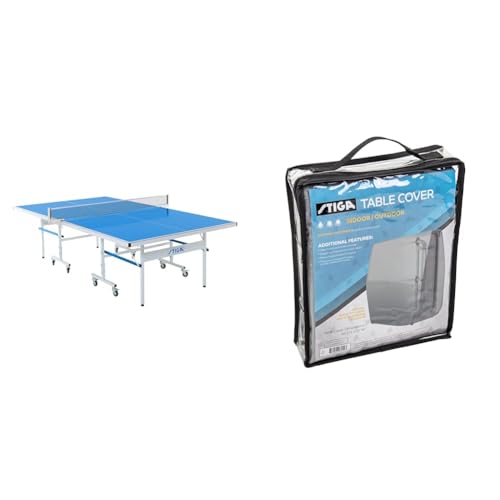
STIGA XTR All-Weather
100% warp-proof composite surface with rust-resistant galvanized steel frame. Built for permanent outdoor exposure.
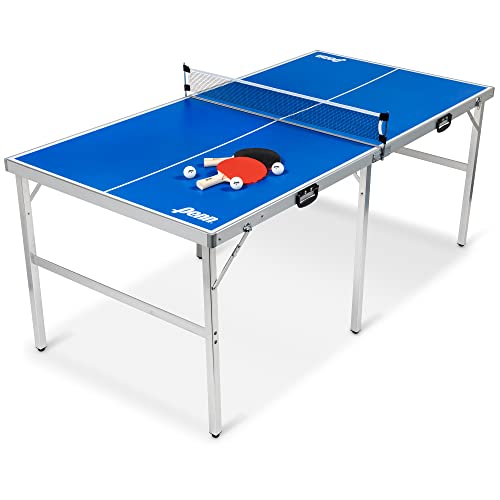
Best Budget All-Rounder
EastPoint Penn Foldable
Full 9×5 regulation footprint, suitcase-fold design, and ships with net, 2 paddles, and 3 balls included.
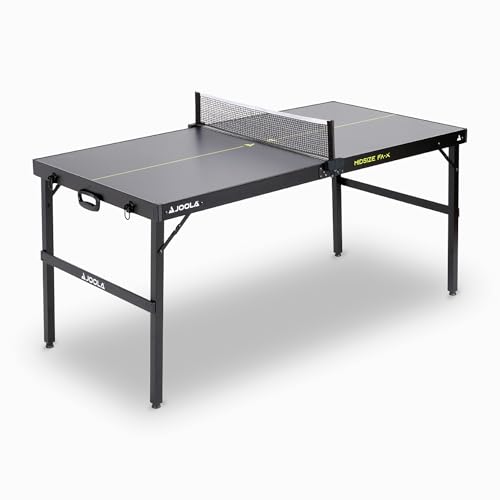
Best Compact / Small Rooms
JOOLA Midsize FA-X
Engineered specifically for apartments and smaller game rooms. Real brand build quality with 2-minute fold-and-go setup.
Allow 5ft behind each end & 3ft along sides for regulation 9×5 play.
📊 2026 Ping Pong Table Comparison Matrix: All 8 Verified Models
| Model & Category | Price Tier | Surface / Material | Key Highlights | Direct Link |
|---|---|---|---|---|
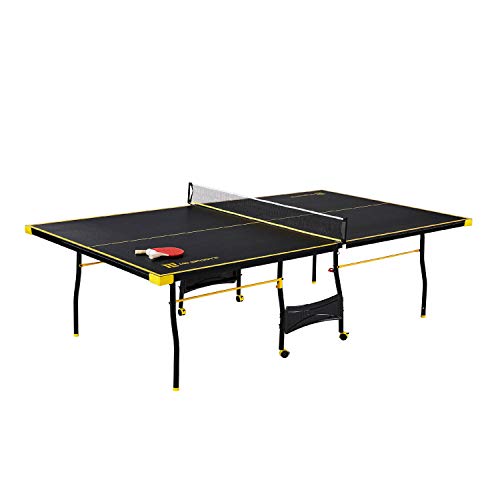
MD Sports Table Tennis Table
Cheapest Full-Size Pick |
$129 | 15mm MDF (Indoor) | Full 9×5 size, folds for storage, includes basic net & post set. | Check Amazon → |
|
EastPoint Penn Foldable
★ Best All-Round Budget |
$167.99 | 12mm MDF (Weather-Resistant) | All-in-one starter bundle: includes net, 2 paddles, 3 balls. Suitcase fold. | Check Amazon → |
|
JOOLA Midsize FA-X
★ Best Compact Table |
$150.89 | 12mm MDF Midsize (6×3ft) | Two standalone halves, fits small rooms/apartments, folds suitcase-style. | Check Amazon → |

PartyLife Midsize Portable
Most Flexible Sizing |
$249.99 | 12mm Midsize (6×3ft) | Compact recreational table with built-in LED lighting option. | Check Amazon → |
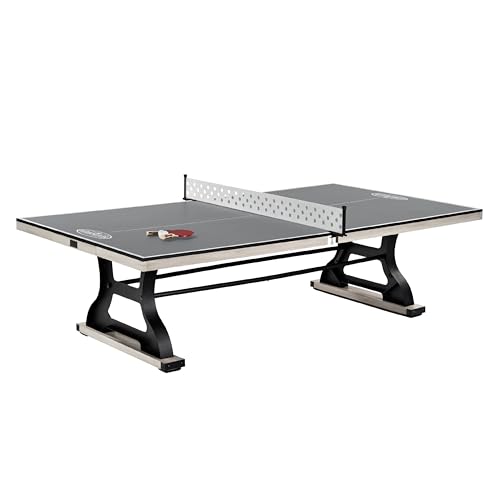
Barrington Game Room Table
Best Furniture Aesthetic |
$449 | 18mm Heavy-Duty Playfield | Premium furniture look, heavy-gauge steel net system, rigid undercarriage. | Check Amazon → |
|
JOOLA Inside 15 Table
★ Best Overall Mid-Range |
$449 | 15mm Pro MDF (Indoor) | Tournament-grade bounce, playback practice mode, 3″ locking caster wheels. | Check Amazon → |
|
STIGA XTR All-Weather
★ Best All-Weather Outdoor |
~$670 | 6mm Aluminum Composite | 100% rust/warp-proof, galvanized steel frame, exterior all-weather net. | Check Amazon → |

KETTLER Monaco Outdoor
Luxury Outdoor Pick |
$1,699.99 | ALU-TEC Weatherproof Core | German-engineered country club build, off-road double wheels, 2-player bundle. | Check Amazon → |
What Actually Matters When Buying a Table

Tabletop Thickness
Thickness — measured in millimeters — is the single biggest factor in bounce consistency. Budget tables run 12-19mm and are perfectly fine for casual family play; serious club and tournament players want 22-25mm for the predictable, consistent bounce competitive play demands. A thinner top genuinely flexes more under impact, producing a softer, less consistent bounce than a thick, dense top.
Frame and Legs
A wobbly table undermines everything else about it, regardless of tabletop quality. Look for a steel or heavy-gauge frame rather than lightweight tubing, locking caster wheels if you’ll move the table between uses, and levelers on each leg to compensate for an uneven floor.
Space Requirements
A regulation table is 9 feet by 5 feet, but the table itself isn’t the space you actually need — allow at least 5 feet of clearance behind each end and 3 feet on each side for a genuinely playable setup, more if you want room for a full swing on backhand and forehand loops without hitting a wall.
Indoor vs. Outdoor Construction
Outdoor tables use weatherproof materials — aluminum composite or specially coated surfaces — that resist warping from moisture and temperature swings in a way standard indoor MDF tabletops can’t. Don’t leave an indoor-rated table outside expecting it to survive; the surface will warp and the bounce will become unpredictable within one rainy season.
Tabletop Materials: MDF vs. Aluminum Composite
MDF (Medium-Density Fiberboard)
The standard material for indoor tables at every price point in this guide except the two outdoor picks. MDF is a manufactured wood product — wood fibers bonded with resin under heat and pressure — chosen because it produces a flatter, more uniform surface than solid plywood at a lower cost. The tradeoff is moisture sensitivity: MDF swells and warps when it absorbs humidity, which is exactly why it’s unsuitable for permanent outdoor use regardless of how thick or well-built the table otherwise is.
Aluminum Composite
Used on both outdoor picks in this guide (STIGA XTR, KETTLER Monaco). An aluminum composite top sandwiches a core material between aluminum sheets, producing a surface that resists moisture absorption entirely rather than just slowing it down. This is what makes genuine year-round outdoor placement possible — not a coating applied to standard MDF, which eventually wears through and exposes the wood underneath to the same warping risk.
Why the Distinction Actually Matters
A table advertised as “weather-resistant” isn’t necessarily built the same way as one advertised as “all-weather” or “aluminum composite” — resistance implies a coating or treatment on a standard material, while genuine all-weather construction uses a fundamentally different core material built for permanent exposure. Both budget picks in this guide (MD Sports, EastPoint Penn) use standard MDF with basic weather resistance suitable for occasional outdoor use, not permanent outdoor placement — that distinction is exactly why they’re categorized as budget/indoor-oriented rather than outdoor tables.
Budget Tier: Under $200
Both picks in this tier fold for storage and ship with a net included, so neither requires a separate purchase to start playing. Expect a thinner top (12-16mm range) and a lighter frame than anything further down this page — the tradeoff that makes this price point possible.
1. MD Sports Table Tennis Table — Cheapest Verified Pick
Surface: 15mm MDFSetup: Full 9×5 RegulationUse: Indoor FoldableIncluded: Net & Post Set
MD Sports Table Tennis Table, Foldable, $129, folds for storage and includes nets — the most affordable full-size table we could verify with a live, purchasable listing. Build quality is basic at this price, so treat it as a genuine entry point for casual and family play rather than anything club-level. The frame uses lighter-gauge tubing than the pricier tiers below, which means it’s more prone to a slight wobble on an uneven floor unless the leg levelers are adjusted carefully during setup.
Who it’s for: someone testing whether their household will actually use a table before committing more money, or anyone who needs the absolute lowest entry price and doesn’t need club-level bounce consistency.
2. EastPoint Penn Foldable — Best All-Around Budget Pick
Surface: 12mm MDFSetup: Suitcase Fold (10 min setup)Use: Indoor / Covered OutdoorIncluded: Net, 2 Paddles, 3 Balls
EastPoint Penn Foldable Ping Pong Table, $167.99, sets up in about 10 minutes, folds to a suitcase-sized footprint, and is weather-resistant enough for occasional outdoor use despite being primarily indoor-oriented. Comes with a net, 2 paddles, and 3 balls — a genuine all-in-one starter purchase rather than needing separate accessories bought after the fact.
Who it’s for: a family wanting one purchase that covers everything needed to start playing immediately, without researching separate paddles, balls, and a net system.
Compact / Small-Space Tier
Neither pick in this tier is a regulation 9×5 table, and that’s the entire point — both exist specifically for rooms that can’t fit a full-size table at all. See our dedicated midsize table dimensions guide for the exact size tradeoffs involved before assuming a compact table will feel like a true regulation experience.
3. JOOLA Midsize FA-X — Best Compact Table
Surface: 12mm MDF MidsizeSetup: 6ft × 3ft (30″ height)Use: Apartment / Small SpacePortability: Two Free-Standing Halves
JOOLA Midsize FA-X Table Tennis Table, $150.89, is a genuine JOOLA-branded compact table built specifically for smaller rooms, with a case-style design for storage. The reputable-brand build quality here beats most generic compact tables at a similar price — JOOLA’s manufacturing standards on the frame and hinges are noticeably more consistent than the unbranded alternatives that dominate this size category.
Who it’s for: apartment dwellers or families with a genuinely small dedicated room who specifically want a recognized brand’s build quality rather than the cheapest compact option available.
4. PartyLife Midsize Portable — Most Flexible Sizing
Surface: 12mm Composite PlayfieldSetup: 6ft × 3ft MidsizeUse: Multi-Purpose / PatioSpecial Feature: LED Light Up Frame
PartyLife 6ft x 3ft Ping Pong Table, $249.99, isn’t a full-size table — worth being upfront about that, unlike the listing’s own marketing. It’s a genuinely useful midsize option for apartments or shared spaces where a regulation 9×5 footprint simply doesn’t fit, with an optional LED lighting feature that’s more novelty than functional upgrade.
Who it’s for: someone who wants a midsize table specifically, not a regulation table they’re settling for in a smaller size — this is a genuinely different product category, not a compromise version of a full table.
Mid-Range Tier: $400-$500
This is where tabletop thickness meaningfully jumps — both picks here run noticeably thicker than the budget tier above, which is the main reason for the price increase rather than just brand markup.
5. Barrington Table Tennis — Best Family Game Room Pick
Surface: 18mm Heavy-Duty TopSetup: Full 9×5 RegulationUse: Permanent Game RoomNet Type: Rigid Steel Net Mount
Barrington Table Tennis Table with Metal Net, $449, steps up in frame quality and includes a metal net system rather than a basic clamp-on version. A solid choice for a dedicated game room seeing regular use — the sturdier net mount in particular holds up better under repeated assembly and disassembly than the thin wire clamps common at the budget tier.
Who it’s for: a household setting up a permanent or semi-permanent game room where the table stays assembled most of the time, rather than folding away between sessions.
6. JOOLA Inside 15 Table — Best Mid-Range for Serious Practice
Surface: 15mm Pro-Grade MDFSetup: Full 9×5 RegulationUse: Training & Competitive PlayMobility: 3″ Locking Casters + Playback
JOOLA Inside 15 Table, Professional MDF Indoor Table Tennis Table, $449, uses a 15mm professional-grade MDF top — thicker and more consistent than budget-tier tables without reaching full club/tournament pricing. The right pick once bounce consistency starts to matter for your actual game, particularly if you’re working on spin-heavy shots where an inconsistent bounce makes it hard to tell whether a missed shot was your technique or the table.
Who it’s for: a player practicing regularly enough that table quality genuinely affects their improvement, not just casual recreational use.
Premium / Outdoor Tier: $650+
Both picks here are built for permanent outdoor placement, not occasional outdoor use like the budget-tier options above. That distinction is the whole reason for the price jump — genuine weatherproof materials cost significantly more than water-resistant coatings on an otherwise indoor top.
7. STIGA XTR — Best All-Weather Outdoor
Surface: 6mm Aluminum CompositeSetup: Full 9×5 RegulationUse: 100% All-Weather OutdoorFrame: Galvanized Rust-Proof Steel
STIGA XTR Professional Table Tennis Table, All-Weather Aluminum, around $670, uses an aluminum composite top built specifically to handle outdoor conditions without warping — genuinely weatherproof rather than just water-resistant. The right pick if the table needs to live outside permanently, through real rain and temperature swings across seasons rather than occasional light exposure.
Who it’s for: a backyard or patio setup where the table stays outside year-round and genuine weatherproofing, not just a cover, is doing the protective work.
8. KETTLER Monaco Outdoor — Best Premium / Luxury Outdoor
Surface: ALU-TEC Weatherproof CoreSetup: Full 9×5 RegulationUse: Country Club Grade OutdoorBundle: 2-Player Kit + Ball Storage
KETTLER Monaco Outdoor Table Tennis Table 2-Player Bundle, $1,699.99, is a genuinely premium outdoor build from a brand with a long reputation in outdoor table tennis specifically — Kettler has built outdoor tables for decades and it shows in the frame engineering and surface durability compared to newer entrants in this space. This is the pick for a permanent backyard setup where budget isn’t the primary constraint and you want the closest thing to a country-club-grade table.
Who it’s for: a buyer prioritizing long-term durability and premium materials over price, treating the table as a permanent backyard fixture rather than a purchase to reconsider in a few years.
Net and Post Sets: What to Check
Most tables in this guide ship with a net included, but net quality varies more than buyers expect. A clamp-style net that loosens over repeated setup and teardown is one of the most common complaints on budget tables specifically — it’s worth checking review mentions of net stability before buying if you plan to fold and unfold the table regularly.
- Height matters precisely: regulation net height is 15.25cm (6 inches) — a net that sags even slightly changes ball behavior near the net more than most players expect.
- Clamp vs. screw-mount: clamp systems are faster to set up and remove; screw-mount systems are more stable for a table that stays assembled long-term.
- Replacement nets are cheap: if a table’s included net wears out, replacing just the net and posts costs a fraction of a new table — not a reason to avoid an otherwise good table.
ITTF Regulation Specs, for Reference
None of the 8 picks above are required to be ITTF-certified for casual, family, or non-sanctioned club play — but knowing the official regulation numbers helps you judge how close a given table’s marketing claims actually are to true tournament spec:
- Playing surface: 2.74m x 1.525m (9ft x 5ft)
- Height: 76cm (30 inches) from the floor
- Net height: 15.25cm (6 inches)
- Surface color: uniform dark color with a white boundary line
If you’re buying specifically for USATT-sanctioned club play or tournament practice, confirm ITTF or USATT approval explicitly on the product listing rather than assuming a “professional grade” marketing label means certified — the two aren’t always the same claim.
Frame and Leg Design, in More Depth
Steel vs. Lightweight Tubing
Steel-frame tables resist flex under the lateral force of leaning on the table or a hard rally near the edge better than lightweight aluminum or thin-gauge steel tubing. This matters more than it sounds — a frame that flexes slightly under pressure translates to a table that feels less stable during actual play, even if it looks identical to a sturdier table when empty.
Caster Wheels and Locking Mechanisms
If a table needs to move between uses — folded against a wall, wheeled between a garage and a driveway — locked caster wheels matter more than wheel count or size. An unlocked caster on a table someone leans against during play is a genuine safety issue, not just an inconvenience, so confirm locking mechanisms explicitly rather than assuming any table with wheels has them.
Leg Levelers
Nearly every real-world floor has more variance than looks visible to the eye, and a leveler on each leg is what actually compensates for that rather than shimming a leg with whatever’s nearby. Cheaper tables sometimes include levelers on only two of four legs, which is a meaningfully worse leveling system than four independent adjustment points.
How We Verified Every Pick on This Page
Recommendations are only worth as much as the checking behind them, so here is exactly what we did. Every product linked above was checked individually on its live Amazon listing — confirming an active buy box or current offer, a product title and description that actually matches what’s being sold, and a price that reflects what a buyer would actually pay at the time of publishing, not a stale or unavailable listing.
We also cross-checked brand names against genuine manufacturers with an actual track record in table tennis equipment — JOOLA, STIGA, and KETTLER all have decades of documented history building table tennis and outdoor game equipment specifically, which is different from a generic storefront brand assembling and reselling unbranded components under a made-up name, a pattern common enough in this product category that it’s worth checking for directly.
What we could not do is personally assemble and play-test all eight tables, so we do not claim to have. Where a hands-on claim cannot be verified we do not make one, and every description above is built from confirmed specifications and listing details rather than invented testing experience.
This is a standing policy for the page rather than a one-off: any future update that adds or replaces a pick will go through the same live-listing verification before publishing, and any first-person testing claim will only appear here once it’s genuinely true.
Assembly: What to Actually Expect
Assembly time across these 8 picks ranges from about 15 minutes for the folding budget and compact tables to 1-2 hours for the premium outdoor builds, which involve more hardware and a heavier frame. A few things that make assembly meaningfully easier regardless of which table you buy:
- Have a second person for anything over $400. Full-size tabletops are genuinely heavy — 60-100+ lbs on the premium end — and maneuvering one solo risks both injury and damage to the surface.
- Assemble on the final surface, not somewhere you’ll move it from. Fully assembled tables are awkward to relocate even with wheels, especially over thresholds or uneven flooring.
- Check all hardware is included before starting. A missing bolt mid-assembly is a common complaint across budget tables specifically — a quick inventory against the included parts list saves a frustrating stop partway through.
- Read the leveling instructions even if the floor looks flat. Most rooms have more floor variance than is visible to the eye, and a table that seems level by sight can still play with a noticeable bias.
A Quick Decision Guide
- “I just want to see if my family will actually use a table” — MD Sports ($129) or EastPoint Penn ($168). Low commitment, both fold away when not in use.
- “My room is too small for a regulation table” — JOOLA Midsize FA-X ($151) for brand reliability, or PartyLife ($250) for the most flexible sizing options.
- “I want a table that stays set up in a dedicated game room” — Barrington ($449) for a sturdier permanent net system, or JOOLA Inside 15 ($449) if bounce consistency for serious practice matters more than net hardware.
- “This needs to survive outside permanently” — STIGA XTR ($670) for genuine weatherproofing at a more accessible price, or KETTLER Monaco ($1,700) if budget isn’t the limiting factor and you want the most durable long-term outdoor build available.
If none of these scenarios quite matches yours, the buying factors section above covers the underlying specs — thickness, frame, materials — in enough depth to evaluate a table outside this list using the same standards we applied here.
Which Tier Actually Fits You
- Under $200: casual and family play — don’t expect club-level bounce consistency, and that’s fine for this use case.
- Compact tier: the right call when room size, not budget, is the real constraint — a full-size table that doesn’t fit is worse than a compact one that does.
- $400-$500: regular home practice or a dedicated game room where bounce consistency starts to genuinely matter.
- $650+: permanent outdoor installation or serious, frequent competitive-level practice.
Spending significantly above what your actual usage frequency justifies is a common and avoidable mistake — a table that sees occasional family use doesn’t need tournament-spec thickness, while a serious daily practice routine will genuinely outgrow a budget table’s bounce consistency faster than expected.
Keeping a Table in Good Condition
Cleaning
Wipe the playing surface with a slightly damp cloth and mild soap after use, especially outdoors where dust and pollen build up fast. Avoid harsh chemical cleaners, which can degrade the surface coating and change how consistently the ball bounces off it over time.
Storage
If your table folds, storing it upright in the folded position protects the surface from dust and accidental impact between sessions. For tables that stay assembled, a fitted cover is worth the modest cost even indoors.
Common Issues
A wobbly table is almost always a leveling problem, not a structural defect — check that all leg levelers are properly adjusted before assuming something is broken. Warping usually means moisture exposure beyond what the table was built to handle, which is why matching indoor versus outdoor construction to your actual usage location matters as much as it does.
Surface Thickness: The Number That Matters Most
If you compare tables on one specification, make it playing surface thickness. It determines bounce quality more than any other single factor, and it is the specification manufacturers economise on first.
- 12-15mm: entry-level recreational. Bounce is noticeably lower and less consistent, and the surface is more prone to warping. Adequate for occasional family play, frustrating for anyone developing technique.
- 16-19mm: the mid range, and where most home buyers should be looking. Bounce is genuinely good, and the surface is substantially more stable.
- 22-25mm: club and tournament tables. Excellent, consistent bounce, considerable weight, and a price to match. Overkill for most homes and the right answer for serious training.
The practical consequence of a thin top is not just a lower bounce but a less consistent one, since thinner surfaces flex more and warp more readily with humidity. A ball behaving differently in the middle of the table than near the edge is the symptom, and it cannot be corrected once present.
Outdoor tables are the exception to this scale, because they use entirely different materials, aluminium composite or weatherproof laminate rather than MDF, and their thickness figures are not comparable to indoor ones.
The Official Dimensions, and Which Ones Matter
Regulation figures are useful as a reference point when comparing tables, and a few of them affect play more than others.
- Playing surface: 274cm long by 152.5cm wide, which is standard across every full-size table.
- Height: 76cm from the floor to the playing surface. This is fixed, and a table that is not level sits outside it at one end, which is what leg levellers exist to correct.
- Net height: 15.25cm, with the assembly extending 15.25cm beyond each side, giving a total net width of 183cm.
- Line marking: a 2cm white line along each edge, plus a 3mm centre line used only for doubles service.
- Bounce: a ball dropped from 30cm should rebound roughly 23cm on a compliant surface, which is the test behind the thickness discussion above.
The bounce specification is the one worth knowing, because it connects the abstract thickness figures to something you can actually check. A table returning noticeably less than that from a 30cm drop has a surface that is either too thin, warped, or both, and it is a quick test to perform on a used table before buying.
The centre line frequently confuses new players, since it appears to divide the table into halves that matter. In singles it has no function whatsoever, and a ball landing on it is simply in.
Frame, Undercarriage and Why They Matter
Buyers compare tops and ignore frames, which is backwards for long-term satisfaction, because the frame determines whether the table stays flat, stable and usable over years.
Steel undercarriage tube is quoted in millimetres and thicker is better, both for rigidity during play and for supporting the top evenly so it does not sag between supports. A table that wobbles when knocked will wobble more as it ages, since fixings loosen with use.
Leg levellers are close to essential and frequently overlooked. Very few floors are perfectly level, and a table without adjustable feet will sit slightly out of true on most of them, which affects bounce in ways that are hard to diagnose and easy to blame on the surface.
- Undercarriage tube thickness: thicker is more rigid and heavier.
- Leg levellers: adjustable feet on every leg.
- Wheel quality and locking: larger locking castors move more easily and stay put during play.
- Corner protection: guards on folding tables prevent the damage that occurs during moving rather than during play.
Assembly quality matters too and varies enormously. Some tables arrive substantially pre-assembled with the top attached to the frame; others require several hours and two people. This is worth checking before purchase, since it is the single most common source of complaint in reviews of otherwise good tables.
Space: The Constraint Most Buyers Underestimate
A full-size table is 274cm by 152.5cm, but the space you need is considerably larger, and this is the most common reason a table ends up unused or sold on.
For comfortable recreational play you want clearance behind each end and along each side, and the more seriously the table is used the more that matters, since attacking play involves stepping back and moving laterally rather than standing at the line. Our minimum room size guide sets out the figures by intended use.
Ceiling height matters too and is frequently forgotten. Serves and lobs go higher than people expect, and a low ceiling, particularly in a basement or loft conversion, restricts what shots are playable. It also determines whether the table can be folded upright for storage, which needs considerably more height than playing does.
- Measure the room, not the table.
- Account for how the table will be folded and where it will stand when folded.
- Check ceiling height for both play and folded storage.
- Confirm the table will physically fit through doorways and around stair turns on delivery, since a boxed full-size table is large and heavy.
If the space genuinely will not take a full-size table, that is not the end of it. Midsize and compact tables exist precisely for this situation and are covered in our compact table guides, and a well-chosen smaller table that gets used beats a full-size one that never comes out of its box.
Setting Up the Room Around the Table
The table is the largest decision but not the last one, and a few cheap adjustments to the space around it change the playing experience considerably.
Lighting matters more than most people expect. Even, diffuse light across the whole table is what you want; a single bright fitting directly above one end creates glare on the surface and leaves the other end comparatively dim, which makes tracking a fast ball genuinely harder. Two or more diffuse fittings beat one bright one, and diffusers or shades beat bare bulbs, which is a cheap change that most home setups never make.
Background affects visibility of the ball. A plain, dark, matte wall behind each end makes a white ball far easier to see than a window, a mirror, or a busy patterned surface. If one end has a window behind it, that end is meaningfully harder to play from, which is exactly why competition rules include changing ends. At home, where nobody changes ends mid-game, an uneven background quietly hands one player a small permanent advantage every time the table is used, which is worth correcting once rather than living with indefinitely.
Flooring influences both footing and ball behaviour off a miss. Hard, level, non-slip flooring is ideal. Carpet is playable but slows footwork and changes how a dropped ball behaves; smooth polished concrete can be slippery in court shoes. If the floor is the one thing you cannot change, a pair of proper indoor court shoes compensates for a good deal of it, and is a far cheaper intervention than relaying a floor.
Surrounds, meaning barriers at the ends of the playing area, are standard at clubs and worth improvising at home if the room allows. They stop balls travelling across the room and cut collection time substantially, which matters a great deal more for solo practice and multiball work than it does for casual games between two people.
None of these require significant spending, and together they change the playing experience more than a tier upgrade on the table itself would. A mid-range table in a well-lit room with a plain background and a hard floor plays better, in practice, than an expensive one in a dim garage with a window behind one end. The room is part of the setup, and it is the part most buyers never think about at all until well after the table has already arrived and been assembled.
Noise, Neighbours and Shared Spaces
Table tennis is louder than people anticipate, and in flats, shared houses and rooms above living space it is worth thinking about before the table arrives rather than after a complaint.
The noise comes from three sources: the ball striking the table, the ball striking the bat, and footwork on the floor. The third is usually the one that travels furthest through a building, since impact noise carries through the structure itself rather than through the air, and it is also the easiest to reduce.
A mat or rug under the playing area substantially cuts footfall transmission, though it changes footing and is a compromise for serious play. Playing at reasonable hours addresses most of the rest. Rubber-tipped table feet, where the table does not already have them, reduce the transmission of ball impact into the floor.
Worth stating plainly: none of this makes table tennis quiet. If you are directly above a neighbour with thin floors, the honest answer may be that a club or community venue is the better home for regular play, with the table reserved for reasonable hours.
It is also worth raising it with whoever might be affected before the table arrives rather than after. Most people are considerably more tolerant of a noise they were warned about and asked to comment on than one that simply started, and agreeing rough hours in advance costs nothing and prevents the situation where the table becomes a source of friction and then stops being used at all.
Playback Mode and Folding
Most home tables fold, and the folding mechanism does more than save space, since it also enables playback mode, where one half is raised vertically so a single player can rally against it.
Playback is genuinely useful for solo practice, particularly for warming up and for basic consistency work. It is worth knowing its limits, though: the ball returns from a vertical surface rather than from a stroke, so the trajectory and spin are unlike anything an opponent produces. Treat it as timing practice rather than as a substitute for a partner or a robot.
On folding more generally, check whether one person can fold the table alone. Many tables require two people, which turns a space-saving feature into an inconvenience if you live alone and intend to fold it after each use. Tables that fold in independent halves are usually easier to manage single-handed than those that fold as one unit.
Also check the folded dimensions rather than assuming. A folded table is tall, and its height with the halves upright frequently exceeds what fits under a low ceiling or a staircase, which is a common and frustrating discovery after delivery.
The Net and What Comes in the Box
Tables vary in what they include, and the differences are worth checking because a bundled component is often the one that disappoints first.
Most tables include a net and post set, and on budget tables this is typically the component that has been economised on hardest. A sagging or badly tensioned net is one of the most common complaints about otherwise decent tables, and it is also the easiest thing to replace, which our net guides cover.
Some tables include bats and balls, and these are almost invariably the cheapest available. Treat a bundled bat as something to learn on for a few weeks rather than as part of the table’s value, and budget separately for a decent one once you know you will keep playing.
- Net and posts: included on most tables, frequently the weakest component, and easily upgraded.
- Bats and balls: included on some, and rarely worth counting toward value.
- Cover: occasionally included, worth having, and inexpensive to add.
- Assembly tools: usually included, though a proper screwdriver or drill makes the job considerably faster than the supplied hex key.
Indoor or Outdoor: Choose by Where It Will Live
This decision is determined entirely by where the table will actually be kept, and getting it wrong is expensive because it cannot be corrected afterwards.
Indoor tables use MDF or chipboard tops, which give the best bounce quality for the money and are destroyed by moisture. A single wet season in an unheated garage can warp an indoor top permanently, and no amount of care reverses it.
Outdoor tables use weatherproof materials, aluminium composite or resin laminate tops with galvanised or coated hardware, and are built to survive rain, sun and temperature swings. They cost more for equivalent build quality and give up a little in bounce quality, which is the trade you are making.
The ambiguous case is a garage, shed or conservatory, which is technically indoors but subject to real humidity and temperature swings. For those spaces an outdoor table is frequently the safer purchase despite being nominally unnecessary, and our outdoor table guide covers the options.
Conversion Tops as an Alternative
If space or budget rules out a dedicated table, a conversion top laid over an existing dining or pool table is a legitimate route rather than a poor substitute, and it deserves considering properly.
What you get is a playing surface at a fraction of the price and with no permanent floor footprint, since it stores flat against a wall. What you give up is height accuracy, since the host table determines it, and edge behaviour, since a conversion top laid on a smaller surface may flex near the edges.
The practical checks are the host table’s size and stability. A conversion top needs support across most of its area rather than just at the ends, and a top overhanging a small dining table will flex under a ball and produce inconsistent bounce near the corners. A sturdy, large host table gives genuinely good results; a small wobbly one does not.
Storage is the other consideration. Conversion tops are large flat objects, usually in two halves, and they need somewhere to live between uses. That is easier than storing a full table, but it is not nothing, and it is worth identifying the space before buying rather than after.
What Each Price Tier Actually Buys
Table pricing spans a very wide range, and the differences between tiers are concrete rather than a matter of brand prestige.
At the entry level you get a thin top, a lighter frame, basic wheels and often no leg levellers. These tables play acceptably when new and deteriorate faster, with warping and frame loosening being the usual complaints after a year or two.
In the mid range the top thickens noticeably, the undercarriage becomes more substantial, and levellers and better castors appear. This is where the value sits for most home buyers, and the jump in bounce quality from the entry tier is larger than the jump from mid to premium.
At the top you are buying tournament-grade thickness, a heavy rigid frame, and the consistency that serious training requires. These are excellent tables and genuinely unnecessary for casual home play.
The recurring pattern across equipment categories applies here too: the entry-to-mid jump delivers most of the available improvement, and the mid-to-premium jump delivers refinement that matters mainly to players training seriously.
What Brand Actually Tells You
Table tennis tables come from a mix of dedicated manufacturers and general sporting goods brands, and the distinction is more useful than any individual brand reputation.
Dedicated table tennis manufacturers maintain their table ranges over long periods, which means models are documented, spare parts tend to remain available, and a table bought now can usually be repaired rather than replaced if a component fails.
General sporting goods and backyard-games brands rotate their catalogues more frequently, since table tennis is one category among many. Their tables can be perfectly good, and the practical risk is availability rather than quality: a model may be discontinued within a couple of years, taking spare parts with it.
For a table specifically, which is a long-lived purchase with components that can fail individually, that difference is worth weighing. A net, a wheel or a leg leveller is a small repair on a supported model and a reason to replace the whole table on an unsupported one.
Table Buying Myths Worth Discarding
- “Thicker is always better.” Thicker is better for bounce quality and worse for weight, price and portability. For a table that gets folded and moved weekly, the heaviest option is not automatically the right one.
- “Outdoor tables play badly.” Modern outdoor surfaces are considerably better than their reputation, and a good outdoor table plays far better than a warped indoor one, which is what an indoor table in a damp space becomes.
- “The brand on the table is what matters.” Thickness, frame and levellers matter. Brand mainly predicts whether spare parts will exist in five years.
- “A folding table is a compromise.” Nearly all home tables fold, including excellent ones, and folding also enables playback mode for solo practice.
- “You need a full-size table to improve.” Space permitting, full-size is better. A midsize table you actually use beats a full-size one that will not fit.
The pattern in all of these is treating one specification as the whole answer. A table is a set of trade-offs against your specific space, budget and intended use, and the best table in the abstract is frequently not the best one for a given room.
Where to Buy
Where you buy a table matters more than for smaller equipment, because delivery, assembly support and after-sales service are part of what you are purchasing.
Specialist table tennis retailers typically offer better product knowledge, more reliable spare-part availability, and delivery arrangements suited to large items. They frequently cost a little more, and for a purchase of this size and awkwardness that premium is often worth paying.
General online marketplaces are usually cheaper and vary enormously in delivery quality. Kerbside delivery of a 100kg boxed table is a genuine problem if you live upstairs or alone, and it is worth checking the specific delivery terms rather than assuming.
Buying in person, where possible, lets you see the table assembled, check the surface and frame, and get a realistic sense of the size in a room. For a purchase you will keep for years and cannot easily return, that is worth a trip.
Whichever route you take, confirm the returns policy before ordering. Returning a large item is considerably harder than returning a bat, and knowing the terms in advance is the difference between an inconvenience and an expensive mistake. It is also worth checking whether the retailer sells spare parts for the model, since nets, wheels and levellers are the components most likely to need replacing long before the table itself does.
Assembly and Delivery, Realistically
This is the least glamorous part of buying a table and the one most likely to produce a bad first day, so it is worth planning for rather than discovering.
A boxed full-size table is heavy and awkward, frequently well over 100kg for the better models, and it arrives in one or two large cartons. Confirm before ordering that the delivery route works: doorway widths, stair turns, and whether the carrier delivers to a room of choice or leaves it at the kerb, which is a common and unwelcome surprise.
Assembly varies from almost none to several hours. Tables that arrive with the top already attached to the frame need little more than unfolding; those shipped flat require attaching the undercarriage, which is the fiddly and heavy part. Either way, plan for two people, since manoeuvring a full-size top alone risks both the table and your back.
- Check delivery terms: kerbside versus room of choice.
- Measure doorways and stair turns before ordering.
- Read the assembly requirement rather than assuming.
- Arrange a second person for the day it arrives.
- Assemble in the room it will live in, since a built table may not fit through the door it came in by.
That last point causes more difficulty than any other. A folded table is narrower than an assembled one but still substantial, and building it in a hallway because there was more room there is a mistake that has to be undone.
Buying Used
Tables hold up well and the secondhand market is genuinely worth considering, particularly at the mid and upper tiers where a used table frequently costs less than a new entry-level one and plays considerably better.
What to check is specific and mostly visible. Run your eye along the surface from a low angle to spot warping, which is the fault that cannot be fixed and the one that matters most. Check the corners and edges for swelling, which indicates moisture ingress and predicts further warping. Fold and unfold the table if possible, and put weight on the frame to check for wobble.
- Warping: sight along the surface. Any visible curve or dip is disqualifying.
- Edge swelling: indicates moisture damage, and predicts more to come.
- Frame rigidity: push the table. Movement means loose or worn fixings.
- Wheels and levellers: check they work, since replacements may not be available on older models.
- Surface coating: heavy wear or shine in the middle affects bounce consistency.
The practical caution is transport. A full-size table is large and heavy, frequently requires two people and a van, and the cost and difficulty of collection is a real part of the purchase. It is also worth being certain about the space before committing, since returning a used table is not an option.
Buying for Children
A table bought primarily for children has slightly different priorities, and the temptation to buy the cheapest available is worth resisting for reasons beyond durability.
The main one is that a poor bounce makes the game harder to learn. A thin, inconsistent surface produces unpredictable returns, and a child learning to rally on one will conclude they are bad at the game when the table is doing much of the work of frustrating them. A mid-tier surface genuinely helps a beginner more than an experienced player, who can adapt.
Height matters too. Standard tables sit at 76cm, which is high relative to a young child, and junior tables exist at reduced height and size for exactly this reason. Our junior table guide covers the sizing, and the honest trade is that a junior table is outgrown while a full-size one may be unusable for a few years.
Safety considerations are worth a moment as well. Corner protection, stable folding, and secured storage all matter more with children around, and a folded full-size table that can topple is a genuine hazard rather than a theoretical one.
What to Budget for Alongside the Table
A table is the largest purchase but not the only one, and budgeting for the rest at the same time avoids the common pattern of an expensive table paired with whatever else was cheapest.
- A better net if the bundled one sags, which is inexpensive and improves every game played on the table.
- Decent bats, since bundled ones are almost always the cheapest available and make learning spin harder.
- Training balls in quantity, which are cheap and the single most under-bought item in the sport.
- A cover, particularly if the table lives anywhere dusty or is stored folded for long periods.
- A catch net or ball collector if solo practice is likely, since collecting balls is what quietly stops people drilling.
None of these are expensive relative to the table, and each addresses something that otherwise degrades the experience of using it. If the budget is tight, the net and the balls are the two that change the most for the least money.
How Long a Table Should Last
A table is among the longest-lived purchases in the sport, and setting a realistic expectation helps put the price tiers in perspective.
A mid-range indoor table kept in a dry, stable room and treated reasonably should last many years, and the components most likely to need attention are the net, the wheels and the fixings, all of which are replaceable on a supported model. The playing surface itself, if it never gets wet, essentially does not wear out from play.
What kills tables is moisture and mishandling rather than use. A warped top is unrecoverable, and warping comes from humidity, not from rallying. Damage during folding and moving is the second cause, which is why castor quality and careful handling matter more than they appear to.
Outdoor tables have a shorter horizon by nature, since they are exposed to weather continuously, though a well-built one covered when unused will still last for years. Bringing an outdoor table in over winter, or at least covering it properly, extends that considerably.
Viewed across that lifespan, the difference between an entry-level and a mid-range table is small annually and large in daily experience, which is the strongest argument for buying a tier up if the budget stretches at all.
A Decision Order That Works
With this many variables, it helps to decide in a sequence rather than comparing everything simultaneously, because the early decisions eliminate most of the field.
- 1. Where will it live? This settles indoor versus outdoor and cannot be revisited later.
- 2. Does a full-size table fit, with clearance? This settles full-size versus midsize or compact.
- 3. Will it need folding and moving? This settles how much the folding mechanism, castors and weight matter.
- 4. How seriously will it be used? This settles the thickness tier, and therefore most of the price.
- 5. Then compare models within whatever that leaves.
Most disappointing table purchases come from starting at step five, comparing well-reviewed models against each other before establishing which category is actually appropriate. A superb indoor table in a damp garage is a worse outcome than a modest outdoor one, and no amount of comparing indoor models to each other surfaces that.
Looking After a Table
Tables are long-lived if treated reasonably and deteriorate quickly if not, and most of the damage comes from storage rather than from play.
- Keep indoor tables dry. Humidity warps MDF tops permanently, and a garage in winter is a genuine risk even under cover.
- Cover it when not in use, which keeps dust off the surface and protects against knocks.
- Do not sit or lean on the top. Playing surfaces are not designed to carry weight, and a sagged top cannot be corrected.
- Clean with a barely damp cloth, not household cleaners, which can damage the surface coating that produces consistent bounce.
- Check and tighten frame fixings periodically, since folding and moving loosens them over time.
Storing a folded table upright against a wall is normal and fine, but check it is stable and cannot topple, particularly where children are around. A folded full-size table is heavy enough to cause serious injury if it falls, and securing it is a five-minute job.
Questions Buyers Ask
How thick should the top be? 16mm or more for a home table you will use regularly. Below that, bounce quality and warp resistance both drop noticeably.
Can I keep an indoor table in the garage? Only if the garage stays genuinely dry and reasonably stable in temperature. Many do not, and MDF warping is permanent.
Is a full-size table necessary? Only if you have the space for it plus clearance. A midsize table that gets used is better than a full-size one that cannot be set up.
How long does assembly take? Varies enormously, from minutes for a largely pre-assembled table to several hours for one shipped flat. Check before buying, and expect to need two people either way.
Do I need playback mode? Useful if you will often practise alone, and not a reason to choose one table over another if you will always play with someone.
The Short Version
Decide indoor or outdoor by where the table will genuinely live, not by where you intend to use it, and treat a garage or conservatory as outdoor unless it is reliably dry and stable.
Buy 16mm or thicker if the table will see regular use, since that is where bounce quality and warp resistance both improve noticeably. Check the undercarriage and confirm it has leg levellers, because a table that will not sit flat undermines whatever you paid for the top.
Measure the room rather than the table, including ceiling height and the route the boxed table has to travel on delivery. And budget a little for a better net, since the bundled one is frequently the weakest part of an otherwise good table.
Frequently Asked Questions
What is the best ping pong table overall?
It depends on budget and space more than any single ‘best’ answer. For most home buyers with room for a full-size table, the JOOLA Inside 15 offers the strongest balance of price and bounce quality; for a permanent outdoor setup, the STIGA XTR is our top pick.
What is the best ping pong table thickness?
22-25mm for serious club or tournament-level consistency; 12-19mm is perfectly fine for casual and family play where perfect bounce consistency matters less than affordability.
How much space do I need for a ping pong table?
The table itself is 9×5 feet, but plan for at least 5 feet of clearance behind each end and 3 feet on each side for a genuinely playable setup — roughly a 19×11 foot room minimum for comfortable full-swing play.
Can I leave an outdoor ping pong table outside year-round?
Only if it’s genuinely built for it, like the STIGA XTR or KETTLER Monaco above. A standard indoor MDF table left outside will warp from moisture within one rainy season regardless of any cover used.
What’s the difference between the budget and premium picks here?
Mainly tabletop thickness, frame rigidity, and weatherproofing. The $129-168 picks use thinner tops and lighter frames adequate for casual play; the $650+ picks use thicker, denser tops and genuinely weatherproof materials built for frequent or competitive use.
Do I need a professional-grade table to improve at ping pong?
No — consistent practice matters far more than table grade below the advanced/competitive level. A mid-range table like the JOOLA Inside 15 is more than sufficient for skill development.
Is a compact table a real compromise, or just a smaller full table?
A genuine compromise — compact tables like the JOOLA Midsize trade some playing surface and regulation-accuracy for fitting into a smaller room. They’re the right call when space is the hard constraint, not a strict downgrade if that’s your situation.
How long does a ping pong table typically last?
With reasonable care, a mid-range or premium table can last well over a decade of regular use. Budget folding tables tend to show wear in the hinge mechanisms and frame joints first, typically within 3-5 years of frequent folding and unfolding.
What net height should I check for before buying?
15.25cm (6 inches) is the regulation standard — most tables in this guide ship with a net already set to this height, but it’s worth verifying on the product listing if net specs aren’t explicitly stated, since a sagging or incorrectly sized net changes how the ball behaves near it.
Do I need two people to assemble a full-size table?
For anything over roughly $400 in this guide, yes — the tabletops are genuinely heavy at that tier, 60-100+ lbs, and a second person significantly reduces both injury risk and the chance of damaging the surface during assembly.
What’s the actual difference between the two outdoor picks here?
Price and build tier mainly — the STIGA XTR at $670 delivers genuine weatherproof performance at a more accessible price, while the KETTLER Monaco at $1,700 adds premium materials and frame engineering from a brand with decades of outdoor-specific manufacturing experience.
Is it worth buying a table with a net already included?
Generally yes, for anyone not already planning to buy a dedicated aftermarket net system — 6 of the 8 picks in this guide ship with a net included, and buying separately rarely saves meaningful money once you account for the extra shipping and setup time.
What’s the real difference between MDF and aluminum composite tops?
MDF is standard for indoor tables and offers a flatter, more cost-effective surface, but it absorbs moisture and warps over time if exposed to genuine outdoor conditions. Aluminum composite resists moisture entirely rather than just slowing absorption, which is what makes permanent outdoor placement possible without the surface eventually warping.
Should I buy based on brand name or specs?
Specs first, brand as a tiebreaker. A recognized brand like JOOLA or STIGA generally indicates more consistent manufacturing quality control, but the underlying thickness, frame material, and construction specs matter more for actual performance than the name on the table.
Are any of these 8 tables ITTF-certified for tournament play?
None of the 8 picks in this guide are explicitly marketed as ITTF-certified — they’re built for serious home, club-adjacent, and recreational use rather than sanctioned tournament play. If you specifically need tournament certification, confirm that status directly with the manufacturer before purchasing, since it’s a distinct claim from general ‘professional grade’ marketing language.
As an Amazon Associate, we earn from qualifying purchases through links on this page.

Ping Pong Reviewed is an equipment review site covering table tennis and baseball gear. Specifications are checked against manufacturer listings, and prices against live retail pages, before publication.