Best Cheap Ping Pong Rubber (4 Real Rubbers, 2026)
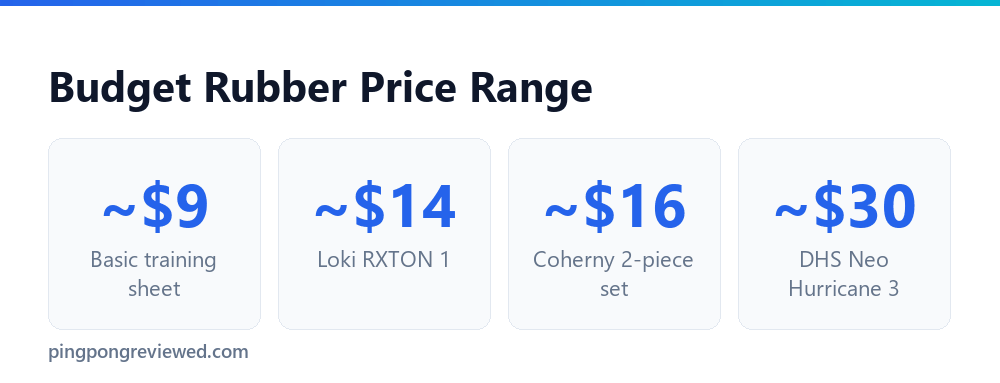
The best cheap ping pong rubber is a genuine rubber sheet you glue onto your own blade — not a cleaning kit, cotton sponge, or complete paddle. The Loki RXTON 1 is the strongest budget pick, ITTF-approved and built for quick attacking play at a genuinely low price.
- →A real rubber sheet is a thin sheet with sponge backing that you glue onto your own blade — not a cleaning kit, cotton sponge, protection film, or complete paddle, all of which get miscategorized as ‘cheap rubber’ surprisingly often.
- →The Loki RXTON 1 and Coherny sheets both deliver genuine, ITTF-relevant performance well under $20.
- →A budget rubber won’t match a premium DHS Hurricane 3 at the highest level, but it’s a real, functional rubber for club and recreational play.
- →Cleaning kits and protection film are worth buying too — just understood as separate accessories, not rubber picks in their own right.
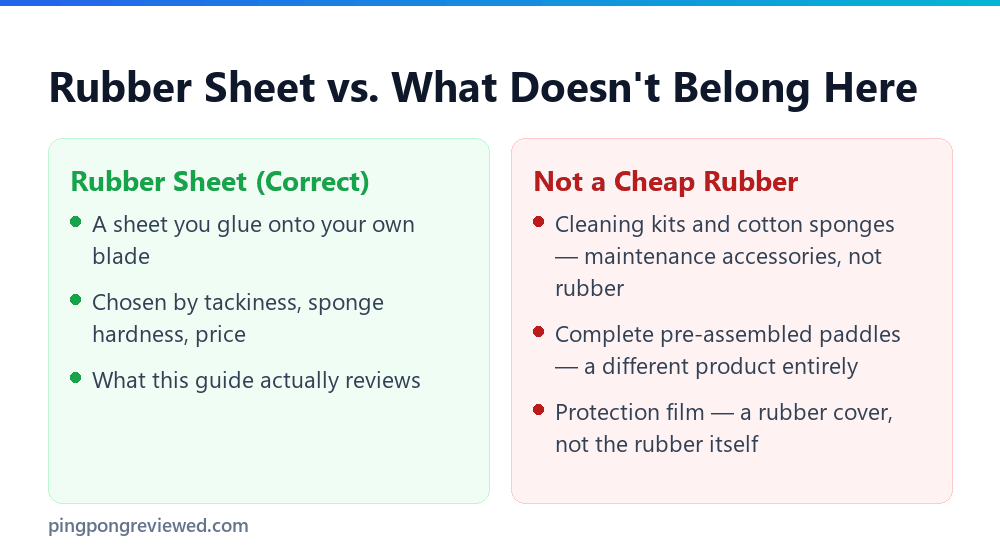
A genuine rubber sheet is a thin layer of rubber with a sponge backing, sold separately from any blade, that you glue on yourself. That’s a completely different product from a cleaning kit (maintains rubber you already own), protection film (a removable cover for the rubber’s surface), or a complete paddle (blade and rubber already assembled) — all of which show up mislabeled as “cheap rubber” in buying guides surprisingly often.
Table of Contents
Best Overall Budget Rubber: Loki RXTON 1

The Loki RXTON 1 is ITTF-approved and built with a 2.1mm sponge tuned for quick attacking play, delivering genuine tacky-rubber performance at a fraction of premium pricing. It’s the strongest overall pick on this list for players who want real rubber characteristics without premium-brand pricing.
- ✓ITTF-approved for legitimate sanctioned play
- ✓Genuine tacky performance at a budget price
- ✓2.1mm sponge tuned for attacking play
- ✕Won’t match a premium DHS Hurricane 3 at the highest competitive level
- ✕Narrower size/thickness selection than premium brands offer
Budget Alternative: Coherny Red/Black Sponge
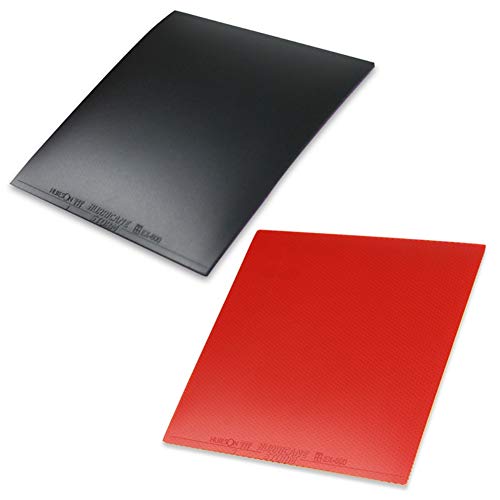
The Coherny sells as a 2-piece red/black set at 2.2mm thickness, a genuinely practical option since it covers both sides of your paddle in one purchase at a low combined price. It won’t match dedicated single-rubber options on refined performance, but for a first custom rubber setup, it’s a reasonable low-risk entry point.
Step-Up Pick: DHS Neo Hurricane 3

The DHS Neo Hurricane 3 sits a step above the pure-budget options here, still well under premium pricing while delivering DHS’s well-known tacky Chinese-style performance. It’s worth the small extra cost over the RXTON 1 or Coherny once you know you want to commit to a tacky rubber setup specifically.
💡 Pro tip: If you’re brand new to custom rubber, start with the RXTON 1 or Coherny before spending more on the Neo Hurricane 3 — tacky rubber demands a specific stroke technique, and it’s worth confirming you like that style before spending more.
Ultra-Budget Pick: Basic 2.0mm Training Rubber
This basic 2.0mm training rubber rounds out this list as the true floor of the budget category, priced under $10. It’s genuinely functional for casual practice and skill development, though serious club or competitive players will outgrow it quickly — think of it as a placeholder rubber for someone still deciding whether they’ll stick with the sport.
Accessories That Aren’t Rubber
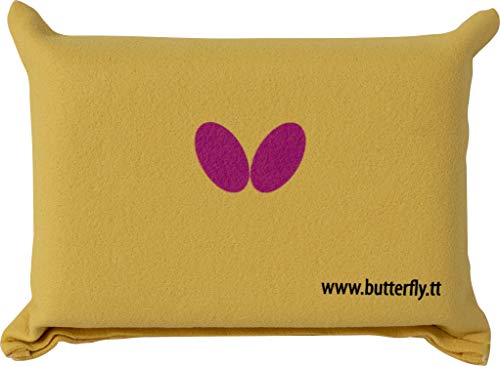
Worth flagging directly: rubber cleaning kits, cotton sponges for storage, and protection film are all genuinely useful accessories that pair with any rubber on this list, but none of them are rubber themselves. A cleaning kit maintains tackiness on rubber you already own; protection film is a removable cover you peel back before play. If a buying guide lists these alongside actual rubber picks without distinguishing them, that’s worth treating skeptically.
Complete Paddles Aren’t Cheap Rubber Either
A second common mix-up: complete pre-assembled paddles, blade and rubber already glued together, sometimes get listed in “cheap rubber” guides even though they’re a fundamentally different purchase. If you want a complete, ready-to-play paddle rather than rubber to pair with your own blade, our separate paddle guide covers that category directly — this list is specifically for rubber sheets sold on their own.
Red vs. Black: Does It Matter for Budget Rubber?
ITTF rules require one black rubber and one clearly different colour on any legal paddle, purely so opponents can tell which side just struck the ball. Since 1 October 2021 the second colour may be red, pink, purple, green or blue and adjust to that side’s characteristics. Color has zero effect on performance at any price point — a red RXTON 1 and a black RXTON 1 play identically. If you’re building a two-sided setup from budget rubber, just make sure you order one of each color rather than matching sides, which would be illegal for sanctioned play.
Comparing This List to Our Spin-Focused Rubber Guide
Our separate guide to the best rubber for spin covers premium options like DHS Hurricane 3 and Yasaka Rakza Z, aimed at players who’ve already decided spin generation is their priority and have the budget to match. This list exists for a different reader — someone prioritizing price first, spin characteristics second. The RXTON 1 and Neo Hurricane 3 here actually overlap with that other guide’s territory at a lower price point, so read both if you’re trying to balance cost against outright performance.
What You Give Up at the Budget Price Point
Budget rubber generally uses simpler sponge formulations that compress and lose responsiveness faster than premium options, and manufacturing consistency varies more from sheet to sheet at this price point. None of that makes a budget rubber a bad purchase — it just explains specifically where the savings come from, and why a serious competitive player eventually outgrows this tier.
Climate and Storage Effects on Budget Rubber
Heat and humidity degrade rubber tackiness faster than normal use alone would, and budget rubber’s simpler formulation tends to be more sensitive to this than premium sheets. Leaving a budget paddle in a hot car or humid gym bag for extended periods accelerates the decline noticeably. A basic paddle case, even an inexpensive one, meaningfully extends how long any rubber on this list holds its grip between sessions.
How Long Budget Rubber Actually Lasts
Expect a budget rubber to hold peak tackiness for a somewhat shorter window than a premium sheet, typically a couple of months of regular play before performance noticeably drops off. That’s a real tradeoff worth factoring into the total cost of ownership — a cheaper rubber replaced more often can end up costing similar to a pricier rubber replaced less frequently, depending on how often you actually play.
Tackiness at the Budget Price Point
Tackiness — how strongly the rubber surface grips the ball at contact — is the single spec that most affects spin potential, and it’s also where budget rubber shows the widest variance. The RXTON 1 and Neo Hurricane 3 both deliver genuine tacky performance, while the Coherny and basic training sheet lean more neutral. If spin generation matters most to your game, prioritize the RXTON 1 or Neo Hurricane 3 over the more general-purpose Coherny set.
Sponge Hardness and What It Changes
Sponge hardness, usually listed in a numeric scale on the packaging, controls how much the rubber compresses and rebounds on contact. Softer sponges suit a slower, more control-focused game and forgive imperfect timing more easily, while harder sponges reward a faster, more committed swing with more explosive pace. Most budget rubber leans toward the softer end of that range, which is actually a reasonable match for players newer to a custom setup, since softer sponge is more forgiving while technique is still developing.
Gluing Budget Rubber to Your Blade
The gluing process is identical regardless of rubber price — apply a thin, even coat of water-based glue to both the blade and the rubber’s underside, then press together once both surfaces are tacky but not wet. Budget rubber doesn’t demand any different technique here, though it’s worth taking extra care on a first attempt, since a rushed glue job wastes a genuinely cheap rubber’s main advantage: low-risk experimentation while you’re still learning what setup you prefer.
Matching Budget Rubber to Your Blade
A budget rubber still interacts with whatever blade it’s paired with, the same as premium rubber does. A control-oriented all-wood blade tames a tacky budget rubber like the RXTON 1 into a more manageable setup for a developing player, while a faster carbon-reinforced blade paired with the same rubber produces noticeably more speed and less forgiveness. If you’re building your first custom setup on a budget, pairing budget rubber with a control-first blade generally makes for the most forgiving combination while you’re still learning.
When Budget Rubber Makes the Most Sense
Budget rubber is the right call in a few specific situations: outfitting a second or third paddle for guests, testing whether a tacky rubber style suits your game before committing to a premium sheet, or simply playing recreationally without competitive ambitions. It’s the wrong call if you’re already a serious club or tournament player — at that level, the consistency gap between budget and premium rubber becomes a real competitive factor, not just a minor preference.
What You’re Actually Buying: Rubber Anatomy
Understanding what a sheet of rubber consists of makes budget comparisons far easier, because cheap sheets and expensive ones differ in specific components rather than in some general quality level.
A table tennis rubber has two bonded parts. The topsheet is the playing surface, and it carries the pimples, facing inward against the sponge on inverted rubber, or outward on pips-out rubber. The sponge sits between topsheet and blade, and its hardness and thickness determine how much energy the rubber stores and returns.
Where budget rubber typically economises is topsheet formulation and sponge consistency. A cheaper topsheet grips adequately when new but loses grip faster; a cheaper sponge may vary slightly in density across the sheet, which shows up as inconsistent response between the middle and edges of the bat. Neither makes a rubber unusable, and for a developing player neither is the limiting factor.
The Rubber Types, and Which Ones Come Cheap
- Inverted (pimples-in): smooth surface, the default for the large majority of players and where nearly all budget options sit.
- Short pips: pimples outward and stubby. Less spin generated, more resistant to incoming spin, favoured by close-to-table blockers.
- Long pips: long thin pimples that buckle on contact and reverse incoming spin. A specialist defensive surface, and a poor first purchase regardless of price.
- Anti-spin: a smooth, low-friction surface that neutralises spin without reversing it. Genuinely niche.
The practical point for a budget buyer is that the cheap end of the market is almost entirely inverted rubber, and that’s fine, because inverted is what the large majority of players should be using anyway. If you find a suspiciously cheap long-pips or anti-spin sheet, the low price is not the reason to be cautious, suitability is.
Sponge Thickness on a Budget Sheet
Most rubber is sold in a range of sponge thicknesses, and the choice matters more than which budget brand you pick. Thicker sponge stores and returns more energy, giving more speed and a higher throw; thinner sponge returns less, giving more control and a flatter, more predictable response.
- Thin (roughly 1.5mm and below): maximum control, least speed. Suits players prioritising placement, and defensive styles where returning less energy is the point.
- Medium (around 1.8-2.0mm): the sensible default for most developing players, and the thickness worth choosing if you are unsure.
- Maximum (around 2.1mm and above): most speed and spin potential, least forgiving. Rewards developed stroke mechanics and punishes inconsistent contact.
A common and avoidable mistake is buying maximum thickness because it sounds like the better product. On a budget sheet in particular, the extra speed is easier to acquire than the control you gave up to get it, and a player still building consistency will usually progress faster on medium.
It’s also worth knowing that combined rubber-and-sponge thickness is capped under the rules, so ‘maximum’ in a product listing generally means at or near that legal ceiling rather than an open-ended figure. That’s why thickness options cluster in such a narrow band across every brand you compare.
ITTF Approval and the Colour Rule
Two regulatory points matter even at the budget end, because they determine whether a rubber is usable in organised play.
ITTF approval means a rubber has been tested against specifications and appears on the approved list, and sanctioned competition requires it. Approved rubber carries the ITTF logo on the sheet. Plenty of inexpensive rubber is approved; plenty of unbranded rubber is not. If you might ever enter a sanctioned event, buying approved rubber from the start avoids discovering the problem at a tournament desk.
The colour rule requires the two sides of a bat to be clearly different colours, so opponents can see which surface struck the ball. For many years this meant one red and one black side; the rules have since been broadened to allow black on one side with a choice of several distinct colours on the other. Either way, two sides the same colour is not legal, and buying two sheets of the same colour is an easy and common mistake.
For purely recreational play none of this is enforced, but the cost of complying is essentially zero when you’re buying anyway, so there’s little reason not to.
Why Cheap Rubber Got Genuinely Good
Budget rubber today is meaningfully better than budget rubber a decade ago, and understanding why helps explain when spending more stops paying off.
Most rubber manufacturing is concentrated among a relatively small number of factories, several of which produce sheets for multiple brands at different price points. The formulations that were premium a generation ago have largely filtered down to the budget tier as manufacturing matured, which is why an inexpensive modern sheet often outperforms a costly sheet from years ago.
What premium pricing buys now is mostly at the margins: the newest topsheet chemistry, tighter consistency between sheets, and sponge formulations tuned for very high racket speeds. Those are real differences, and they matter to players operating at the level where they can be felt. They are not the difference between improving and not improving.
The practical takeaway for a budget buyer is to be sceptical of the assumption that price maps neatly onto quality in this category. It maps onto a specific kind of refinement that most players cannot yet access, which is a different claim entirely.
Getting a Full Life Out of an Inexpensive Sheet
Budget rubber rewards basic care disproportionately, because the thing that fails first on a cheap sheet is usually topsheet grip rather than the sponge, and grip loss is substantially accelerated by dust and neglect.
Wipe the surface after sessions, keep the bat in a case rather than loose in a bag, and store it away from direct sunlight and heat. None of that is specific to budget rubber, but the effect is proportionally larger: a well-kept inexpensive sheet can comfortably outlast a neglected premium one, which inverts the assumption that spending more buys longevity.
Know what end-of-life looks like so you replace at the right time rather than too early or far too late. The signals are a surface that no longer feels grippy under a dragged thumb, visible shine where the matte finish has polished away, and serves that no longer produce the spin they used to at the same stroke speed. Edges lifting or the sponge separating are separate problems, usually gluing rather than wear.
Replacing rubber is straightforward and covered in our rubber replacement and glue guides. At budget prices, replacing a sheet the moment it genuinely stops gripping is far better value than persisting with a dead surface, since a worn cheap rubber plays worse than a fresh cheap rubber by a wide margin.
Budget Buying Mistakes Worth Avoiding
- Buying a bare sheet without checking your blade. Rubber is sold oversized and trimmed to fit, so this is rarely a problem, but confirm the sheet is larger than your blade head before ordering.
- Forgetting you need glue. Bare rubber does not come attached. Factor a bottle into the cost if you do not already have one.
- Buying two identical colours. Covered above, but it is the single most common ordering error and makes the bat illegal for organised play.
- Chasing the cheapest possible sheet from an unknown seller. Below a certain price the saving is a few pounds and the risk is a sheet with no ITTF marking and unpredictable consistency.
- Replacing only one side. If both sides are the same age, both are worn. Replacing one leaves a bat that behaves very differently depending on which face you use.
None of these are expensive mistakes individually, which is precisely why they are so common, the stakes feel low enough that people order without checking first. Two minutes spent confirming the order avoids every one of them, and none of the five is any harder to prevent than it is annoying to discover after delivery.
When Cheap Rubber Is the Right Answer
There’s a persistent assumption that budget equipment is a compromise you tolerate until you can afford better. For rubber specifically, that’s often wrong, and there are situations where a cheaper sheet is genuinely the better purchase.
- You’re still developing basic strokes. Fast, high-throw premium rubber is less forgiving of imperfect contact, and a controlled budget sheet gives clearer feedback while you build technique.
- You’re trying a new rubber type. Testing whether short pips suits you is far cheaper on a budget sheet than a premium one, and the answer transfers.
- You change rubber frequently. Rubber is a consumable, and at high replacement rates the per-year cost difference between budget and premium becomes substantial.
- You play casually. If you play once a fortnight, a premium sheet will lose its properties to age before you wear it out through use.
Where the extra money does buy something real is at the top of the game: a player with developed technique generating high racket speed can extract more spin and speed from a premium sheet, and will feel the difference immediately. Below that level, the honest position is that rubber is rarely the limiting factor.
Where to Spend Instead
If your budget is genuinely tight, rubber is rarely where the next pound does most good, and it is worth knowing what outranks it.
Balls come first for most players. Practising with inconsistent balls undermines everything else, and decent training balls cost very little. A bat is only as consistent as what you hit with it.
Shoes come second if you play on a proper court. Court shoes change how quickly you can move to the ball, and being in position matters far more than what the ball meets when you get there. Rubber, in most budget-constrained setups, is the third priority rather than the first.
What is the best cheap ping pong rubber?
The Loki RXTON 1 is the strongest overall budget pick, ITTF-approved with genuine tacky performance at a low price.
Is a cleaning kit a type of cheap rubber?
No — a cleaning kit is a maintenance accessory for rubber you already own, not a rubber sheet itself.
Is a complete paddle the same as cheap rubber?
No — a complete paddle has rubber already attached to a blade; this guide covers standalone rubber sheets you glue onto your own blade.
How long does budget rubber actually last?
Typically a couple of months of regular play before performance noticeably drops off, shorter than most premium rubber sheets.
Should I buy budget rubber or save for a premium option?
Budget rubber is a reasonable starting point for players newer to custom setups; save for premium once you know your preferred playing style and rubber type.
Does the color of budget rubber affect performance?
No — red and black rubber perform identically at any price point; the color requirement exists purely so opponents can identify which side struck the ball.
As an Amazon Associate, we earn from qualifying purchases through links on this page.

Ping Pong Reviewed is an equipment review site covering table tennis and baseball gear. Specifications are checked against manufacturer listings, and prices against live retail pages, before publication.