Best Shoe for Running Gym and Table Tennis (2026)
If you want one pair that handles running, the gym and table tennis, this page is for you specifically — not the player after the single best table tennis shoe, which our dedicated guide covers with purpose-built picks. Below are three genuinely versatile options, plus a straight account of what you give up by choosing one shoe instead of three specialised ones.
This kind of three-activity crossover shoe isn’t a widely covered category outside this site’s own niche, since most mainstream cross-training guides focus on running plus gym work without table tennis specifically in the mix at all. That’s part of why we built this as its own dedicated page rather than folding it into either our running-adjacent content or our table tennis shoe guide — the actual decision-making here is genuinely different from either of those single-purpose guides.
Table of Contents
The Honest Tradeoff of One Shoe for Three Activities
No single shoe optimizes for running, gym training, and table tennis simultaneously, because those activities want different things from a sole and upper. Running rewards forward-motion cushioning and shock absorption. Gym training, especially anything involving lifting, rewards a flatter, more stable sole. Table tennis rewards a lightweight build and lateral grip. A genuine cross-trainer compromises across all three rather than excelling at any one, which is exactly the right choice if you do a bit of everything and don’t want three separate shoe purchases, and exactly the wrong choice if you’re serious about any single one of those activities.
For serious runners specifically, a dedicated running shoe will outperform any cross-trainer on longer distances. For serious table tennis players, our dedicated table tennis shoe guide covers purpose-built options with genuinely better lateral support and grip than any crossover shoe offers.
The gym-training side of this compromise deserves its own honest note too. Heavy lifting specifically, squats and deadlifts especially, benefits from a flat, stable sole with minimal cushioning underfoot, closer to what a zero-drop shoe provides than what a plush running shoe does. If your gym routine is mostly cardio machines and light training, the cushioning tradeoff matters less. If it’s mostly heavy compound lifts, a genuinely flat-soled shoe will feel more stable under load than either the WHITIN or ASICS picks below, though both still handle moderate gym use reasonably well.
3 Verified Crossover Picks
1. WHITIN Men’s Wide Toe Box Zero Drop Cross Trainers: Best Overall
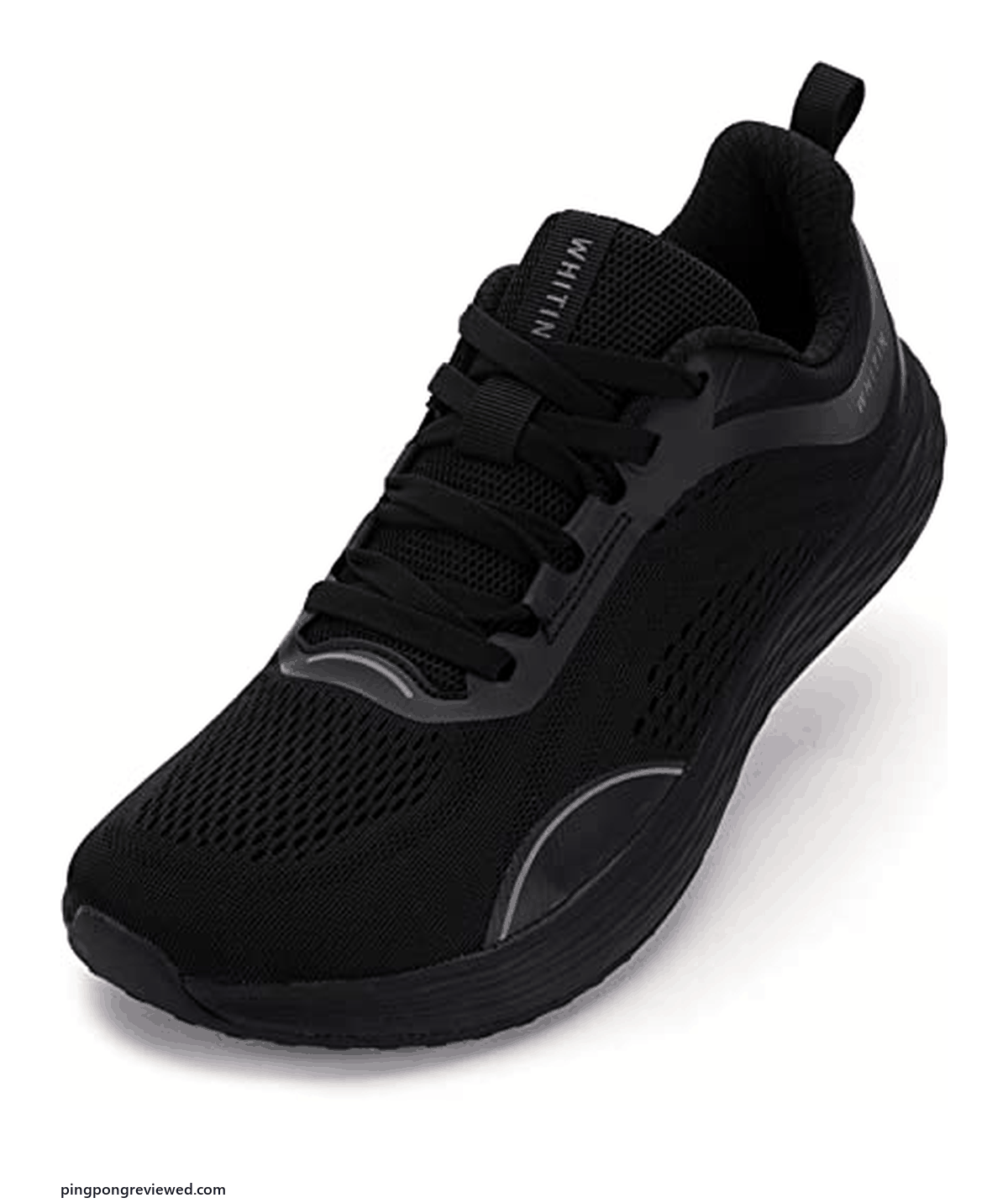
WHITIN Men’s Wide Toe Box Zero Drop Cross Training Shoes, $43.99, is explicitly marketed for cross training with a slip-resistant outsole and EVA foam midsole, and it’s built with enough lateral stability to handle casual table tennis footwork better than a pure running shoe would. The wide toe box and zero-drop design also suit gym work like squats and lunges reasonably well.
2. WHITIN Women’s Wide Toe Box Zero Drop Shoes: Best Women’s Crossover
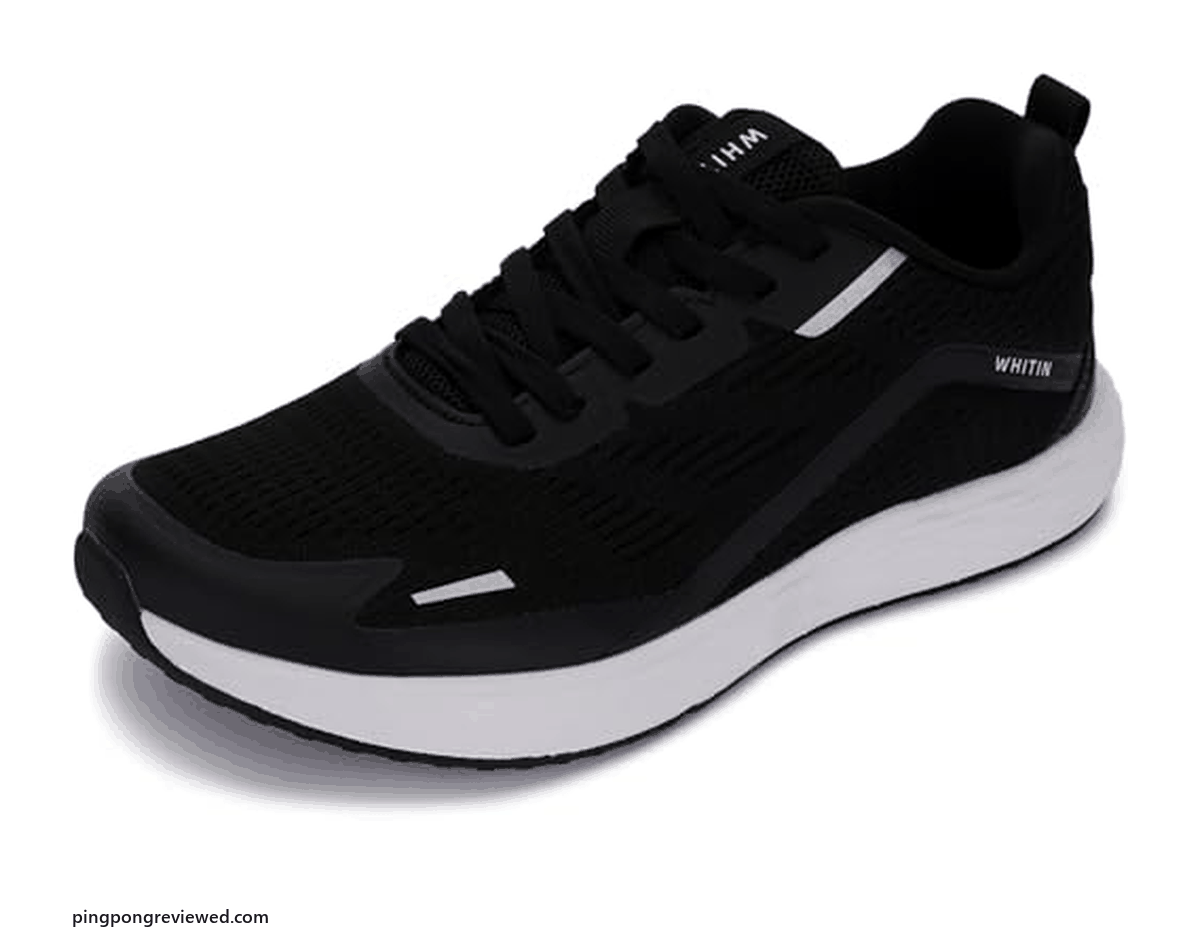
WHITIN Women’s Wide Toe Box Zero Drop Shoes, $29.99, is the women’s equivalent from the same line, sharing the same core design philosophy and similar crossover suitability across walking, gym, and casual court play.
3. ASICS Gel-Rocket 10: Best for Heavier Table Tennis Use
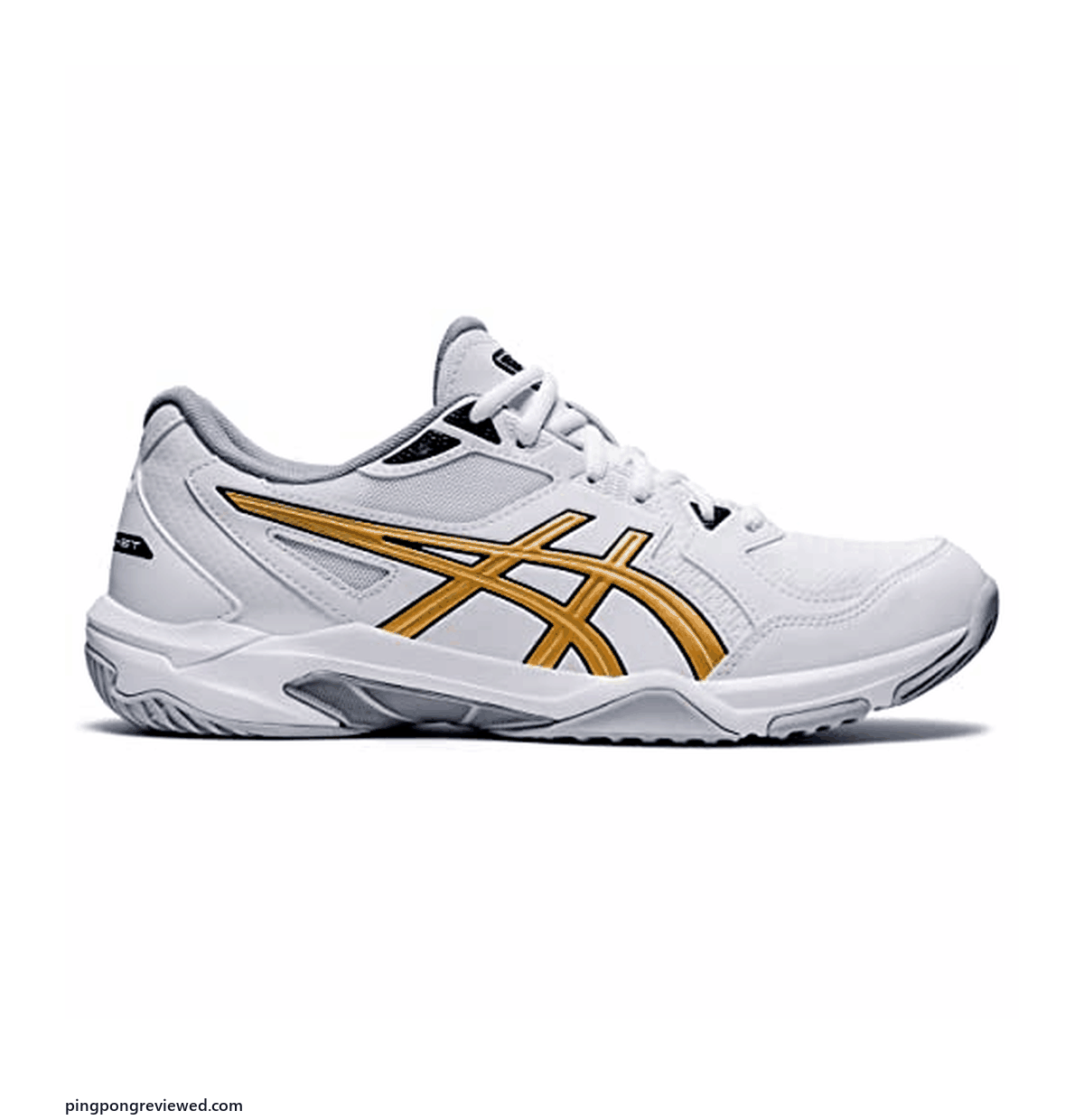
ASICS Men’s Gel-Rocket 10 Indoor Court Shoes, $59.95, is technically a volleyball shoe, but its thick, supportive sole and indoor-court grip make it the strongest table tennis performer of these three picks, at the cost of being noticeably heavier and less running-friendly than either WHITIN pick. Choose this one if table tennis is the activity you do most seriously among the three.
Weight and cushioning split along a similar line worth considering directly. The WHITIN picks are noticeably lighter and better ventilated for sustained running or longer gym sessions, while the ASICS pick carries more built-up structure around the midsole and heel specifically to survive repeated hard lateral pushes on a court surface. Neither tradeoff is a defect — they’re simply built around different priorities, and the honest answer to which is best depends entirely on how you’d actually split your time across the three activities in a typical week.
Which Pick Actually Fits Your Mix
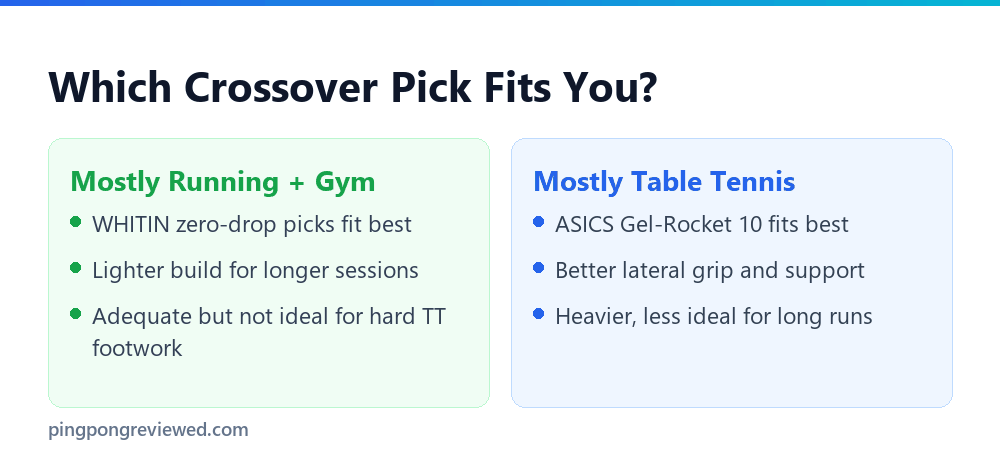
Be honest with yourself about which activity actually takes up most of your time, since that should drive the choice more than any single spec. If running and general gym work make up most of your week and table tennis is occasional, either WHITIN pick is the better everyday shoe. If table tennis is genuinely your primary activity and running or gym work is secondary, the ASICS pick will serve you noticeably better on the court even though it’s a worse running shoe.
What We Cut From the Old List
A warning about crossover lists generally: they are frequently padded out to hit a round number, and casual or dress-styled shoes turn up in them regularly. Those lack the grip, flexibility and lateral support that either the gym or the table demands, and no amount of marketing language changes that. Unfamiliar single-listing brands are the other thing to watch for — the picks here come from WHITIN and ASICS, both with substantial, verifiable rating histories.
This kind of padding is a pattern worth watching for in any “best shoes for X and Y and Z” article, not just this one — when a list needs to hit a round number like 10, weaker filler entries tend to creep in specifically to hit that count rather than because they earned their spot on genuine merit. A shorter list of products that actually fit the stated use case is more useful to a reader than a longer one padded out with entries that don’t.
How We Verified These Picks
Each of the 3 picks above was checked against its own live Amazon listing individually for current price, current rating count, and that the product description genuinely supports a crossover use case rather than being a single-purpose shoe marketed loosely as versatile.
We also specifically checked rating volume, not just the star average, since a shoe with a 4.8 average built on a handful of reviews tells you far less than a 4.3 average built on hundreds or thousands. Both WHITIN picks and the ASICS pick above carry substantial enough rating counts to treat their averages as reasonably reliable rather than an early, possibly unrepresentative signal.
Frequently Asked Questions
Is there really one best shoe for running, gym, and table tennis?
Not a shoe that excels at all three — only one that compromises across them reasonably well. If any one activity dominates your week, a shoe built specifically for that activity will outperform a crossover pick.
Can I run in table tennis shoes?
For very short distances, yes, but table tennis shoes lack the forward-motion cushioning a dedicated running shoe provides, and regular longer runs in them increase injury risk over time.
Can I play table tennis in running shoes?
Casually, yes, though you’ll notice meaningfully less lateral stability and grip than a purpose-built or genuine crossover shoe provides during quick direction changes and sudden stops.
Are zero-drop shoes good for gym workouts?
Generally yes for exercises like squats and deadlifts specifically, since a flatter sole improves ground contact and stability compared to an elevated running-shoe heel.
Can I use casual or dress-styled trainers for table tennis?
No. They have neither the sole grip for quick lateral pushes nor the flexibility for gym work, and they turn up on crossover lists as filler rather than as genuine recommendations.
Should I just buy three separate pairs of shoes instead?
If your budget and closet space allow it, three purpose-built pairs will each outperform any single crossover shoe at its specific activity. A crossover pick is a genuine, honest compromise for people who don’t want to manage three pairs, not an equivalent alternative in raw performance.
How do I know if a shoe is a genuine crossover option or just marketed that way?
Check whether the listing’s own description specifically addresses lateral stability and multi-activity use, the way the WHITIN listings above explicitly do, rather than a generic running shoe simply calling itself “versatile” in its title without any supporting detail.
Will a crossover shoe wear out faster than a specialized one?
Not necessarily faster, but differently — a crossover shoe absorbs stress patterns from three genuinely different types of movement rather than one, which can wear specific areas of the sole unevenly over time compared to a shoe built around a single repeated motion.
As an Amazon Associate, we earn from qualifying purchases through links on this page.

Ping Pong Reviewed is an equipment review site covering table tennis and baseball gear. Specifications are checked against manufacturer listings, and prices against live retail pages, before publication.