Table Tennis Shoes for Flat Feet: What Doctors Say (2026)
For table tennis shoes for flat feet, we found none marketed for it among the makers we checked, Butterfly and Mizuno. The NHS says flat feet that don’t cause problems need no treatment and should not stop you playing sports. If you want a shoe with a maker-stated arch-support insole, the documented ones are pickleball shoes such as the Skechers Viper Court Pro, not table tennis models. We haven’t tested any shoe and we’re not giving medical advice, so this guide reports what medical sources and shoe makers state, checked on October 8, 2026.
If you search for table tennis shoes for flat feet, you will mostly find reworded tennis articles and forum threads. The pages we looked at rarely separate what doctors say from what shoe sellers say, and that gap is what this guide tries to fill.
We read the NHS, MedlinePlus, Cleveland Clinic and a physician society page on flat feet, then the shoe makers’ own pages. Where a claim comes from a seller’s listing, we say so. For wider feet in general, see our Mizuno table tennis shoes guide, which covers Mizuno’s wide models sold in Japan.
- →The NHS says flat feet should not stop you doing any activities, including sports, and that you don’t need to do anything if they aren’t causing problems.
- →None of the medical sources we read mention table tennis, and none says flat feet need structured arch support or a stability midsole for sport.
- →No table tennis maker we checked markets a flat-feet shoe. Butterfly’s pages make no arch-support claim, and only its Lezoline Vilata states a wider width.
- →Skechers’s Viper Court Pro is a pickleball shoe with a removable Arch Fit insole and an APMA Seal. Its maker text doesn’t mention table tennis.
- →See a GP if flat feet are painful, stiff, weak or numb, if you often get foot or ankle injuries, or if only one foot is affected.
Table of Contents
What medical sources say about flat feet
The NHS page on flat feet, last reviewed in June 2025, says flat feet usually don’t cause problems, should not stop you doing any activities including sports, and are rarely a sign of anything serious. It says you don’t need to do anything if they aren’t causing problems.
If they do, it says a foot specialist can advise on shoes, insoles, stretches and exercises, and that wide, comfortable shoes with a low heel are usually best. Those measures won’t change the shape of your feet, but can help with pain or stiffness.
MedlinePlus, reviewed in June 2025, says flexible flat feet that cause no pain or walking problems need no further treatment in older children and adults. It adds that adults may have tired or achy feet after long periods of standing or playing sports, and lists options if you have pain: an arch-support insert you can buy or have made, special shoes, and calf muscle stretches. See MedlinePlus. Cleveland Clinic says many people won’t need treatment, and that occasional mild aches can be managed with options including orthotic shoe inserts.
What the same sources don’t say
This matters, because shoe pages often fill the gaps. None of the NHS, MedlinePlus, Cleveland Clinic or physician society pages we read mention table tennis, court shoes or shoes for lateral-movement sports. None says flat feet need structured arch support or a stability midsole for sport. None mentions zero-drop or barefoot shoes. None says flat feet fatigue faster during side-to-side movement, that you should buy a half size up, or gives a break-in time for supportive shoes.
Two sources say more. Cleveland Clinic says flat feet can cause ankle instability. And AAPMR, a physician society, says people with flat feet tend to have wide feet and may need special footwear, and mentions anti-pronation or motion-control footwear and pronation support with orthoses, but in the context of painful, acquired flatfoot, not ordinary painless flat feet. A 2023 systematic review of nine studies, in BMC Musculoskeletal Disorders, said it could not conclude that foot orthoses are useful for flexible flat feet, though they might reduce pain in adults.
⚠️ Watch out: See a GP if you have flat feet and your feet are painful, stiff, weak or numb, you often get foot or ankle injuries, you have problems walking or with balance, you didn’t have flat feet before, or only one foot is affected. That is the NHS’s list, and we are not giving medical advice.
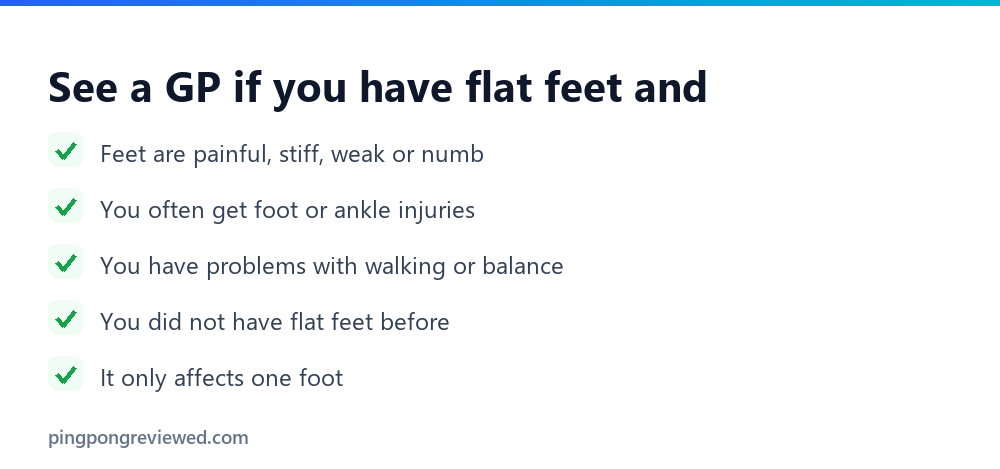
Table tennis shoes for flat feet: what each maker states
Because no maker sells a flat-feet shoe, the most useful comparison is what each one states about the features people ask about: arch support, a removable insole, width and stability. The gaps are as informative as the claims.
Table tennis shoes: what Butterfly says and doesn’t say
We read Butterfly’s shop pages for the Lezoline Vilata, Levalis and Unizes II. None mentions arch support, flat feet, orthotics or a removable insole, and none gives a weight. That doesn’t mean the shoes lack those features. It means Butterfly doesn’t claim them, so we can’t either.
1. Butterfly Lezoline Vilata: the one with a stated wider width
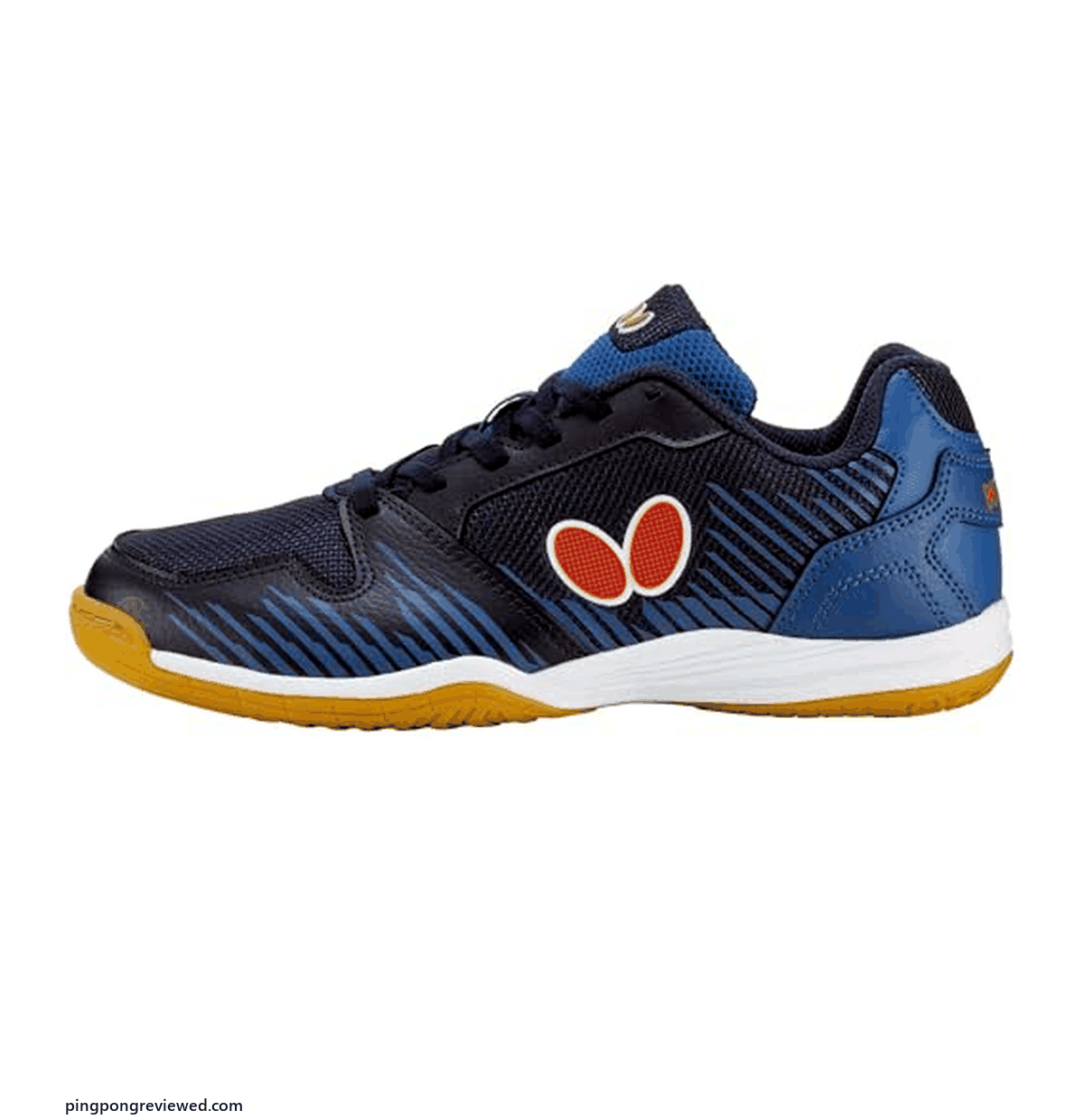
Butterfly says the foot circumference of the Lezoline Vilata has been redesigned to be wider, and that it suits players with wide feet or high insteps. Butterfly’s shop showed $89.99, struck through from $99.99, on October 10. The navy size 7.5 version was $89.99 on Amazon on October 8, with three left, and that listing is in EU and Japanese sizes, so use Butterfly’s size chart.
2. Butterfly Lezoline Levalis: a higher collar and heel counter
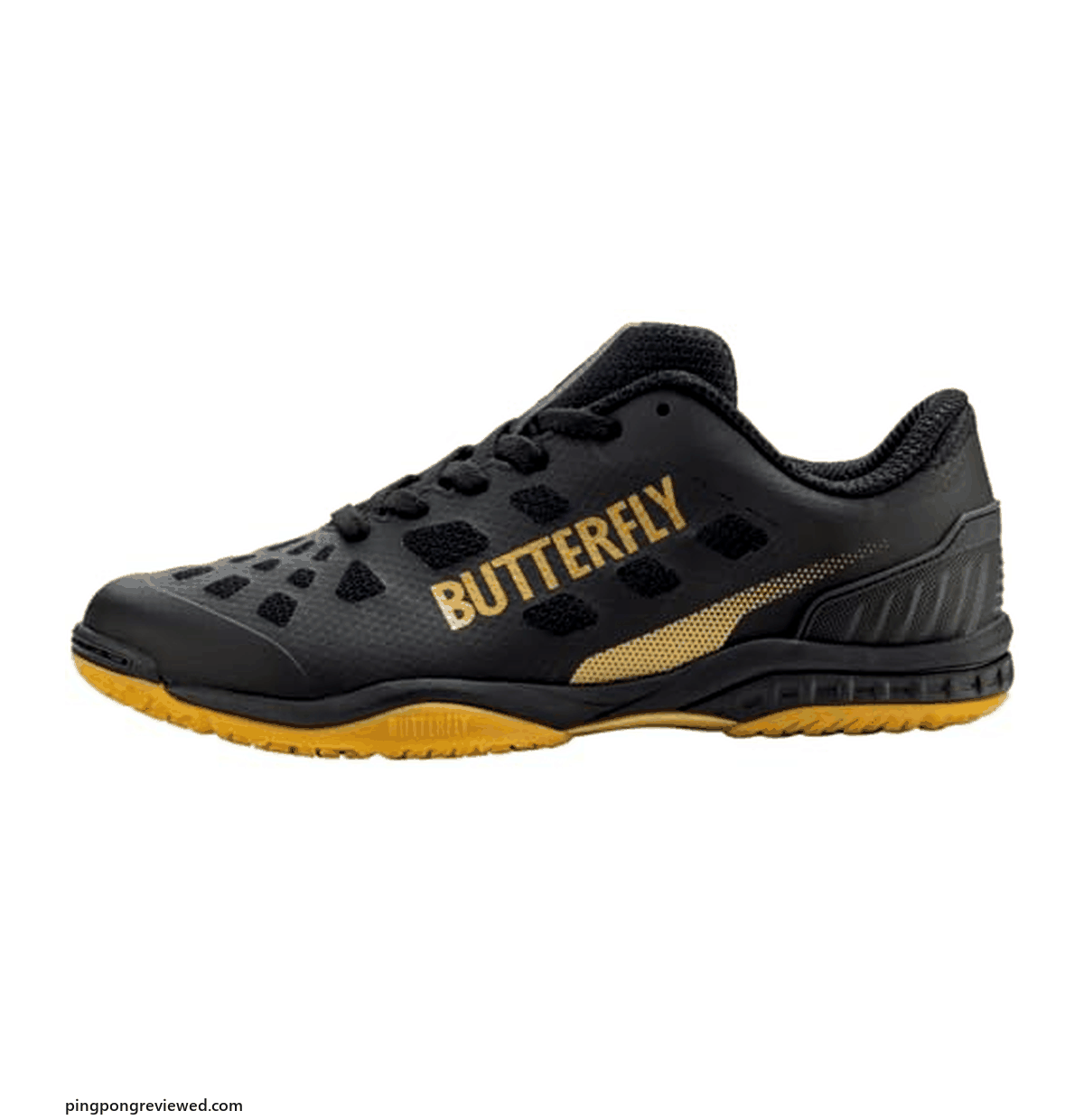
Butterfly says the Lezoline Levalis has a higher collar and an external heel counter that offer a secure hold around the ankle, preventing lateral movement and supporting stable motion, and a slightly tapered last in the midfoot. Butterfly’s shop showed $149.99, struck through from $169.99, on October 10. The Stealth Black size 8.5 version was $149.99 on Amazon on October 8. This is Butterfly’s description of a feature, not evidence that it helps flat feet.
3. Butterfly Lezoline Unizes II: the entry-level option
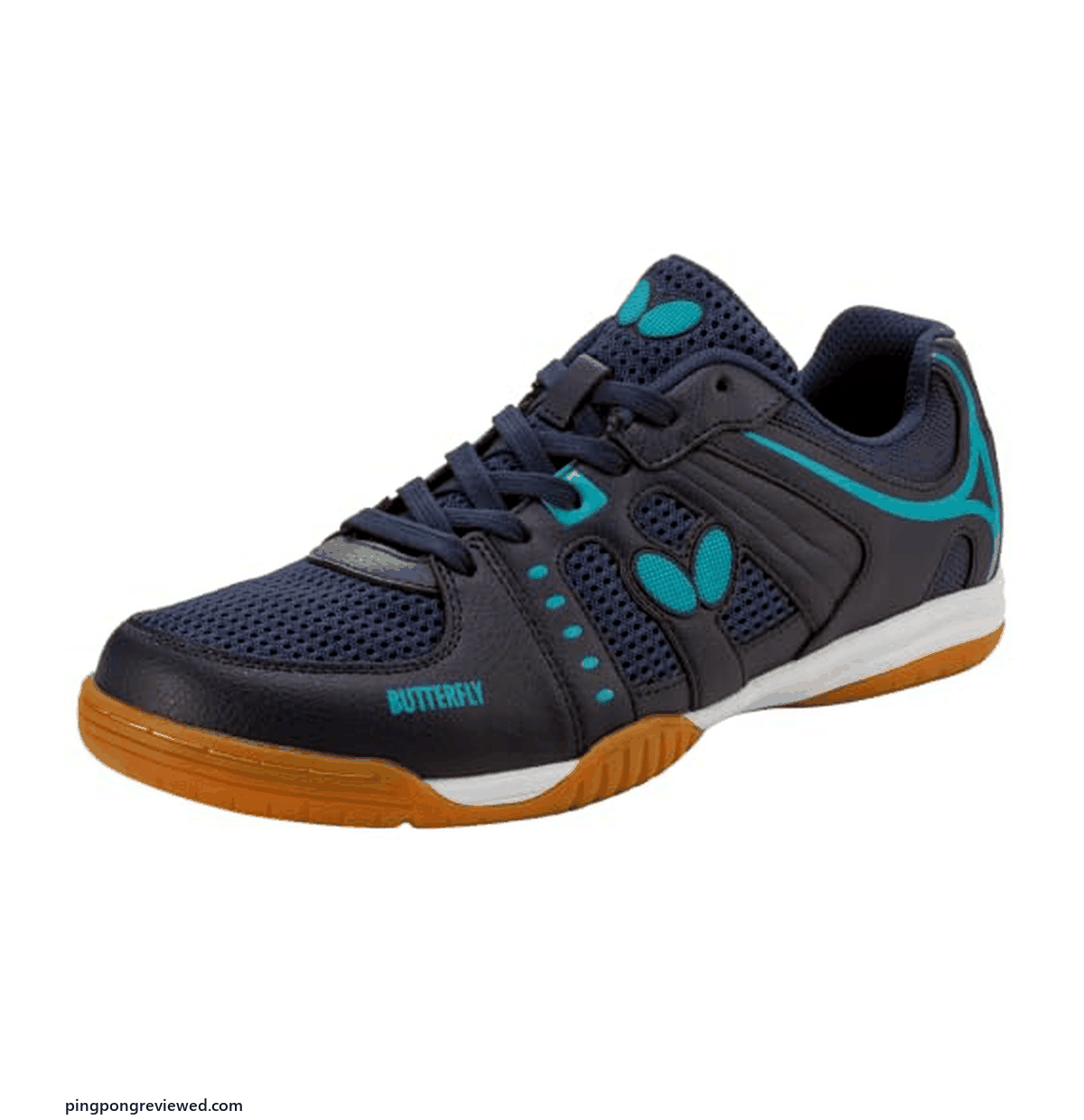
Butterfly recommends the Lezoline Unizes II for beginners and describes it as relatively reasonably priced, and its shop showed $69.99, struck through from $84.99, on October 10. The navy size 7 version was $69.99 on Amazon on October 8, with seven left. Amazon’s listing says it gives cushioning and support specifically for table tennis footwork. Butterfly makes no arch-support claim for it.
Court shoes with a stated arch-support insole
The shoes with a documented arch claim are sold for other sports. That is a crossover choice, and none of the maker text we read mentions table tennis.
4. Skechers Viper Court Pro: a pickleball shoe with a removable Arch Fit insole
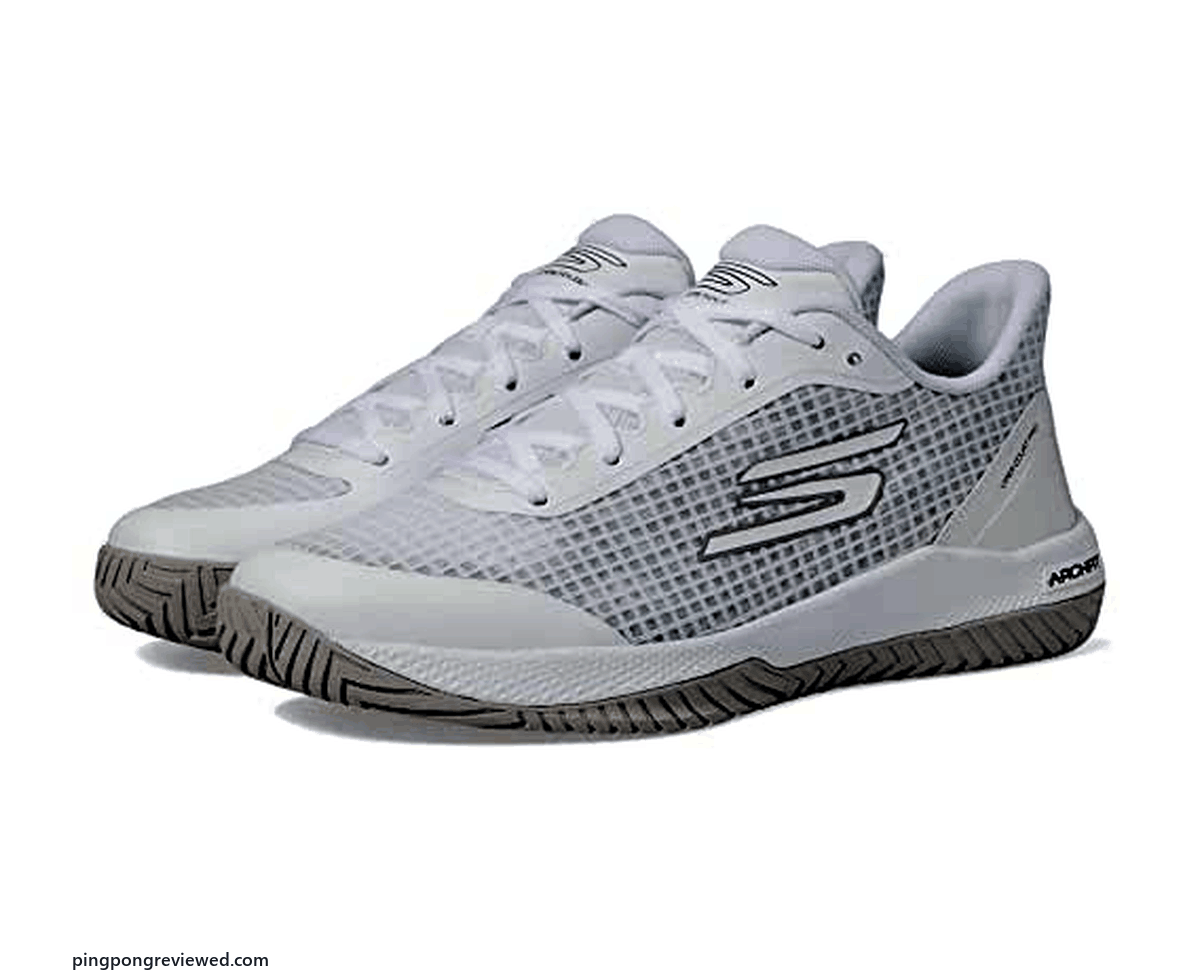
The men’s Skechers Viper Court Pro, style 246069 was $115.00 on Amazon on October 8, white in size 9, with five left. Other color and size variants we saw were $89.75 to $104.25, so the price you see depends on the variant.
Skechers’s Indian site describes it as designed specifically for the elite pickleball athlete, with a removable Arch Fit insole, a podiatrist-certified arch support system, lightweight cushioning and a Goodyear Gold outsole for traction, stability and durability. See Skechers’s page.
Style 246069 appears in the APMA Seal database. APMA says its seal goes to products found to promote good foot health, and that it is not a testing laboratory and makes no comparisons between competing products. See APMA’s program page.
So the seal doesn’t say the shoe suits flat feet or any sport. We found no non-marking sole statement, no weight, and no table tennis mention, and Skechers’s US page for this style redirected to a sold-out page on October 8.
5. FitVille Wide and Extra Wide: seller claims, not maker pages
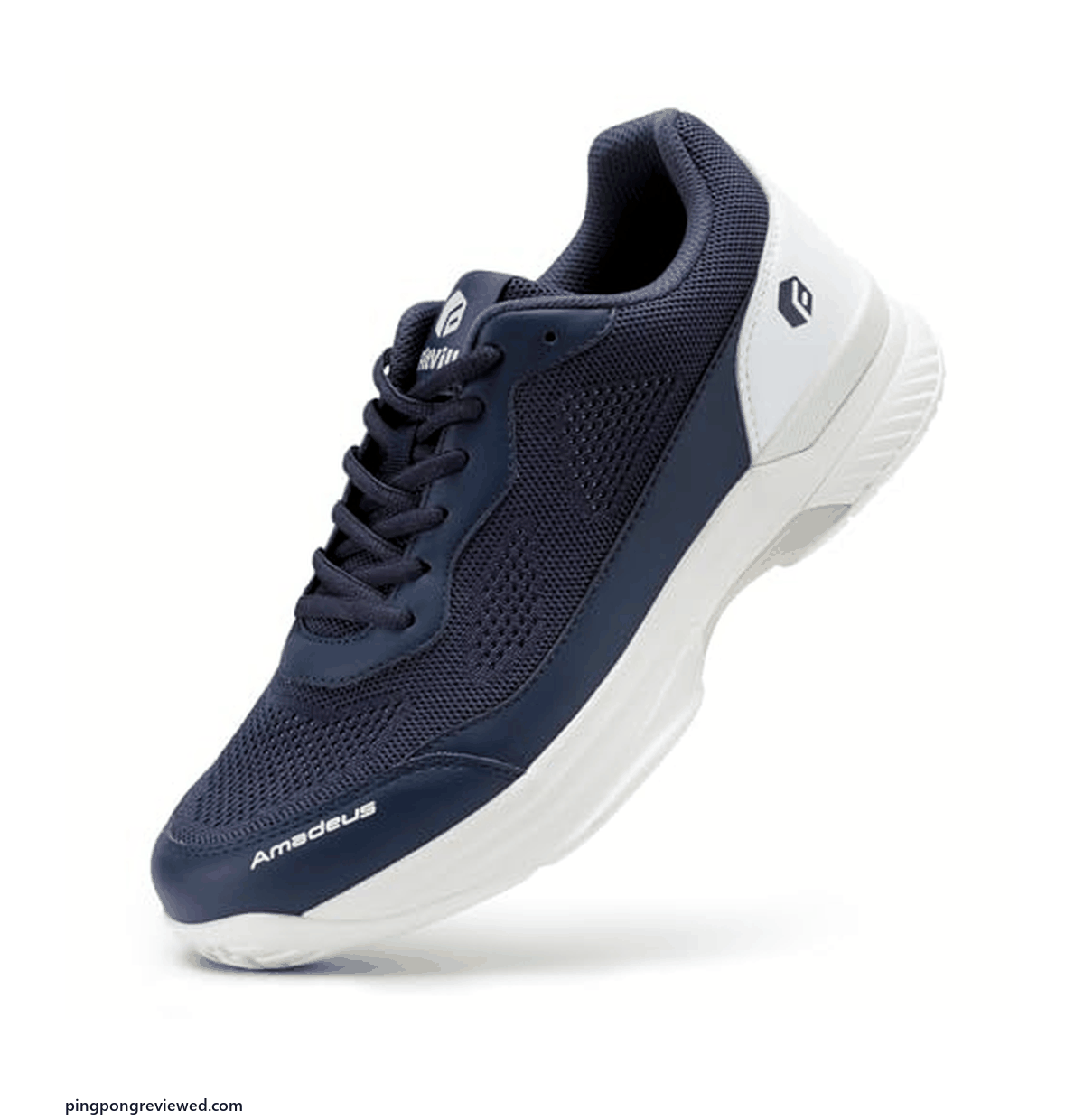
FitVille sells wide-fit pickleball and tennis shoes, and we couldn’t open FitVille’s own website, so everything here is Amazon listing text. The FitVille Wide (10.5 Wide, black) was $69.99 on Amazon on October 8. Its listing says OrthoLite insoles enhance stability and give shock absorption and pain relief, and mentions a roomy toe box.
The FitVille Extra Wide (size 12 X-Wide) was $66.99, and its listing mentions a wide toe box, high insteps, ArchCore insoles with a supportive heel cup and arch design, and a TPU heel ring. Another FitVille listing says good arch support will relieve foot pain, including from flat feet. That is a seller’s claim. The NHS, MedlinePlus and Cleveland Clinic don’t make it.
A table tennis shoe you can’t buy in the US: Mizuno Wave Medal 8
Mizuno’s European page calls the Wave Medal 8 an especially excellent option for players seeking stability, at 275 g, and shows it out of stock on October 8. See Mizuno’s European page. Mizuno Japan lists a removable cup insole, a width listed as 2E-equivalent, and a Wave Medal 8 Wide listed as 3E-equivalent. See Mizuno Japan’s page. Mizuno USA sells no table tennis shoes, as we explain in our Mizuno guide.
Insoles and orthotics for table tennis shoes and flat feet: what the sources say
If you have pain, MedlinePlus lists an arch-support insert, bought in a store or made to order, as one option. Cleveland Clinic lists orthotic shoe inserts for occasional mild aches. The 2023 review found the evidence mixed: it couldn’t conclude that orthoses help flexible flat feet, though they might reduce pain in adults.
If you or a clinician decide on an insert, you need a shoe with a removable insole. Skechers says the Viper Court Pro’s is removable, and Mizuno Japan lists one for the Wave Medal 8. Butterfly’s pages and FitVille’s Amazon listings don’t say. We found no source on how much room an orthotic needs or whether it works better than a shoe alone, so we make no claim.
Sizing and width
Use each maker’s own size chart. Butterfly’s Vilata and Levalis pages print US, European and Japanese sizes, and several Amazon titles use European or Japanese sizes. Each Amazon listing is one size and one color, and prices differ by variant. We found no source for the idea that flat feet need a half size up, so we don’t repeat it. For width, Butterfly’s only stated wider shoe is the Vilata, and FitVille’s width claims are seller text.
How we checked this guide
We read the NHS, MedlinePlus, Cleveland Clinic and AAPMR pages, the 2023 BMC review, APMA’s program page and Seal database, Butterfly’s US shop pages, Skechers’s Indian page, Mizuno’s European and Japanese pages, and Amazon’s product data, all on October 8, 2026. Mayo Clinic and AAOS pages wouldn’t open, and FitVille’s and ASICS’s sites wouldn’t load, so we left those out. We did not test any shoe, and we don’t give medical advice. Prices and stock change daily.
Frequently asked questions
Do flat feet stop you playing table tennis?
The NHS says flat feet should not stop you doing any activities, including sports. MedlinePlus says adults may have tired or achy feet after long periods of standing or playing sports. Neither page mentions table tennis.
Do I need special shoes for flat feet?
The NHS says you don’t need to do anything if flat feet aren’t causing problems. If they hurt, MedlinePlus lists an arch-support insert, special shoes and calf stretches, and Cleveland Clinic lists orthotic shoe inserts for occasional mild aches.
Is there a table tennis shoe made for flat feet?
We found none among the makers we checked. The Butterfly shop pages we read for the Vilata, Levalis and Unizes II say nothing about arch support, flat feet, orthotics or removable insoles. Mizuno groups its Wave Medal line as stability and cushioning, and that line is listed on Mizuno’s Japanese and European sites, though we found it neither on Mizuno USA nor on Amazon US.
Are pickleball shoes OK for table tennis?
Skechers describes the Viper Court Pro as designed for pickleball, and Amazon lists pickleball, tennis and volleyball. The maker text we read doesn’t mention table tennis or say the sole is non-marking, so check your venue’s floor rules.
What does the APMA Seal on the Skechers Viper Court Pro mean?
APMA says its seal goes to products found to promote good foot health, and that it is not a testing laboratory and doesn’t compare competing products. It doesn’t say a shoe suits flat feet or any sport.
Can I use my own insoles or orthotics?
That depends on a removable insole. Skechers describes the Viper Court Pro’s Arch Fit insole as removable, and Mizuno Japan lists a removable cup insole for the Wave Medal 8. Butterfly’s pages and FitVille’s Amazon listings don’t say. A 2023 review of nine studies could not conclude that foot orthoses help flexible flat feet, though they might reduce pain in adults.
Which Butterfly shoe is wider?
Butterfly says the Lezoline Vilata’s width has been redesigned to be wider, and that it suits players with wide feet or high insteps.
When should I see a doctor instead of buying shoes?
The NHS says to see a GP if your feet are painful, stiff, weak or numb, you often get foot or ankle injuries, you have problems walking or with balance, you didn’t have flat feet before, or it only affects one foot.
Sources
Medical sources: NHS, MedlinePlus, Cleveland Clinic, AAPMR and the 2023 BMC review. Shoes: Butterfly Vilata, Levalis, Unizes II, Skechers, APMA Seal entry, Mizuno Europe and Mizuno Japan. Prices and stock come from Amazon’s product data.
As an Amazon Associate, we earn from qualifying purchases through links on this page.

Ping Pong Reviewed is an equipment review site covering table tennis and baseball gear. Specifications are checked against manufacturer listings, and prices against live retail pages, before publication.