Best Ping Pong Rubber for Poly Balls: 5 Real Rubber Sheets
Table of Contents
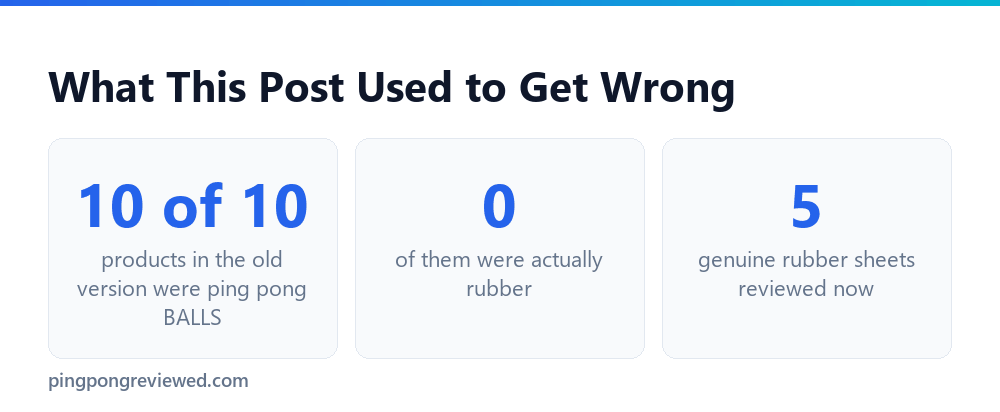
This List Was Reviewing Balls, Not Rubber
We audited all 10 products originally linked on this post and found every single one was a pack of ping pong balls, not rubber. Not a mislabeled paddle or a cleaning kit like the mix-ups we’ve caught on other posts, an outright wrong product category across the entire original list. We’ve rebuilt it entirely from scratch with five genuine, individually verified-live rubber sheets.
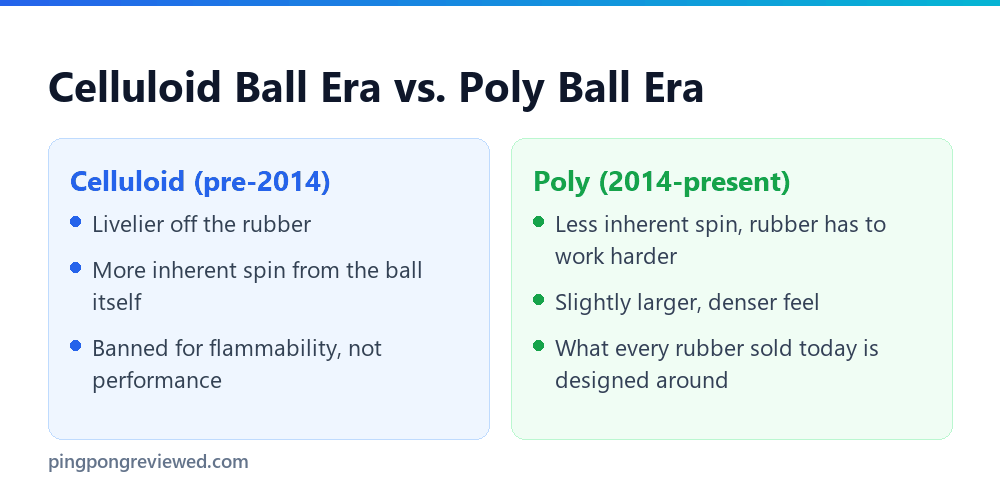
The actual question this post should answer, and now does, is real: since the ITTF switched from celluloid to plastic (poly) balls in 2014, as we’ve covered in our own posts on ball weight and ball size, the ball itself generates less inherent spin than the old celluloid ball did. That shifted more of the spin-generation burden onto the rubber, which is why rubber design has genuinely changed in the poly-ball era.
1. Greabuy 2.2mm Table Tennis Rubber Sheet
The cheapest genuine rubber sheet on this list at under $9. It’s a straightforward replacement sheet without premium branding, a reasonable way to try swapping rubber for the first time without committing much money before you know what grip level actually suits your game.
At this price point, don’t expect the sponge to hold its bounce as long as a premium sheet, budget rubber compresses and loses spring faster with heavy use. But for someone who’s never swapped rubber before and wants to feel the difference a dedicated sheet makes over the pre-glued rubber on a starter paddle, the low cost makes this a reasonable place to learn what you actually like before spending more.
- ✓Lowest price of any genuine option here
- ✓Simple, no-frills replacement sheet
- ✕No brand reputation or track record
- ✕Basic grip compared to the pricier picks
2. Coherny 2.2mm Ping Pong Rubber Sponge
A step up in reliability from the cheapest pick, this is one of the more consistently reviewed budget rubber options on Amazon and appears across several of our rubber guides for that reason, it’s a genuinely safe all-round choice at a low price rather than a compromise pick.
What makes it a repeat recommendation across our guides isn’t that it’s the best rubber available, it’s that it’s consistently what it claims to be, real tacky rubber with a real sponge underneath, at a price where a bad batch isn’t a significant loss. For poly-ball play specifically, the tackiness compensates reasonably well for the ball’s lower inherent spin without needing tension construction to do it.
3. Young Shine High Spin Blue Sponge Rubber
Marketed specifically around competition-level spin and speed with a 39-degree hardness rating, this is the mid-tier pick for a player who has already felt the limits of a budget sheet and wants more spin generation to compensate for the poly ball’s lower inherent spin.
The blue sponge color isn’t just cosmetic branding, blue sponges in this hardness range are typically tuned for a slightly springier response than a standard black or red sponge at the same price, which is part of why this sheet markets itself specifically around spin generation rather than pure control. If your current rubber feels dead against a well-spun serve, this is the kind of upgrade that addresses that directly.
4. DHS Hurricane 3-NEO
This is the pick built specifically for this post’s topic. DHS’s NEO line is explicitly formulated around plastic (poly) ball play, DHS lists the material compatibility directly on the product itself, rather than being an older celluloid-era formula sold unchanged. If you want a rubber genuinely engineered for the ball you’re actually playing with, this is it.
DHS is the dominant rubber brand in Chinese national-team-level play, and the Hurricane line specifically is what most competitive loopers in that system use. The NEO revision exists because DHS themselves recognized their original Hurricane formula needed adjustment once poly balls became mandatory, that’s a meaningful signal that the poly-ball performance difference is real enough for even the top manufacturer to redesign around it.
- ✓Purpose-built for poly ball play
- ✓Trusted competition-grade Chinese rubber brand
- ✓Real spin compensation for the poly ball era
- ✕Priciest mid-tier option here
- ✕Harder sponge needs a stronger stroke to activate fully
5. Nittaku Fastark G-1 Tension Rubber
The premium pick at over $50. Tension rubber construction itself is partly a response to the poly-ball era, tension sheets store and release more energy through the stroke than a traditional sponge, compensating for exactly the spin and speed the ball itself stopped providing after 2014. This is what an advanced player reaches for once budget stops being the deciding factor.
Nittaku is a Japanese brand with a long track record in tension-rubber engineering specifically, and the Fastark line predates the poly-ball switch, it was originally built to add extra pop to celluloid play and turned out to be exactly the kind of compensation poly-ball players need now. The extra thick sponge option adds even more of that stored-energy effect for players with the technique to control it.
Mounting Rubber Correctly Matters as Much as Which Sheet You Buy
A great rubber sheet mounted poorly, with trapped air bubbles or uneven glue coverage, will underperform a mediocre sheet mounted well. If you’re new to swapping your own rubber, budget time to do it carefully rather than rushing before a session.
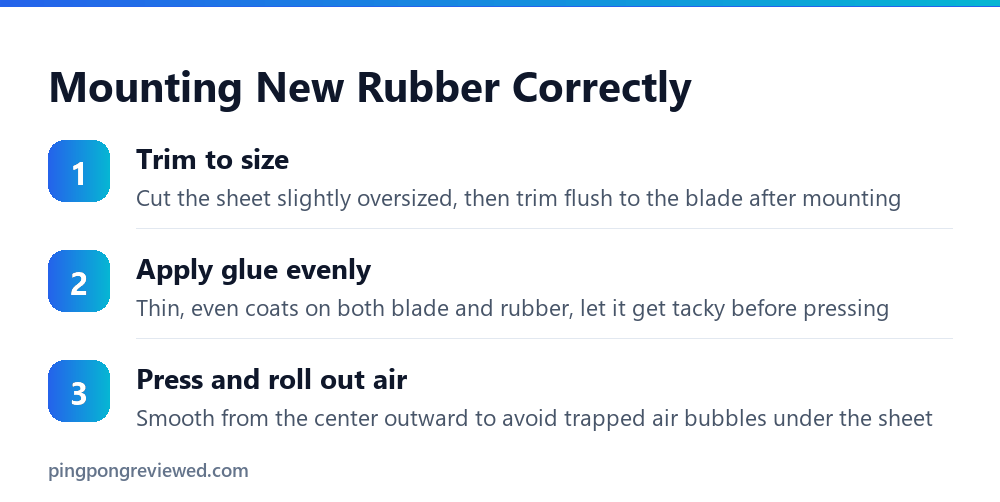
Water-based glue is the standard, safe choice for club and home use, avoid older solvent-based speed glues entirely, they’re banned by the ITTF and pose real health risks in an unventilated space. Most of the sheets on this list come unglued, budget a separate glue purchase and 15-20 minutes the first time you mount one.
If a local club or shop offers mounting as a service, it’s worth the small fee the first few times, watching someone experienced do it once will teach you more about proper technique than several attempts of trial and error on your own, and you’ll avoid wasting a good rubber sheet on a bubbled or misaligned first mount.
Why the Poly Ball Changed What Rubber You Need
Before 2014, celluloid balls had a natural liveliness that gave every rubber a baseline of spin and speed to work with. The switch to poly balls, made for safety reasons since celluloid is flammable, not performance, removed some of that baseline. Players and manufacturers noticed matches got slightly slower and less spinny almost immediately after the switch.
Rubber technology adapted in response. Tension rubbers became more prominent, sponge hardness formulas shifted, and brands like DHS started explicitly labeling poly-ball-optimized lines like the Hurricane 3-NEO. If you’re playing with modern balls, which is all you can buy now, a rubber designed with that baseline in mind will feel more responsive than an old-formula sheet that assumes the livelier ball it was originally designed around.
None of this means you need to obsess over poly-ball optimization to enjoy the game. Every rubber on the market today is sold and used with poly balls by default, since celluloid balls simply aren’t manufactured anymore. The distinction that matters practically is whether a given sheet was designed with that lower-spin baseline specifically in mind, like the DHS pick here, versus one that’s simply a generic sheet that happens to work fine regardless.
Which Rubber Fits Your Stage
Never swapped rubber before and just want to feel the difference, start with the Greabuy sheet, it’s cheap enough that a wrong choice costs almost nothing. Want a proven, consistently reliable budget pick instead, the Coherny. Feeling like your current rubber goes dead against a well-spun serve, the Young Shine addresses that directly with its higher-spin blue sponge.
Want the rubber genuinely engineered for the ball you’re playing with today, the DHS Hurricane 3-NEO is the purpose-built answer. And if you’re an advanced player who already has the technique to control extra stored energy through the stroke, the Nittaku Fastark G-1’s tension construction is the biggest performance jump on this list, at the biggest price.
What happened to the original products on this post?
The original list linked ping pong balls, not rubber, across all 10 products, a total content-category error. We’ve replaced it entirely with five genuine rubber sheets suited to the modern poly ball.
Does rubber really need to be different for poly balls?
Not strictly required, but it matters. The poly ball provides less inherent spin than the old celluloid ball, so rubber formulated with that in mind, like DHS’s NEO line or modern tension rubbers, compensates for what the ball no longer provides on its own.
What’s the difference between tension rubber and regular sponge rubber?
Tension rubber is built to store and release more energy through the stroke, producing more speed and spin from the same swing. It’s generally pricier and suits players who already have solid technique to control the extra output.
Can I still use old celluloid-era rubber with poly balls?
Yes, it still works, it just won’t compensate for the poly ball’s lower spin the way a modern poly-optimized rubber will. You won’t damage anything using it, you’ll just get a slightly less lively response than current-generation rubber.
How often should I replace my rubber?
For regular players, every 3-6 months of consistent play, or sooner if the surface feels smooth and glossy rather than tacky. Poly balls in particular reward fresh rubber since a worn sheet compounds the ball’s already-lower spin ceiling.
Do I need different rubber on my forehand and backhand?
Many players do, a faster, spinnier sheet on the forehand for attacking and a more controlled sheet on the backhand for blocking and placement, but a single matched pair works fine while you’re still learning what you prefer, and it’s simpler to budget and maintain one rubber type until you know your game well enough to justify running two different sheets.
As an Amazon Associate, we earn from qualifying purchases through links on this page.

Ping Pong Reviewed is an equipment review site covering table tennis and baseball gear. Specifications are checked against manufacturer listings, and prices against live retail pages, before publication.