Does a Ping Pong Paddle Blade Make a Difference? (2026)
Does a ping pong paddle blade make a difference? Yes, genuinely, but the honest, complete answer is that how much it matters depends heavily on your skill level. This page focuses specifically on that question, not what a blade is (covered in our definitional page) or how to choose one (covered in our how-to-choose framework), but whether the blade itself is actually the thing making the difference in your results, or whether something else matters more first.
This question comes up so often, and gets such wildly different answers depending on who you ask, precisely because the honest answer genuinely changes based on who’s asking. A beginner and a club-level intermediate player asking the exact same question deserve different answers, and a page that gives one blanket “yes, buy the best blade you can afford” answer regardless of skill level is giving advice that’s actively wrong for at least one of those two readers.
Table of Contents
How a Blade Actually Changes Your Game
The blade affects three things directly: speed, since stiffer construction and composite layers return more energy on contact; control, since thinner, more flexible blades absorb some of that energy for a softer, more manageable feel; and vibration/feel, the actual sensation you get on contact, which affects how precisely you can judge shot placement and spin. These aren’t marketing claims, they’re direct consequences of how differently constructed wood and composite layers physically respond to ball impact.
Ply count and layer arrangement drive most of this difference. A 5-ply all-wood blade typically flexes more than a 7-ply blade with carbon layers added, since carbon’s rigidity resists deformation on contact far more than wood alone does. That extra rigidity converts more of your swing energy into ball speed, which is exactly why composite blades trend faster, and exactly why that speed comes at the cost of some of the softer, more forgiving feel all-wood blades are known for. Neither construction is a strict upgrade over the other; they’re different tools suited to different priorities.
Where It Actually Matters Most: Skill Level
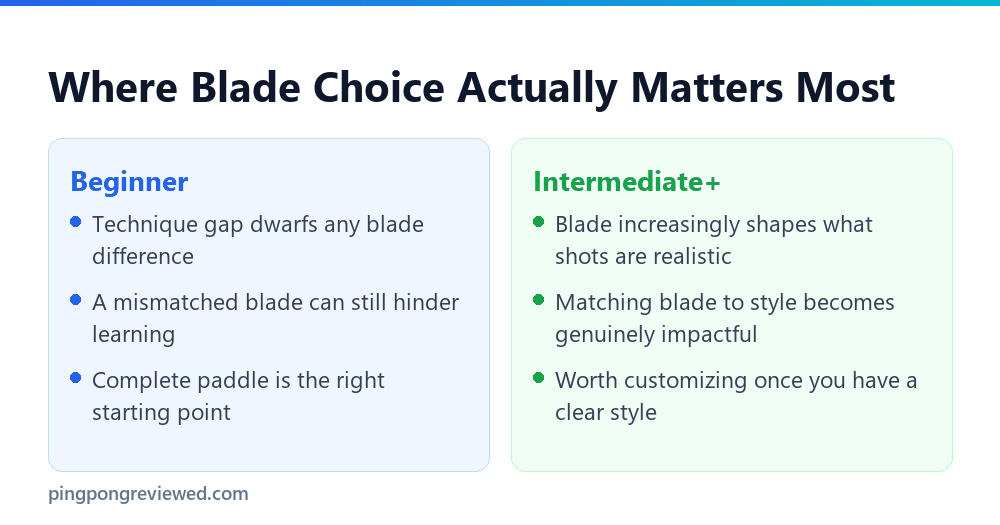
For beginners, technique gaps dwarf whatever difference a specific blade makes. A beginner struggling with basic contact consistency won’t see meaningfully better results from a $150 blade over a $30 complete paddle, since the limiting factor is skill, not equipment. That said, a genuinely mismatched blade, one too fast and unforgiving for someone still building consistency, can actively hinder learning by amplifying small technique errors into bigger misses, which is why we recommend complete, moderate-speed paddles for beginners rather than aggressive custom setups.
For intermediate and advanced players, blade choice starts to matter considerably more. Once your technique is consistent enough that you’re making deliberate tactical choices, shot selection, spin variation, attacking versus controlling a point, the blade genuinely shapes what’s realistically achievable. An all-wood control blade paired with an aggressive playing style fights against you; a fast composite blade paired with a defensive, controlled style does the same in reverse. This is the point where the blade-versus-technique question genuinely flips toward the blade mattering as much as raw skill.
There’s a useful way to test where you actually fall on this spectrum before spending money on a blade upgrade: pay attention to whether your misses come from inconsistent contact, hitting the ball at all cleanly, or from tactical shortfalls, getting outmaneuvered by an opponent’s placement and spin despite clean contact. Inconsistent contact points toward a technique gap that a new blade won’t meaningfully close. Tactical shortfalls despite clean, consistent contact point toward a genuine equipment ceiling that a better-matched blade could realistically help push past.
Matching Blade to Playing Style
- Offensive players generally benefit from faster, stiffer blades that maximize speed and spin potential on aggressive shots.
- Defensive players generally benefit from slower, more flexible all-wood blades that prioritize control and consistency over raw power.
- All-round players typically do best with a balanced middle-ground blade rather than one optimized heavily toward either extreme.
Real, well-known blade lines reflect this split directly: Butterfly’s Timo Boll series is genuinely popular among offensive players for its speed characteristics, while STIGA’s Allround Classic is a long-standing, genuinely control-oriented choice among defensive and all-round players. Neither is objectively better, they’re built around different tactical priorities.
Grip type interacts with this choice too, in a way that’s easy to overlook when focused purely on offensive-versus-defensive blade speed. A shakehand grip generally pairs comfortably with most blade shapes and speeds, while a penhold grip tends to favor a slightly different weight distribution for the fast, close-to-table forehand-dominant style penhold play is built around. If you already have a settled grip preference, factor it into blade selection alongside pure playing style, rather than treating the two decisions as fully independent of each other.
How We Fact-Checked This Page
The mechanism explanations here, why stiffness and construction affect speed, control, and feel, reflect established equipment physics rather than invented claims. The specific blade examples named are real, currently sold product lines with genuinely accurate positioning, not fabricated player endorsements.
One thing you will not find here is a list of specific professional players’ current blade setups. Sponsorships and personal preferences change repeatedly over a career, and equipment pages that state a named pro’s current gear without a dated source are usually repeating something that was true several years ago. The product-line examples used above — the Timo Boll series, the Allround Classic — describe established brand positioning that has stayed consistent, which is a different and far more durable claim.
The Bottom Line
A ping pong paddle blade genuinely makes a difference, but the size of that difference scales with your skill level far more than most equipment marketing suggests. Beginners should spend their money and attention on technique first and a reasonable complete paddle second, not the other way around. Intermediate and advanced players have real, legitimate reason to think carefully about blade choice, since at that stage it genuinely shapes what’s tactically achievable rather than sitting quietly in the background behind raw skill.
If you’re still unsure which category you fall into, err on the side of a complete paddle and more practice time before investing in a separate blade purchase. The cost of being wrong in that direction is small, a bit of extra practice with slightly less than optimal equipment. The cost of being wrong the other way, buying an advanced custom blade before your technique can actually use it, is a real purchase that may end up fighting against your game rather than helping it, exactly the outcome this page is trying to help you avoid.
Frequently Asked Questions
Does the blade material actually impact ping pong performance?
Yes, genuinely — wood type and whether composite layers are added directly affects speed, control, and feel on contact, which are real physical consequences of the actual construction, not just marketing language.
How does blade thickness affect gameplay?
Thicker blades generally play stiffer and faster with less flex; thinner blades offer more control and a softer feel. Neither is universally better, it depends on your playing style.
What’s the ideal blade weight for beginners specifically?
Lighter to moderate weight generally suits beginners best overall, since it’s genuinely easier to control during the technique-building phase before you’ve developed strong opinions about power versus control tradeoffs.
Do professional players use customized blades?
Nearly all serious competitive players use custom-built setups, a specific blade paired with specific rubber chosen individually, rather than an off-the-shelf complete paddle.
Does a blade matter more than rubber choice?
They genuinely matter together rather than one dominating the other — the blade sets the baseline speed and feel, while rubber significantly shapes spin and grip on top of that foundation. Changing either one meaningfully changes your overall setup and how it plays.
Is it worth upgrading my blade as a casual player?
Only if you’ve developed specific opinions about what your current setup lacks after playing regularly. Upgrading before you have that clarity often means paying for a difference you can’t yet feel or use effectively.
Can a better blade fix inconsistent technique?
No — a blade upgrade addresses equipment limitations, not technique gaps. If your misses come from inconsistent contact rather than tactical shortfalls, practice and coaching will help far more than any equipment change.
How do I know if I’ve outgrown my current blade?
A common sign is feeling genuinely limited by your equipment during otherwise clean, consistent play, wanting more spin or speed than your current setup can provide despite solid technique, rather than simply wanting to spend money on something new.
Does blade shape (not just material) affect performance?
Yes, to a smaller degree — slight variations in blade face shape and handle design suit different grip styles and shot preferences, though the material and construction differences covered above have a larger overall performance impact.
As an Amazon Associate, we earn from qualifying purchases through links on this page.

Ping Pong Reviewed is an equipment review site covering table tennis and baseball gear. Specifications are checked against manufacturer listings, and prices against live retail pages, before publication.