Best Nittaku Ping Pong Balls: 3 Verified Picks (2026)
Nittaku is a narrower lineup than most ball brands, and that is the first thing to understand when shopping for them — the live Amazon catalogue is smaller and more concentrated than the generic bulk-ball brands you will have seen alongside it. Three Nittaku products are worth your attention, each verified against a current listing, and the differences between them come down to regulation versus training use rather than to quality tiers.
Table of Contents
Why Choose Nittaku Specifically
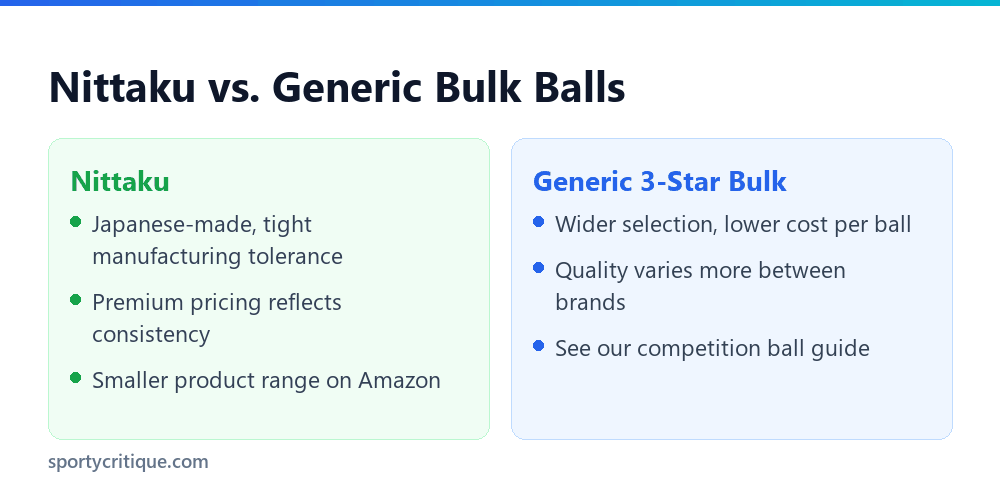
Nittaku is a Japanese table tennis equipment maker with a long competitive pedigree, and its balls carry a manufacturing reputation for tight roundness and bounce tolerance that justifies a real price premium over generic 3-star options. If brand consistency and a track record in elite play matter more to you than squeezing the lowest possible cost per ball, Nittaku is a reasonable place to spend more. If cost per ball is the priority instead, our competition ball guide covers a wider spread of verified 3-star options across several brands.
A Short History of Nittaku
Nittaku (Nippon Takkyu, literally “Japan table tennis”) has manufactured table tennis equipment since the 1950s and has long supplied balls, rubber, and blades to elite Japanese competitive players. The brand’s reputation for tight manufacturing tolerance on its balls specifically comes from decades of supplying equipment for a competitive scene that has consistently produced world-ranked players, which is part of why Nittaku balls carry real credibility in serious club and tournament circles rather than just marketing language borrowed from a more general sporting-goods reputation.
Like every major ball manufacturer, Nittaku transitioned from celluloid to poly plastic construction around the same industry-wide 2014 shift covered in our ball-material guide, and its current 3-Star Premium line reflects that modern poly-ball formulation rather than older celluloid construction. That transition affected how tacky and aggressive rubber pairs with a ball’s surface across the entire industry, not just for Nittaku specifically, which is part of the broader material history covered in more depth on our dedicated rubber and ball guides elsewhere on this site.
The 3 Verified Picks
1. Nittaku 3-Star Premium (Full Pack) — Best Overall
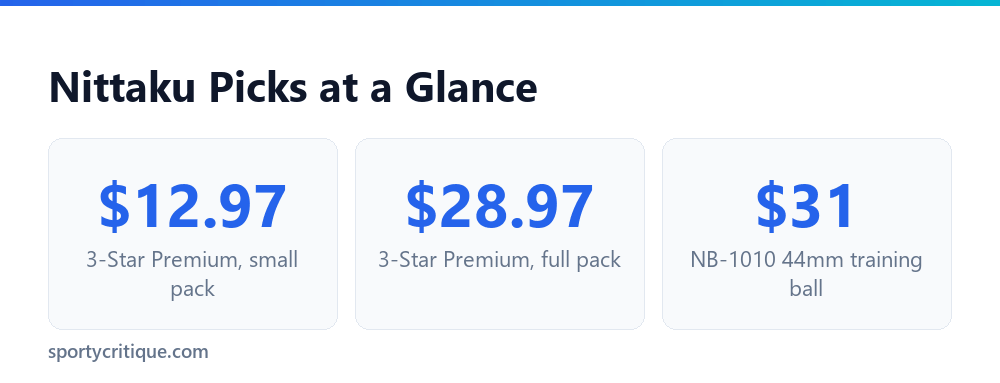
Nittaku 3-Star Premium Table Tennis Balls, $28.97, is the genuine, ITTF-approved 3-star ball Nittaku is best known for — the same pick we verified and recommended in our general competition ball guide. Widely used at club and tournament level, with a manufacturing consistency that’s noticeably tighter than budget bulk options.
2. Nittaku 3-Star Premium (Small Pack) — Best for Trying the Brand
Nittaku 3-Star Premium Table Tennis Balls, Small Pack, $12.97, is the identical 3-star Premium ball in a smaller pack size — a lower-commitment way to try Nittaku’s quality before buying the larger pack above.
3. Nittaku NB-1010 44mm Large Training Ball — Best for Oversized Training
Nittaku NB-1010 Table Tennis Balls, 44mm Large, 3-Star, around $31 for a 3-pack, is a genuinely different product from the two picks above — a 44mm oversized ball rather than regulation 40mm. Not legal for standard play, but useful specifically as a training tool for players working on tracking and contact timing, similar to the jumbo balls covered in our beginner ball guide.
A Note on Ball Sizing
Regulation table tennis balls are 40mm, a standard set by the ITTF since a 2000 rule change from the original 38mm. The 44mm Nittaku training ball above is intentionally non-regulation — larger and slower, which makes it easier to track and contact but not appropriate for actual competitive or even standard casual play on a regulation table. Confirm which size you actually need before buying: the two Premium picks are regulation 40mm, the NB-1010 is not.
Caring for Nittaku Balls
Premium balls like the Nittaku 3-Star Premium line lose their manufacturing advantage faster than budget balls if stored carelessly, which makes basic care genuinely worth the small effort given the price you’re paying for that consistency in the first place.
- Avoid stacking weight on stored balls — the plastic deforms under sustained pressure, ruining roundness regardless of brand.
- Keep out of direct heat and sunlight, which can warp the plastic over time.
- Store in original packaging when possible rather than loose in a bag with hard equipment.
- Don’t mix ball generations in the same set if you’re tracking consistent bounce feel — Nittaku, like other brands, has made minor formulation changes across production runs over the years.
How We Verified These Picks
Every product linked above was checked against its live Amazon listing individually — confirming current stock, current price, and that the product description matches what the ASIN actually links to. Some Nittaku products that appear on other guides, including a specific NEXCEL variant, have no live matching listing we could verify, which is why three confirmed products appear here rather than a longer list. A shorter accurate list beats one padded with names that sound familiar but cannot actually be bought. If a listing referenced here goes out of stock or gets replaced by the seller, we revisit and re-verify it rather than leaving a stale link standing on the page indefinitely.
Frequently Asked Questions
Which ping pong balls are the best overall?
There’s no single universal answer — Nittaku’s 3-Star Premium is among the most respected in competitive circles, but our competition ball guide covers verified picks from DHS, STIGA, and JOOLA too, since brand preference often comes down to feel and budget rather than one objectively best option.
Is Nittaku better than DHS or STIGA balls?
Not objectively better, just different in reputation and origin — Nittaku is the Japanese standard, DHS is the Chinese national standard, and both carry genuine ITTF-approved manufacturing quality. Preference often comes down to which region’s competitive scene you’re most connected to.
What’s the difference between the two 3-Star Premium picks?
Only pack size and price — both are the identical Nittaku 3-Star Premium ball, just sold in different quantities. Buy the small pack to try the brand, the full pack once you know you want to commit.
Can I use the 44mm training ball in a regular game?
Not for regulation or competitive play — it’s intentionally oversized as a training aid. For actual matches, use the regulation 40mm 3-Star Premium picks instead.
Why does this guide only have 3 products instead of 5?
Because Nittaku’s live Amazon catalogue is genuinely narrower than the generic ball brands. Several Nittaku products named on other guides have no verifiable live listing, so three confirmed picks is the accurate current lineup rather than a padded count.
How many balls are in each Nittaku pack?
This varies by listing and can change over time, so always check the current pack count directly on the live product page rather than assuming based on price alone — the small and full pack options linked above differ specifically in quantity, not in the underlying ball quality itself.
Are Nittaku balls made in Japan?
Nittaku is a Japanese company with deep roots in Japanese competitive table tennis manufacturing, and its balls carry that manufacturing heritage directly through their design and quality standards. Always check the specific listing for current country-of-manufacture details, since production locations can shift over a product’s lifecycle even for well-established brands.
Do professional players actually use Nittaku balls?
Nittaku balls see genuine, ongoing use in Japanese domestic competition and among players closely connected to that competitive scene, similar to how DHS dominates Chinese domestic play. Different regions and federations sometimes specify different official ball suppliers for their sanctioned events.
Is the price difference between Nittaku and generic balls worth it?
For competitive or serious club play, many players find the tighter manufacturing consistency genuinely worth the premium cost. For casual or practice use, the difference matters much less — our practice ball guide covers genuinely cheaper bulk options better suited to high-volume drilling where per-ball cost matters more than premium manufacturing consistency does.
As an Amazon Associate, we earn from qualifying purchases through links on this page.

Ping Pong Reviewed is an equipment review site covering table tennis and baseball gear. Specifications are checked against manufacturer listings, and prices against live retail pages, before publication.