DHS Hurricane 3 Review: Real Price, Real Grades, Real Specs
DHS Hurricane 3 is the rubber most Western players have heard of before they’ve ever touched one, the sheet behind two decades of Chinese national-team spin, sold across a grading system that’s confusing if you’ve only shopped for Japanese or European rubber before. This page puts real numbers, real pricing, and the real grading system in one place.
What follows is verified retailer specifications and current pricing, not a claimed hands-on verdict.
📊 Note: What this review is. We have not logged hours on this sheet, and we’re not going to describe a feel we haven’t felt. What follows is verified pricing, a retailer’s published specification numbers, and the real grading system behind the price you’ll actually pay. For subjective playtesting impressions, we link out to hands-on reviews below.
Table of Contents
What DHS Hurricane 3 Costs Right Now
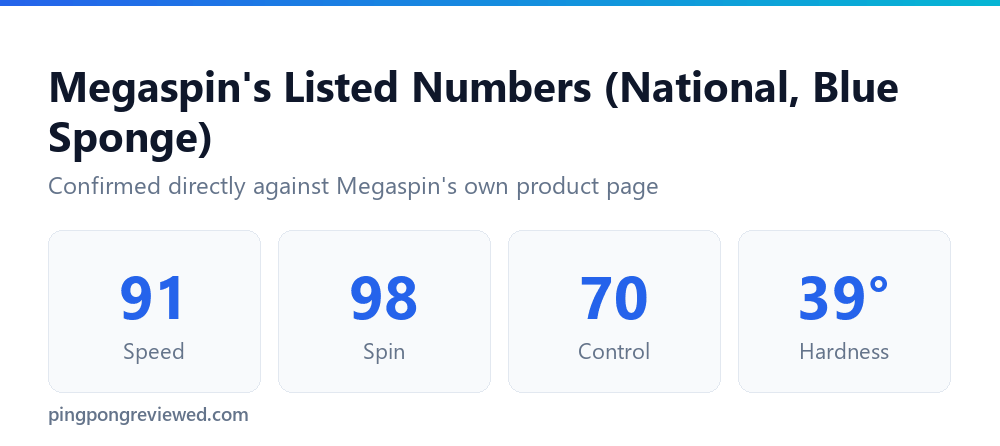
Megaspin lists the National grade, Blue Sponge version of Hurricane 3 at $98.95, marked down from a $125.95 list price, at 39-degree hardness in 2.2mm thickness. That’s a premium price for a rubber often assumed to be a budget option simply because it’s Chinese-made rather than European or Japanese.
The price reflects the specific grade, not the rubber in general. Hurricane 3 is sold across multiple quality tiers, and the National Blue Sponge version priced here sits at the top of that range, not the bottom.
💡 Pro tip: If $98.95 sounds high for what you expected to be a budget rubber, that’s the National Blue Sponge grade talking. Lower grades of the same rubber family exist at meaningfully lower prices, see the grading breakdown below before assuming this is the only option.
Hurricane 3 is listed on Amazon across multiple hardness and grade combinations, alongside specialist retailers like Megaspin.
The Grading System That Explains the Price
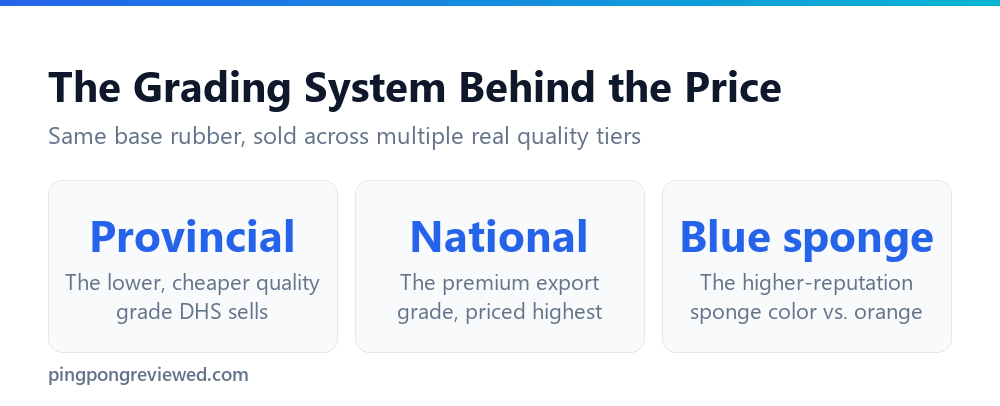
This is the part most first-time buyers miss entirely: DHS sells Hurricane 3 across multiple real quality grades and sponge colors, not as one single, uniform product. “Provincial” is the lower, more affordable grade. “National” is the premium export grade, priced meaningfully higher and carrying the stronger reputation. Sponge color matters too, blue sponge generally commands a higher price and reputation than orange sponge within the same grade.
None of this is marketing fluff invented for this article, multiple independent retailer listings describe the same grading structure consistently, which is exactly why two people can both say they own “Hurricane 3” and be describing different products at different price points.
⚠️ Watch out: Before buying, confirm exactly which grade and sponge color a listing is selling. “Hurricane 3” alone, without a grade specified, doesn’t tell you which tier of the product you’re actually getting.
The Official Specifications
For the specific National Blue Sponge listing priced above, Megaspin’s own product page lists the following performance figures.
The spin figure is the one that actually explains this rubber’s reputation. A 98 spin rating alongside only moderate control reflects a rubber built around a tacky topsheet that grabs the ball hard, rather than a springy sponge that catapults it, a different mechanism than most Western attacking rubbers use to generate their numbers.
How It Actually Compares to Tenergy 05
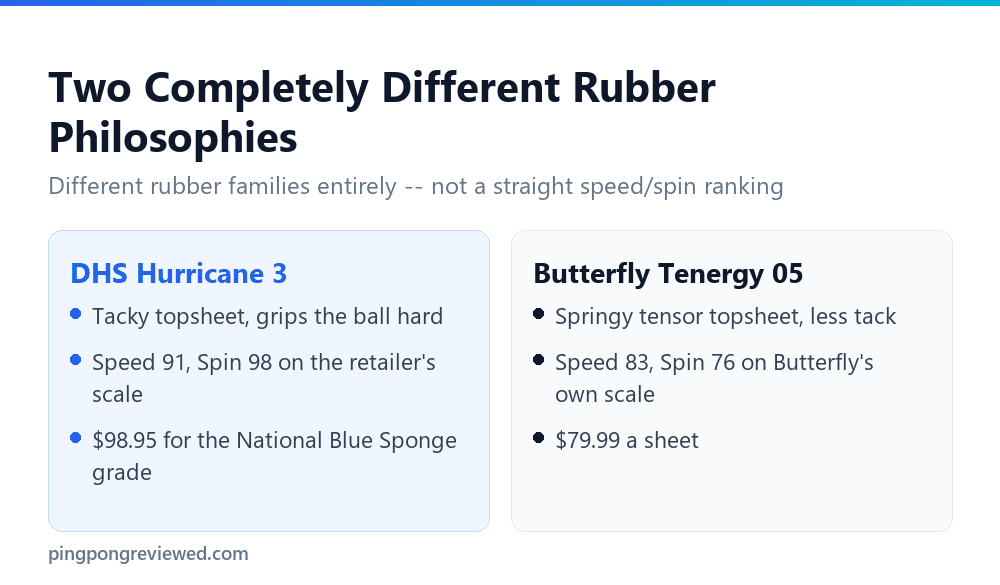
Tenergy 05 is the rubber every other topspin sheet on this site gets measured against, so it’s worth the comparison here too, with an important caveat specific to this matchup.
Price is the more directly comparable figure, and even that depends entirely on which Hurricane 3 grade is being priced. The National Blue Sponge grade covered here, at $98.95, actually costs more than Tenergy 05’s $79.99, a genuine surprise for anyone assuming Chinese rubber is automatically the budget option.
Who Hurricane 3 Is Actually For
This rubber rewards a specific, developed stroke style more than it suits a player looking for an easy power upgrade. Its tackiness means spin comes from actively brushing the ball with real technique, not from the sponge doing passive work the way a tensor rubber’s spring does.
- ✓You’ve developed a slower, more deliberate looping stroke
- ✓You play a Chinese-style, close-to-table attacking game
- ✓You want maximum spin from technique rather than passive sponge speed
- ✓You’re comparing tacky rubber against tensor rubber deliberately
- ✕You’re a beginner still building a consistent contact point
- ✕You want a rubber that generates spin with minimal technique
- ✕You’re used to a fast, springy tensor rubber and want a drop-in swap
- ✕You haven’t tried a tacky rubber before and want to test the category cheaply
That last point matters for the price-conscious buyer specifically: testing the tacky-rubber category doesn’t require the National Blue Sponge grade priced here. A lower grade of the same rubber family is the more sensible way to find out whether the style suits your game before paying premium-grade prices.
Thickness and Hardness Options
The listing priced above shows 2.2mm thickness at 39-degree hardness, but the wider Hurricane 3 line spans multiple hardness grades, 39, 40, and 41 degrees appear consistently across retailer listings, giving buyers a real choice in how firm the sponge feels underneath the tacky topsheet.
- 39° is the softer end of this rubber’s range, generally more forgiving and easier to control for a player newer to tacky rubber.
- 40-41° firms things up further, rewarding a faster, more committed stroke the way harder sponges generally do across any rubber brand.
💡 Pro tip: If this is your first tacky rubber, the softer 39° hardness at a lower grade is a more forgiving place to start than jumping straight to the National Blue Sponge grade at higher hardness.
Why This Rubber Has the Reputation It Does
Hurricane 3’s association with the Chinese national team dates back roughly two decades, consistently documented across independent retailer and review sources as a dominant choice since around the 2000 Olympic cycle. That reputation is genuine and long-standing, not a recent marketing narrative, but it’s worth separating the rubber’s historical prestige from a guarantee that it’s the right choice for any specific player’s current game.
A rubber can have an entirely deserved elite reputation while still being the wrong technical fit for a given player’s stroke style, which is exactly the situation Hurricane 3 presents for players used to tensor rubber’s more passive spin generation.
📊 Note: This site does not have independent confirmation of which exact current players use which specific Hurricane 3 grade, casual sources describe national-team usage broadly without consistently specifying hardness or sponge color, so that detail is left out rather than repeated imprecisely.
Gluing and Care Notes Specific to Tacky Rubber
Tacky rubber like Hurricane 3 tends to attract dust and lose some of its surface grip through ordinary handling faster than a smoother tensor topsheet does, simply because the tack itself is what’s picking up debris. Wiping the surface down after sessions and storing it with its protective film rather than exposed helps preserve that tack meaningfully longer than leaving it uncovered between uses.
Gluing follows the same modern, water-based process any current inverted rubber uses, spread thin on both blade and rubber, let both surfaces go touch-dry, then lay the sheet down from one edge. The historical association between Hurricane 3 and speed glue belongs to an earlier, now-banned era of the sport; the rubber sold today is applied the same standard way as any other current inverted sheet.
Where to Buy It
Megaspin and other established table tennis specialty retailers carry Hurricane 3 across its various grades, alongside listings on Amazon covering different hardness and grade combinations. As with any rubber carrying real brand reputation, buying from an established retailer rather than an unfamiliar marketplace seller reduces the risk of receiving a mislabeled grade.
⚠️ Watch out: Given the real grading system covered above, a suspiciously cheap listing claiming to be “National Blue Sponge” grade is worth treating with real skepticism, confirm grade and sponge color match the price before buying.
None of this needs to feel intimidating just because it’s a less familiar naming and grading system than most Western buyers are used to. Confirm the grade, match the hardness to your own stroke, and Hurricane 3 becomes a straightforward purchase rather than a confusing one.
That’s the honest, complete picture: a legendary rubber family, sold across a real grading system that determines what you actually pay, worth understanding before the numbers alone decide the purchase for you.
Common Questions
How much does DHS Hurricane 3 cost?
The National, Blue Sponge grade lists at $98.95 on Megaspin. Lower grades (Provincial) and orange sponge versions of the same rubber family cost meaningfully less.
What do ‘National’ and ‘Provincial’ mean for Hurricane 3?
They’re real quality grades DHS sells the same base rubber under. National is the premium export grade; Provincial is the lower, more affordable tier.
Is DHS Hurricane 3 a budget rubber?
Not necessarily. The National Blue Sponge grade covered in this review costs more than Butterfly Tenergy 05. Lower grades of Hurricane 3 are more affordable.
How does Hurricane 3 compare to Tenergy 05?
They generate spin through different mechanisms, tack versus spring, which play differently on the table even when the listed numbers look comparable. It’s not a direct better/worse comparison.
Is Hurricane 3 good for beginners?
Generally not as a first rubber. It rewards an already-developed brushing stroke rather than generating spin passively the way a tensor rubber does.
The Verdict
The short version: DHS Hurricane 3, at the National Blue Sponge grade, is a premium-priced, tacky spin rubber with a real, decades-long reputation, built around a fundamentally different playing mechanism than tensor rubbers like Tenergy 05. It rewards an already-developed brushing stroke rather than an easy power upgrade, and its price at this grade is a real surprise for anyone assuming Chinese rubber means budget rubber. Verified against Megaspin’s own listing on 6 September 2026.
- →Megaspin’s National Blue Sponge listing: Speed 91, Spin 98, Control 70, Hardness 39°.
- →Priced at $98.95, more expensive than Tenergy 05, not a budget rubber.
- →DHS sells Hurricane 3 across real quality grades: Provincial and National.
- →Spin comes from tackiness, not sponge spring, a different mechanism than tensor rubber.
- →Rewards an already-developed brushing stroke rather than beginners.
- →Lower grades of the same rubber family exist for testing the category more affordably.
So the closing question is the grading system, not just the rubber: does your game and budget call for the National Blue Sponge grade priced here, or would a lower grade of the same rubber family let you test this style for meaningfully less first?
Grade first, hardness second, stroke style third, get those three in order and Hurricane 3 stops being a confusing legend and becomes just another rubber you can actually shop for.
As an Amazon Associate, we earn from qualifying purchases through links on this page.

Ping Pong Reviewed is an equipment review site covering table tennis and baseball gear. Specifications are checked against manufacturer listings, and prices against live retail pages, before publication.