Best Beginner Ping Pong Rubber: 5 Genuine Rubber Sheets
Table of Contents
Finding the Best Beginner Ping Pong Rubber
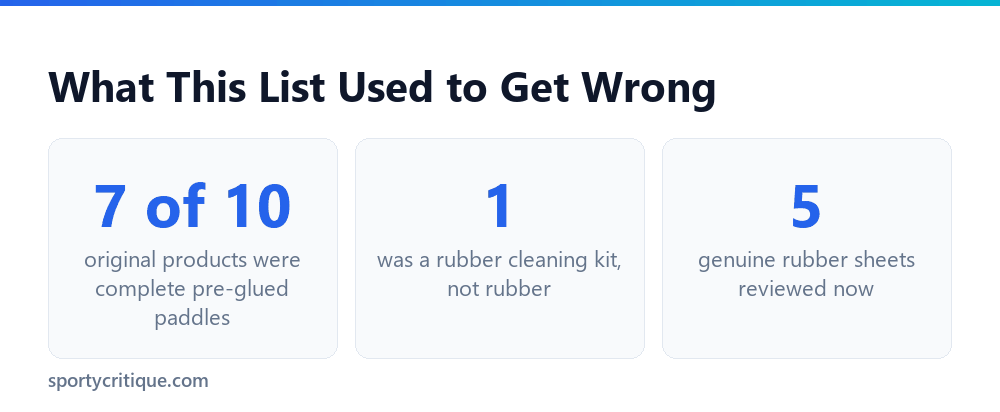
Seven of the ten products originally reviewed on this post were complete pre-glued paddles, not rubber sheets, and one was a cleaning kit, the same mislabeling pattern we’ve now caught across several rubber and blade posts on this site. We kept the three genuine rubber sheets that survived the audit and sourced two more to build a proper five-pick list.
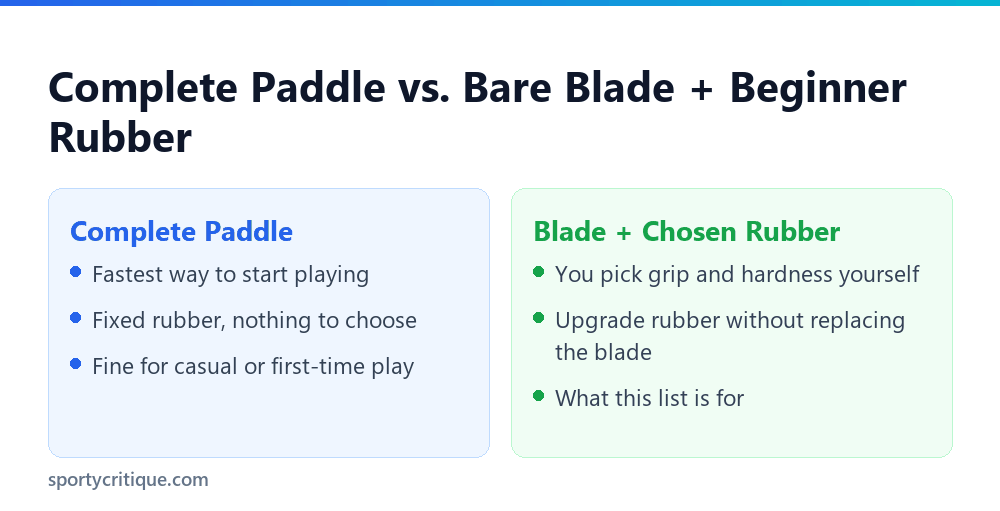
A quick note on who this list is actually for. If you just want to start playing table tennis this weekend, a complete paddle is the faster, simpler choice, our beginner paddle guide covers that path. This list is for a beginner who already has a blade (or a starter paddle they’re upgrading from) and wants to choose their own forgiving, easy-to-control rubber.
That second group is bigger than it might sound. A lot of players start with a cheap complete paddle, play for a few weeks, and quickly notice the rubber feels dead, no matter how hard they swing, the ball just doesn’t spin the way it does when better players hit it. Swapping in a real rubber sheet is usually the single cheapest upgrade that actually fixes that feeling, cheaper than a new blade and far cheaper than a new paddle entirely.
1. Loki RXTON 1 Allround Spin Control Rubber
Explicitly marketed for beginners and training, and the allround spin-control tuning backs that up, forgiving enough to not punish inconsistent technique while still teaching you what real spin generation feels like compared to the flat rubber on a cheap starter paddle.
“Allround” is the key word in how this rubber is built. It’s not tuned to maximize one specific trait like top-end spin or blistering speed, it’s tuned to behave predictably across a wide range of shots, which is exactly what a beginner needs while still figuring out which shots they actually gravitate toward. You won’t outgrow its versatility quickly, even if you eventually want something more specialized once your game develops a clearer identity.
- ✓Explicitly built for beginners
- ✓Allround, forgiving spin-control tuning
- ✓Reasonable price for a first custom sheet
- ✕Not built for advanced spin or speed
- ✕Softer sponge caps top-end power
2. KIMAGIC Friendship 729 Beginner Rubber
Friendship 729 is a well-established Chinese brand, and this sheet is marketed directly at training, beginners, and advanced players in one listing, meaning it’s built to be forgiving enough for a new player but not so limited that you’ll outgrow it in a month.
That three-audience labeling, training, beginners, and advanced, isn’t just marketing spread thin. Friendship 729 has decades of history supplying rubber to serious Chinese training programs, and their entry-level sheets are built on the same manufacturing base as their higher sheets, just with simpler tuning. You’re getting a genuine brand’s foundational rubber, not a stripped-down product built to a lower standard.
3. Greabuy 2.2mm Rubber Sheet
The cheapest genuine rubber sheet on this list at under $9. For a total beginner who isn’t sure they’ll stick with the sport long enough to justify spending more, this is the lowest-risk way to try a dedicated rubber sheet for the first time.
Keep your expectations calibrated to the price. This won’t match the consistency or longevity of the pricier picks here, but it does the one job that matters most for a first-timer, it lets you feel the difference between a starter paddle’s built-in rubber and a real tacky sheet without spending much to find out whether that difference is worth chasing further.
4. Zaoalife Training Rubber for Spin Control
A budget training sheet with a super sticky surface and high-density sponge, explicitly labeled for spin control practice. The extra tack helps a beginner feel what real spin contact is supposed to feel like, which is often the hardest thing to learn from a stiff, flat starter-paddle rubber.
The high-density sponge underneath the sticky surface is worth calling out specifically. A lot of ultra-budget rubber uses a thin, low-density sponge that feels dead on contact, this sheet’s denser foam gives you more feedback through the paddle, which makes it easier to learn what a good versus bad contact actually feels like in your hand rather than just guessing from the result.
5. Coherny 2.2mm Rubber Sponge
A safe, consistently reviewed pick that shows up across several of our rubber guides for the same reason each time, real tacky rubber over a real sponge, delivered reliably at a low price. A dependable choice if you want the rubber our other guides also recommend rather than a beginner-specific niche pick.
There’s real value in choosing the option that keeps showing up across different buying guides on this site. It means the same sheet has held up under review for control, for spin, and now for beginners, which is a stronger signal of genuine reliability than any single glowing review, a product that performs consistently across different use cases rarely does so by accident.
- ✓Consistent quality at a low price
- ✓Balanced grip, not overly stiff
- ✓Recommended across multiple guides on this site
- ✕Not marketed specifically to beginners
- ✕No standout feature beyond reliability
Which Beginner Rubber Fits Your Situation
Want the most explicitly beginner-tuned option, start with the Loki RXTON 1, its allround construction is built exactly for where you are right now. Prefer a rubber from a brand with decades of training-program history behind it, the KIMAGIC Friendship 729.
Not sure you’ll stick with custom rubber at all and want the cheapest honest test, the Greabuy sheet. Want extra tack specifically to learn what real spin feels like, the Zaoalife training rubber. And if you’d rather go with the option that keeps earning a spot across this site’s other rubber guides too, the Coherny is the safest all-around bet.
What to Actually Expect From Your First Custom Rubber
The biggest difference you’ll feel switching from a pre-glued starter paddle to any of these five sheets isn’t speed, it’s spin. Starter-paddle rubber is built to be durable and cheap, not tacky, so it doesn’t grip the ball enough to generate real topspin or backspin. A dedicated beginner rubber sheet, even a budget one, will grip noticeably better.
Don’t expect instant mastery just from the equipment upgrade. Better rubber makes spin possible, it doesn’t teach you the brushing motion that actually produces it, that still takes practice and, ideally, a look at our forehand loop guide once you’re ready to build that stroke properly.
Give yourself a real adjustment period too. Ironically, a grippier rubber sometimes makes your shots feel less predictable at first, not more, because you’re suddenly generating spin you don’t yet know how to control or read. That’s a normal, expected part of the upgrade, not a sign you bought the wrong sheet, and it usually settles within a few sessions of regular play.
Basic Care So Your First Rubber Lasts
New rubber loses its peak tack faster than most beginners expect if it isn’t looked after. Wipe the surface down with a damp cloth or dedicated rubber cleaner after each session to clear off dust and skin oils, both dull the tackiness that makes these sheets worth buying over your starter paddle’s rubber in the first place.
Store your paddle with a protective film or sheet over the rubber face rather than tossing it loose into a bag with balls and other gear. Direct contact with rough surfaces or prolonged sun exposure degrades the sponge and surface faster than normal play does, and a $9-16 rubber sheet is cheap enough to replace but still worth protecting so you get the full value out of learning on it before it’s time to move on to something more advanced.
What happened to the original products on this post?
Seven of the ten were complete pre-glued paddles and one was a rubber cleaning kit, not rubber sheets. We kept the three genuine rubber sheets and sourced two more to complete this list.
Should a total beginner buy rubber separately or just get a complete paddle?
A complete paddle is the faster, simpler start if you just want to play casually. Buy separate rubber once you already have a blade and want to choose your own grip and hardness rather than accepting whatever came pre-glued.
How do I mount rubber onto a blade myself?
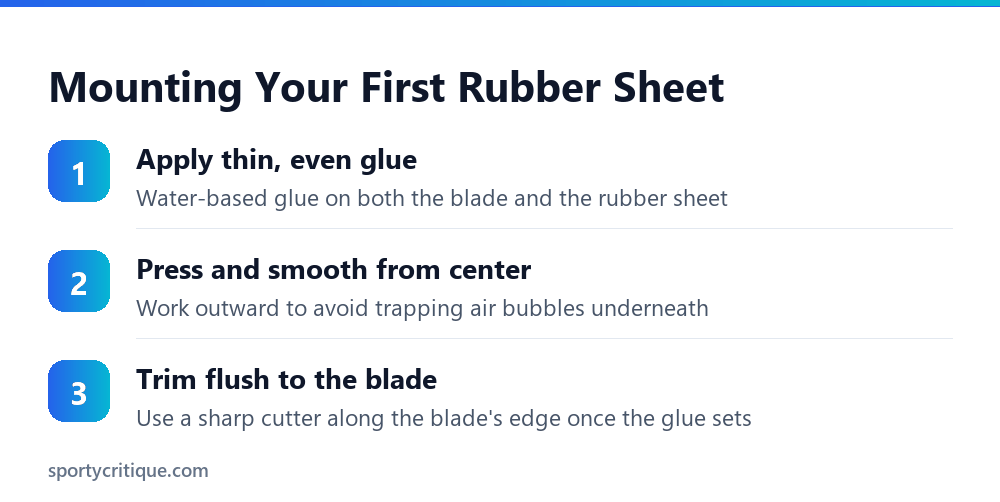
With water-based table tennis glue, applied thinly and evenly to both the blade and rubber, pressed together, then trimmed flush to the blade’s edge. A local club or shop can also mount it for a small fee if you’d rather not do it yourself the first time.
Is beginner rubber the same as control rubber?
They overlap but aren’t identical. Beginner rubber prioritizes being forgiving and easy to learn spin on, control rubber (covered in our separate guide) prioritizes predictability for players who already have consistent technique.
How long will a beginner rubber sheet last?
Most beginners get several months of regular play out of any of these five before the surface tack degrades noticeably, cleaning after sessions extends that meaningfully. At this price point, replacing it isn’t a big expense once it does wear down, and trying a different sheet next time is a reasonable way to learn what grip level you personally prefer.
When should I upgrade from a beginner rubber sheet?
Once you notice consistent, controlled contact and want more spin, speed, or control than your current sheet delivers, that’s usually a few months to a year into regular play, and often coincides with wanting a more specialized sheet like the ones in our control or spin rubber guides. There’s no rush, plenty of recreational players stay happy on a beginner-level sheet indefinitely.
As an Amazon Associate, we earn from qualifying purchases through links on this page.

Ping Pong Reviewed is an equipment review site covering table tennis and baseball gear. Specifications are checked against manufacturer listings, and prices against live retail pages, before publication.