Official Table Tennis Ball Specifications, Explained (ITTF)
The exact four specs every legal ball must meet, the two historic changes that measurably altered gameplay, and how star ratings actually connect to them.
Ping Pong Training Guide
The exact four specs every legal ball must meet, the two historic changes that measurably altered gameplay, and how star ratings actually connect to them.
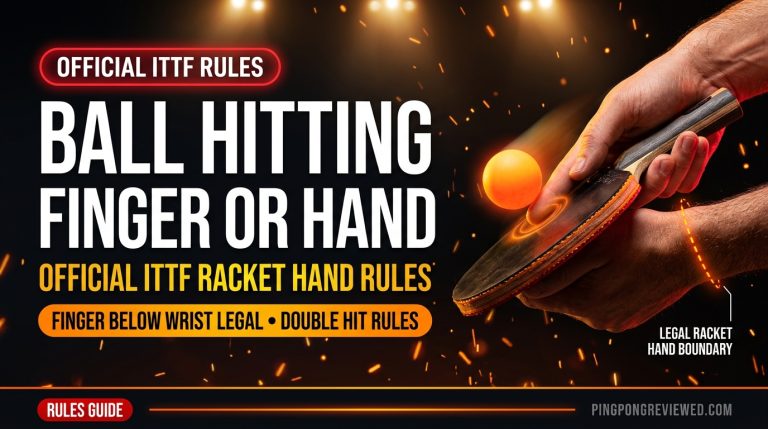
Official Rule Ruling ITTF Rule 2.5.7 & USATT Rulebook Table of Contents Toggle Quick Answer: Is it Legal if the…
Why players suddenly swap sides mid-game in a close, decisive match. Both switching triggers explained, plus what happens if one gets missed.
An enforceable rule most casual players have never heard of. What must contrast with the ball, what’s exempt, and why it exists.

A fundamental most players never think about: the loose-tight-loose grip cycle, why over-gripping caps your spin, and how to notice you’re doing it.
Picking the wrong lateral step for the distance costs recovery time. The mechanics of both steps, as described in a dedicated footwork guide.
The foundational concept behind modern offensive table tennis: serve, anticipate the return, attack for dominance rather than an instant winner.
Serve deception isn’t hiding your arm. It’s one curved motion producing multiple spins. The mechanics, as described by coaching sources.
A rule dating to 1983, taken from ITTF Rule 2.04.08. What gets checked, when, and how the standard has changed over time.
A 2016 rule change most casual players still don’t know about. What’s allowed now, what isn’t, and why the rule changed.
A broken ball voids the rally no matter how the point was going. The rule explained, plus a practical note on avoiding it altogether.
A single 60-second timeout for the entire match, not per game. How it’s requested, why it’s scarcer than other sports’ timeouts, and when to actually use it.